


-


Understanding feed and water intake in poultry
Feed and water efficiency are two vital economic and agricultural traits. Selection for phenotypic feed efficiency has tremendously improved livestock productivity over the past 50 years. However, there have been a number of undesirable changes in the regulation of energy homeostasis and probably...
Read MoreRegular price £25.00Sale price £25.00 Regular price £25.00Unit price per -


A balanced approach to commercial poultry breeding
Balanced selection aims to move all of the relevant traits of a breed in the direction of the preferred response. This approach takes into account performance traits of growth, yield and feed conversion, but also gives weight to fitness traits such as fertility, hatchability and early chick survi...
Read MoreRegular price £25.00Sale price £25.00 Regular price £25.00Unit price per -
Probiotics, prebiotics and other feed additives to improve gut function and immunity in poultry
Poultry producers have been cautious in the application of probiotics, due to mixed experiences of their effectiveness and lack of knowledge regarding the scientific basis for their modes of action. Prebiotics have been more readily accepted because they can be added without any significant chang...
Read MoreRegular price £25.00Sale price £25.00 Regular price £25.00Unit price per -


Genes associated with functional traits in poultry: implications for sustainable genetic improvement
Poultry production primarily focuses on the supply of saleable products. Meat and eggs are classified as production traits and are the focus of improvement in poultry breeding organizations, while the functional traits of birds have received much less attention. However, over the past decade, the...
Read MoreRegular price £25.00Sale price £25.00 Regular price £25.00Unit price per -


The cellular basis of feed efficiency in poultry muscle: mitochondria and nucleic acid metabolism
Feed is one of the most significant costs involved in animal production, and feed efficiency is therefore a very important genetic trait in animal agriculture. In poultry, a clear link between breast muscle mitochondrial function and feed efficiency has been reported. This chapter provides an ove...
Read MoreRegular price £25.00Sale price £25.00 Regular price £25.00Unit price per -
Developments in feed technology to improve poultry nutrition
Systematic evaluation of each stage of the feed manufacturing has the potential to identify opportunities for improvement in manufacturing efficiency and reduced nutrient variation in finished feed, ultimately resulting in lower cost sustainable poultry production. This chapter examines the role ...
Read MoreRegular price £25.00Sale price £25.00 Regular price £25.00Unit price per -


Advances in understanding and improving the role of amino acids in poultry nutrition
Dietary amino acids are central to optimizing growth performance, meat yield, and egg production of poultry. This chapter addresses amino acid digestibility coefficients for feed ingredients, digestible amino acid requirements of poultry based on production efficiency, and the role of supplementa...
Read MoreRegular price £25.00Sale price £25.00 Regular price £25.00Unit price per -


Biochemical and physiological determinants of feed efficiency in dairy cattle
The energetic, physiological or metabolic efficiency of an animal depends on various factors, including the ingredients and physical form of the animal’s diet; the bacterial population in their digestive tract; and the interactions between their hormones, receptors, organs and metabolism patterns...
Read MoreRegular price £25.00Sale price £25.00 Regular price £25.00Unit price per -


Responsible and sustainable use of medicines in dairy herd health
As well as having a moral obligation to safeguard animal health and welfare, veterinarians and dairy producers also have One Health responsibilities to protect human health and the environment from the risk of antimicrobial resistance and the food chain from medicine residues. This chapter descri...
Read MoreRegular price £25.00Sale price £25.00 Regular price £25.00Unit price per -


The rumen microbiota and its role in dairy cow production and health
Ruminants have a complex microbial community inhabiting their gastrointestinal tract. In particular, rumen microbiota converts lignocellulose material to nutrients and energy, which dictate to the animal’s performance through a host–microbe symbiotic relationship. Owing to their significant role ...
Read MoreRegular price £25.00Sale price £25.00 Regular price £25.00Unit price per -


Disorder of digestion and metabolism in dairy cattle: the case of subacute rumen acidosis
Excessive fermentation in the rumen as a result of energy-rich diets decreases ruminal pH and leads to a digestive disorder called ruminal acidosis. This chapter examines one kind of acidosis, subacute rumen acidosis (SARA), and includes a detailed case study on SARA risk in the post-partum phase...
Read MoreRegular price £25.00Sale price £25.00 Regular price £25.00Unit price per -
Feed supplements for dairy cattle
The manipulation of rumen fermentation to maximize the efficiency of feed utilization and increase ruminant productivity is of great commercial interest. This chapter reviews the beneficial effects sought through manipulating rumen fermentation in dairy cattle. It then considers a wide variety o...
Read MoreRegular price £25.00Sale price £25.00 Regular price £25.00Unit price per -


Sustainable nutrition management of dairy cattle in intensive systems
When measuring the sustainability of a dairy farm, one should take into account its technical and economic performance, its stewardship of natural resources, and the norms and policies of the society in which the farm operates. This means that managing dairy herd nutrition depends not only on mee...
Read MoreRegular price £25.00Sale price £25.00 Regular price £25.00Unit price per -


Control of infectious diseases in dairy cattle
This chapter describes the developments to control infectious diseases in the dairy cattle industry, and outlines recent research in this area. A risk analysis approach is presented as a framework for managing infectious diseases at global and farm level. Disease hazards, and the release and expo...
Read MoreRegular price £25.00Sale price £25.00 Regular price £25.00Unit price per -


Key issues in the welfare of dairy cattle
Concerns about dairy cattle welfare are widespread. Cattle welfare is influenced by various circumstances and conditions, which are related to and dependent on each other. Confinement, restricted movements, high milk yield, disrupted social structures, painful and frightening management procedure...
Read MoreRegular price £25.00Sale price £25.00 Regular price £25.00Unit price per -


Understanding the behaviour of dairy cattle
In recent years, I have developed the necessary tools to gain a thorough understanding of cow behaviour in intensive management systems. This improved understanding can facilitate the design of new, sustainable management systems, which promote cattle welfare. In this chapter, I provide an overvi...
Read MoreRegular price £25.00Sale price £25.00 Regular price £25.00Unit price per -
Preventing and managing lameness in dairy cows
Lameness in dairy cows is a major economic and welfare problem worldwide. Despite its importance there are still significant gaps in the published evidence-base, particularly on the subject of disease pathogenesis, treatment and herd interventions. None-the-less, using a systematic approach invol...
Read MoreRegular price £25.00Sale price £25.00 Regular price £25.00Unit price per -
Aetiology, diagnosis and control of mastitis in dairy herds
Mastitis is one of the most economically important diseases in dairy production. Associated costs include treatment, culling, death and decreased milk production, and cow welfare is also compromised. This chapter reviews the indicators of mastitis and the contagious and environmental pathogens wh...
Read MoreRegular price £25.00Sale price £25.00 Regular price £25.00Unit price per -


Causes, prevention and management of infertility in dairy cows
Reproduction and fertility are central components to successful dairy enterprises, and an appropriate management and understanding of the physiological events needed for fertility is crucial to sustainable dairy farming. This chapter discusses the physiology of the main impediments to fertility a...
Read MoreRegular price £25.00Sale price £25.00 Regular price £25.00Unit price per -


Prevention and control of parasitic helminths in dairy cattle: key issues and challenges
Parasitic helminth infections are one of the most important causes of production loss in livestock worldwide. Grazing dairy cattle are exposed to various worm species, all of which can affect health, welfare and productivity to varying degrees. For several decades, helminth control relied primari...
Read MoreRegular price £25.00Sale price £25.00 Regular price £25.00Unit price per -


The use and abuse of cereals, legumes and crop residues in rations for dairy cattle
The production of animal feed requires a significant amount of water, competes with food production through the allocation of arable land, and restricts organic matter availability for soil health. Once feed is consumed, inefficient conversion then contributes to greenhouse gas emissions and othe...
Read MoreRegular price £25.00Sale price £25.00 Regular price £25.00Unit price per -


Housing and the welfare of dairy cattle
In modern dairy farming, lactating cows and un-weaned calves are often housed indoors, in a restricted space, at high density, and/or separate from other animals. Such housing conditions affect the welfare of the animals by creating risks of illness and injuries and placing restrictions on behavi...
Read MoreRegular price £25.00Sale price £25.00 Regular price £25.00Unit price per -


Modelling crop growth and grain yield in maize cultivation
Drought stress, often accompanied by heat stress, is a major problem for maize cultivation, and these stresses are projected to occur more frequently and to be more severe because of global climate change. It is therefore essential to predict likely drought impacts on maize production, which larg...
Read MoreRegular price £25.00Sale price £25.00 Regular price £25.00Unit price per -


Nematodes associated with maize
Plant-feeding, or plant-parasitic, nematodes are ubiquitous in soils that support plant growth, and at least one species is usually present in association with the roots or shoots of maize. However, the macro-effects of phytophagous nematodes are notoriously difficult to test and measure, and de...
Read MoreRegular price £25.00Sale price £25.00 Regular price £25.00Unit price per -


Control of rodent pests in maize cultivation: the case of Africa
Rodents cause significant damage to maize at sowing, seedling and maturity stages . The major rodent pest species of maize in Africa are Mastomys and Arvicanthis spp. Rodent management programmes in this continent have been reactive but have not considered the population ecology of the target spe...
Read MoreRegular price £25.00Sale price £25.00 Regular price £25.00Unit price per -
Controlling aflatoxins in maize in Africa: strategies, challenges and opportunities for improvement
Maize is subject to pre- and post-harvest contamination with aflatoxins, which are acutely toxic, immunosuppressive, mutagenic, teratogenic and carcinogenic compounds. This chapter describes in detail the current strategies employed for aflatoxin control and the challenges associated with them, i...
Read MoreRegular price £25.00Sale price £25.00 Regular price £25.00Unit price per -


Maize seed variety selection and seed system development: the case of southern Africa
Maize is the most important staple food crop in southern Africa. It is predominantly grown by smallholder farmers, but seed companies generally target large commercial farmers in high potential areas when developing new varieties. To address the needs of smallholder farmers in maize genetic impro...
Read MoreRegular price £25.00Sale price £25.00 Regular price £25.00Unit price per -


Good agricultural practices for maize cultivation: the case of West Africa
Maize is the most important staple food crop for over 300 million people in sub-Saharan Africa but poor management practices and problems related to climate and soil quality mean that yields regularly fall below what is needed to feed the population. This chapter describes the effect of poor soil...
Read MoreRegular price £25.00Sale price £25.00 Regular price £25.00Unit price per -


Economically important insect pests of maize
Maize yields in most sub-Saharan African countries remain low, at 0.5 to 1.0 ton/ha. While some of this yield disparity can be attributed to the use of open-pollinated varieties (OPVs), much of the yield reduction is a result of numerous economically damaging insect pests. This chapter describes ...
Read MoreRegular price £25.00Sale price £25.00 Regular price £25.00Unit price per -


Advances in maize post-harvest management
One of the key constraints to improving food and nutritional security in the developing world is poor post-harvest management, which leads to loss of grains. Improved post-harvest management at farm level is crucial, as it directly impacts on poverty alleviation, food, nutrition and income securi...
Read MoreRegular price £25.00Sale price £25.00 Regular price £25.00Unit price per -


Zero-tillage cultivation of maize
Zero-till cultivation of maize (Zea mays L.) is a relatively widely used production system whereby the only soil disturbance occurs with the seeding operation. The system aims to reduce erosion, improve soil physical attributes, decrease costs, and improve long-term sustainability of maize cultiv...
Read MoreRegular price £25.00Sale price £25.00 Regular price £25.00Unit price per -

Precision maize cultivation techniques
Information and communication technologies are transforming the way maize is cultivated around the world by providing farmers with a suite of novel tools and techniques for improving crop production, enhancing input use efficiency and increasing profitability while achieving environmental sustain...
Read MoreRegular price £25.00Sale price £25.00 Regular price £25.00Unit price per -


Post-harvest wheat losses in Africa: an Ethiopian case study
This chapter discusses the results of a 2014 questionnaire-based survey instrument used to gauge perceptions of 200 Ethiopian wheat farmers on a wide range of wheat production and post-harvest handling and storage- related topics. It outlines the methods employed in the study, the demographics of...
Read MoreRegular price £25.00Sale price £25.00 Regular price £25.00Unit price per -


Variety selection in wheat cultivation
Variation among wheat plants serves as the raw material for varietal development or plant breeding, allowing the selection of plants which are suited to particular environments, management methods or markets. The superiority of an identified line is normally validated through a series of trials, ...
Read MoreRegular price £25.00Sale price £25.00 Regular price £25.00Unit price per -


Cassava cultivation in sub-Saharan Africa
In sub-Saharan Africa, cassava is cultivated under a wide range of ecological and agronomic conditions. Cassava’s adaptability to relatively marginal soils and erratic rainfall conditions, its high productivity per unit of land and labour, the certainty of obtaining some yield even under the most...
Read MoreRegular price £25.00Sale price £25.00 Regular price £25.00Unit price per -


Integrated crop management for cassava cultivation in Asia
The demand for cassava in Asia is expected to grow in the years to come, largely because of an increasing demand for animal feed, biofuels and multiple uses of starch. Increasing the quantity and quality of cassava products in response to growing demand requires careful and sustainable increases ...
Read MoreRegular price £25.00Sale price £25.00 Regular price £25.00Unit price per -
Seed systems management in cassava cultivation
A sustainable cassava seed system will ensure that high-quality seeds of farmer-demanded varieties and crops are produced and fully available on time and affordable to farmers and other stakeholders. This chapter describes the production and management of high-quality cassava seed under both info...
Read MoreRegular price £25.00Sale price £25.00 Regular price £25.00Unit price per -


Value chain approaches to mechanization in cassava cultivation and harvesting in Africa
Cassava is a basic staple food in sub-Saharan African (SSA) countries. However, despite the use of improved varieties in some areas, yield levels have remained low due to inefficient production systems. Cassava production in SSA is mainly through manual labour, which is time consuming and ineffic...
Read MoreRegular price £25.00Sale price £25.00 Regular price £25.00Unit price per -

Drivers of change for cassava’s multiple roles in sustainable development
This chapter reviews the ways cassava yields can be improved sustainably to keep pace with a rising population. It also looks more broadly at improving the role cassava can play in improving farmers’ and consumers’ lives – through income generation, improved food security, better nutrition, and a...
Read MoreRegular price £25.00Sale price £25.00 Regular price £25.00Unit price per -


Durum wheat: production, challenges and opportunities
Durum wheat is principally used for the manufacture of pasta, couscous and, to a lesser extent, in the production of bulgur and bread. This chapter explores the challenges and opportunities of durum wheat production in the twenty-first century, addressing globally important production as well as ...
Read MoreRegular price £25.00Sale price £25.00 Regular price £25.00Unit price per -
Integrated crop management of wheat
Integrated crop management (ICM) is the practice of using multiple agronomic and pest control methods to maximize yield and net returns and to minimize inputs while maintaining economic and environmental sustainability. This chapter describes the role of agronomists in developing ICM strategies a...
Read MoreRegular price £25.00Sale price £25.00 Regular price £25.00Unit price per -


Improving wheat cultivation in Asia
It has been estimated that wheat production in South Asia needs to grow at the rate of 2-2.5% annually until the middle of 21st century to feed its population. This chapter reviews some of the key issues which must be addressed in order to improve wheat cultivation in Asia. We begin by considerin...
Read MoreRegular price £25.00Sale price £25.00 Regular price £25.00Unit price per -
Wheat crop modelling to improve yields
Crop simulation models are robust tools for scientists, farmers and policymakers that can be used to develop practices and strategies to increase agricultural productivity and sustainability on a local, regional or global scale under conditions and treatments difficult or impossible to test using...
Read MoreRegular price £25.00Sale price £25.00 Regular price £25.00Unit price per -


Improving water management in winter wheat
Globally, winter wheat is mainly grown in Eurasia, China, Iran and the United States. Some areas have high precipitation, while other areas require irrigation for high yield in winter wheat. Nevertheless, drought stress can significantly reduce winter wheat yields, even in high precipitation envi...
Read MoreRegular price £25.00Sale price £25.00 Regular price £25.00Unit price per -


Organic production of wheat and spelt
Wheat plays a major role in organic agriculture around the globe. This chapter reviews the current state of organic cultivation of wheat and of its close relative, spelt, with a focus on crop diversification, through rotational design, use of species mixtures containing wheat, and diversification...
Read MoreRegular price £25.00Sale price £25.00 Regular price £25.00Unit price per -


Use and nutritional value of cassava roots and leaves as a traditional food
Cassava is an important staple crop for the food security of millions of people in developing countries. This chapter examines the strengths and weaknesses of cassava roots and leaves as a source of nutrients, and describes and analyses efforts to promote biofortified varieties of cassava with hi...
Read MoreRegular price £25.00Sale price £25.00 Regular price £0.00Unit price per -


The emergence of cassava as a global crop
This chapter outlines current knowledge about cassava’s origin in Amazonia and summarizes the history of its introduction and diffusion in the Old World. The chapter examines the evolution of the traits that led to its success, focusing on two aspects under-appreciated by cassava breeders, extens...
Read MoreRegular price £25.00Sale price £25.00 Regular price £25.00Unit price per -


Targeting smallholder farmers to adopt improved cassava technologies: challenges and opportunities
This chapter examines the challenges and opportunities for targeting smallholder farmers to adopt improved cassava technologies for yield and profitability. Smallholder farmers are not a homogenous group and, therefore, a static technology promotion system cannot address the needs of a dynamic cl...
Read MoreRegular price £25.00Sale price £25.00 Regular price £25.00Unit price per -


Intercropping and crop rotations in cassava cultivation: a production systems approach
Cassava does not have a specific and determined maturity period and it can therefore be harvested over a range of ages, depending on cropping system and socio-economic conditions. This chapter reviews current knowledge on mixed cropping systems (both intercropping and crop rotations) in which cas...
Read MoreRegular price £25.00Sale price £25.00 Regular price £25.00Unit price per -


GCP21: a global cassava partnership for the 21st century
Since 1998, cassava has outperformed all the world’s major crops in relative production increase. It is also recognized as being resilient to climate change. Its global average yield, however, is only 13 Mt/ha, compared to a potential of at least 65 Mt/ha, partly due to the impact of pests and di...
Read MoreRegular price £25.00Sale price £25.00 Regular price £25.00Unit price per -


New uses and processes for cassava
Cassava’s versatility, resilience to climate stress and huge potential for yield increase make it increasingly popular for both food security and industrial applications. This chapter investigates current uses of cassava and considers new processes which might be introduced to promote greater uti...
Read MoreRegular price £25.00Sale price £25.00 Regular price £25.00Unit price per -


Nutrient sources and their application in cassava cultivation
This chapter discusses various sources of nutrients to be applied to prevent soil nutrient depletion, as well as the optimum rates, times and methods of their application. It also describes how computer models can predict site-specific nutrient requirements and balanced fertilizer rates to maximi...
Read MoreRegular price £25.00Sale price £25.00 Regular price £25.00Unit price per -


Cassava for industrial uses
Cassava serves not only as a staple food for mankind but also as an industrial crop for food and non-food applications. The roots with high starch contents are processed to dried chips and extracted pure starch. The production scale varies from household level, small and medium-sized enterprises ...
Read MoreRegular price £25.00Sale price £25.00 Regular price £25.00Unit price per -


Cassava cultivation and soil productivity
Cassava is becoming an ever more important crop, and over the past 20–30 years its planted area has increased faster than that of any other food crop. However, yields are still low due to the fact that the crop is usually grown on infertile soils and without adequate soil and crop management. Thi...
Read MoreRegular price £25.00Sale price £25.00 Regular price £25.00Unit price per -


Addressing nutritional disorders in cassava cultivation
Cassava is drought-tolerant and grows reasonably well in relatively infertile soils where other crops would fail. However, production could be further increased if important soil-related constraints are addressed. In order to supply cassava plants with the nutrients required for optimal productio...
Read MoreRegular price £25.00Sale price £25.00 Regular price £25.00Unit price per -


Cassava cultivation in Latin America
Cassava was domesticated from its wild species ancestors in the New World, probably in South America. This origin, with its connection to indigenous cultures, has been presented as both advantage and disadvantage. It has helped to maintain the production of cassava, but has also been the cause of...
Read MoreRegular price £25.00Sale price £25.00 Regular price £25.00Unit price per -


Advances in control of wheat rusts
Rusts are feared diseases of wheat. Despite the many resources invested into genetics of rust resistance, the lack of durability of resistance in wheat and the availability of low-cost fungicides have led to widespread reliance on chemical control. This reliance is unsustainable in the long term...
Read MoreRegular price £25.00Sale price £25.00 Regular price £25.00Unit price per -


Wheat pests: insects, mites, and prospects for the future
Wheat pests are the subject of this chapter and the previous one. There are four major taxa of wheat pests. Rodents and nematodes were discussed in the previous chapter. Insects and mites are discussed in this chapter. Case studies are presented for eight species: Hessian fly, orange wheat blosso...
Read MoreRegular price £25.00Sale price £25.00 Regular price £25.00Unit price per -


Wheat pests: introduction, rodents and nematodes
Three major groups of organisms cause biotic stress in wheat: pests, diseases and weeds. This chapter and the chapter that follows are about wheat pests. Three major pest taxa affect wheat: rodents, nematodes and arthropods. Rodents and nematodes are introduced in this first chapter, along with u...
Read MoreRegular price £25.00Sale price £25.00 Regular price £25.00Unit price per -


Measuring wheat quality
Wheat quality depends on the genetic make-up of a particular wheat sample. The environment in which it is grown then influences this quality potential. This chapter describes the effects of protein and starch on wheat quality, and the way these components give rise to wheat properties considered...
Read MoreRegular price £25.00Sale price £25.00 Regular price £25.00Unit price per -


The impact of climate change on wheat insect pests: current knowledge and future trends
Assessments of sustainability of wheat production systems under climate change must eventually include projected impacts on pests, weeds and diseases. Generating these projections is challenging because of the various mechanisms by which climate change can influence prevalence and impacts of thes...
Read MoreRegular price £25.00Sale price £25.00 Regular price £25.00Unit price per -


Sequencing and assembly of the wheat genome
The genome sequence is an essential prerequisite for defining the complete gene catalogue of an organism, and it provides a framework for identifying and understanding the function of variants associated with phenotypic traits of interest. For wheat, these traits include disease resistance, crop ...
Read MoreRegular price £25.00Sale price £25.00 Regular price £25.00Unit price per -


Genetic and other factors affecting wheat quality
Wheat quality derives from interactions between the components of the kernel. In turn these components are themselves collections of multiple sub-components. Many components are under genetic control and are modulated, if not profoundly influenced, by growing conditions. This chapter focuses on t...
Read MoreRegular price £25.00Sale price £25.00 Regular price £25.00Unit price per -


Wheat genetic resources: global conservation and use for the future
The importance of wheat to the global food supply means that many institutions across the world hold collections of wheat germplasm to study and preserve wheat genetic material. This chapter describes a global ex situ conservation strategy to assess the status of wheat genetic resources held by i...
Read MoreRegular price £25.00Sale price £25.00 Regular price £25.00Unit price per -


Integrated pest management in wheat cultivation
This chapter provides an overview of integrated pest management (IPM) in wheat cultivation. IPM uses biological, cultural and chemical methods in a compatible way. A wide variety of biological control agents contribute to pest control in wheat and successful IPM strategies require looking at the ...
Read MoreRegular price £25.00Sale price £25.00 Regular price £25.00Unit price per -


Photosynthetic improvement of wheat plants
The light-driven assimilation of CO2 in photosynthesis is the primary determinant of the biomass of wheat. The current theoretical maximum efficiency of photosynthesis in wheat is 4.6%, but in practice it rarely exceeds 2% and averages less than 1% in the field (Zhu et al. 2008). Improving this c...
Read MoreRegular price £25.00Sale price £25.00 Regular price £25.00Unit price per -


Innovations in apple tree cultivation to manage crop load and ripening
This chapter is a summary of recent innovation in orchard training system design, pruning technique, thinning, plant growth regulators and fruit finishing, with the specific goal of identifying more sustainable practice. New training systems like the ‘bi-axis’ are described as well as pruning tec...
Read MoreRegular price £25.00Sale price £25.00 Regular price £25.00Unit price per -


Advances in soil and nutrient management in apple cultivation
This chapter explores the emerging issues that are likely to influence future approaches to soil and nutrient management in apple orchards. These include climate change and variability, the degradation of soil and water resources, and the future availability and cost of fertilizers. We then consi...
Read MoreRegular price £25.00Sale price £25.00 Regular price £25.00Unit price per -


The apple genome – harbinger of innovation for sustainable apple production
Apple breeding programs are aimed at improving the agronomic and consumer traits of apples. While DNA-informed breeding doesn’t reduce the time between generations, it can enable the early elimination of undesirable seedlings, thus saving resources for the program. Combined with horticultural and...
Read MoreRegular price £25.00Sale price £25.00 Regular price £25.00Unit price per -


Bacterial diseases affecting apples
Bacterial diseases present an ongoing challenge to the sustainability of apple production. Fire blight is a serious economic threat to apple production in regions of the world where it occurs, and it it is used as an example to present the key issues and challenges which bacterial diseases raise ...
Read MoreRegular price £25.00Sale price £25.00 Regular price £25.00Unit price per -
Growing organic apples in Europe
This chapter reviews key research areas involved in organic apple production, and covers the development of suitable varieties and rootstocks, soil fertility management and strategies for maintaining apple tree health. A number of case studies are then considered in order to show how research can...
Read MoreRegular price £25.00Sale price £25.00 Regular price £25.00Unit price per -


Advances in understanding apple tree growth: rootstocks and planting systems
Recent research and development has investigated the factors influencing apple tree growth, with the ultimate aim of helping apple growers provide the market with fruit which is consistent in quality and which exhibits the features that consumers value, such as firmness, juiciness, colour and app...
Read MoreRegular price £25.00Sale price £25.00 Regular price £25.00Unit price per -
Advances in post-harvest storage and handling of apples
Harvest management and storage of apples in optimal conditions are critical factors in maintaining the sustainability of orchard operations. Post-harvest handling of apples, as for most horticultural products, is largely concerned with the maintenance of product quality after harvest. This chapte...
Read MoreRegular price £25.00Sale price £25.00 Regular price £25.00Unit price per -


Advances in pest- and disease-resistant apple varieties
Disease and pest-resistant cultivars can significantly contribute to sustainable and resilient cultivation of apples. In this chapter, we review the development of apples that are resistant to a number of important diseases, including apple scab, powdery mildew, fire blight, nectria canker and Ma...
Read MoreRegular price £25.00Sale price £25.00 Regular price £25.00Unit price per -


Sustainable arthropod management for apples
Management of apple pests is a necessary and challenging part of crop production. Cosmetic and phytosanitary standards entail management of key pests to very low levels which are biologically difficult to sustain. This chapter begins by covering key pests. Such pests drive integrated pest manag...
Read MoreRegular price £25.00Sale price £25.00 Regular price £25.00Unit price per -
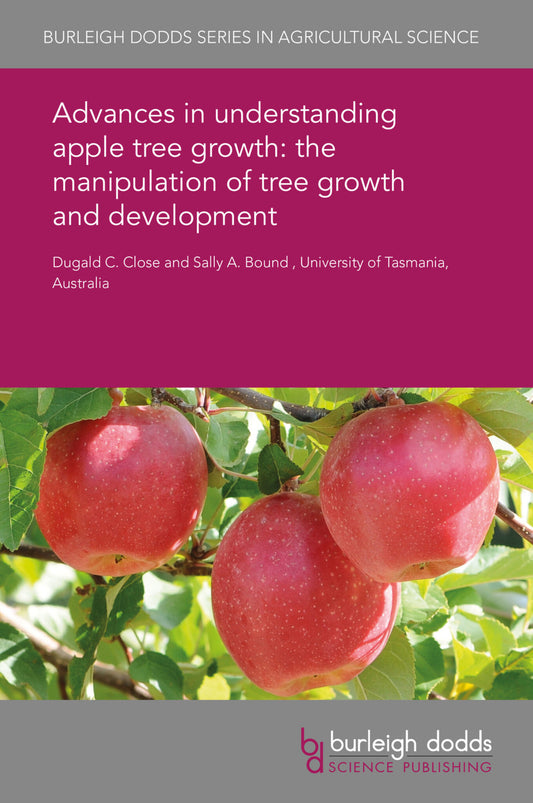

Advances in understanding apple tree growth: the manipulation of tree growth and development
Recent research and development has investigated the factors influencing apple tree growth, with the ultimate aim of helping apple growers provide the market with fruit which is consistent in quality and which exhibits the features that consumers value, such as firmness, juiciness, colour and app...
Read MoreRegular price £25.00Sale price £25.00 Regular price £25.00Unit price per -


Advances in understanding flowering and pollination in apple trees
Fruit production of apples is a two-year process, beginning with the transition of a bud from vegetative to a floral state during the summer. The bud differentiates, overwinters and emerges as a flower the following spring. Flowers are then pollinated, fertilized and the fruit grows first by cell...
Read MoreRegular price £25.00Sale price £25.00 Regular price £25.00Unit price per -


Traceability in the beef supply chain
Traceability, or rapid access to knowledge of the history, treatment and location of cattle and beef products through supply chains, is of paramount importance to food safety investigations, corrective actions and product recalls. This chapter defines traceability as applied to beef before descri...
Read MoreRegular price £25.00Sale price £25.00 Regular price £25.00Unit price per -


Maintaining the safety and quality of beef carcass meat
Contamination of animal carcasses during slaughtering procedures is undesirable, but unavoidable in the conversion of live animals to meat for consumption. Internal muscle tissues are essentially sterile, and most initial contamination of red meat carcasses is contributed by the hide during remov...
Read MoreRegular price £25.00Sale price £25.00 Regular price £25.00Unit price per -


Beef carcass inspection systems
This chapter provides an overview of the purposes and importance of meat inspection programmes in addressing hazards to both human and animal health. Subsequent sections cover the design, implementation and results of ante- and post-mortem inspection, and provide a review of some important proced...
Read MoreRegular price £25.00Sale price £25.00 Regular price £25.00Unit price per -


Nutritional and nutraceutical/functional properties of maize
Maize is the most widely grown crop, which is primarily used for animal feed and food. It is a staple food for a large segment of the world’s population, and it is also used as an industrial raw material. This chapter - reviews the nutritional quality of maize by considering various quality compo...
Read MoreRegular price £25.00Sale price £25.00 Regular price £25.00Unit price per -


Key challenges in maize breeding in sub-Saharan Africa
Development, release and commercialization of improved maize varieties has improved tremendously in the last two or three decades in sub-Saharan Africa (SSA). Nevertheless, major challenges remain; these are described in this chapter, and strategies by which they may be overcome are proposed. Wi...
Read MoreRegular price £25.00Sale price £25.00 Regular price £25.00Unit price per -


Ensuring the genetic diversity of maize and its wild relatives
Genebanks and ex situ collections are essential to conserving maize genetic diversity and enabling global access to those resources. The chapter provides a comprehensive and authoritative review of the key issues facing both in situ and ex situ collections. These issues include better conservatio...
Read MoreRegular price £25.00Sale price £25.00 Regular price £25.00Unit price per -
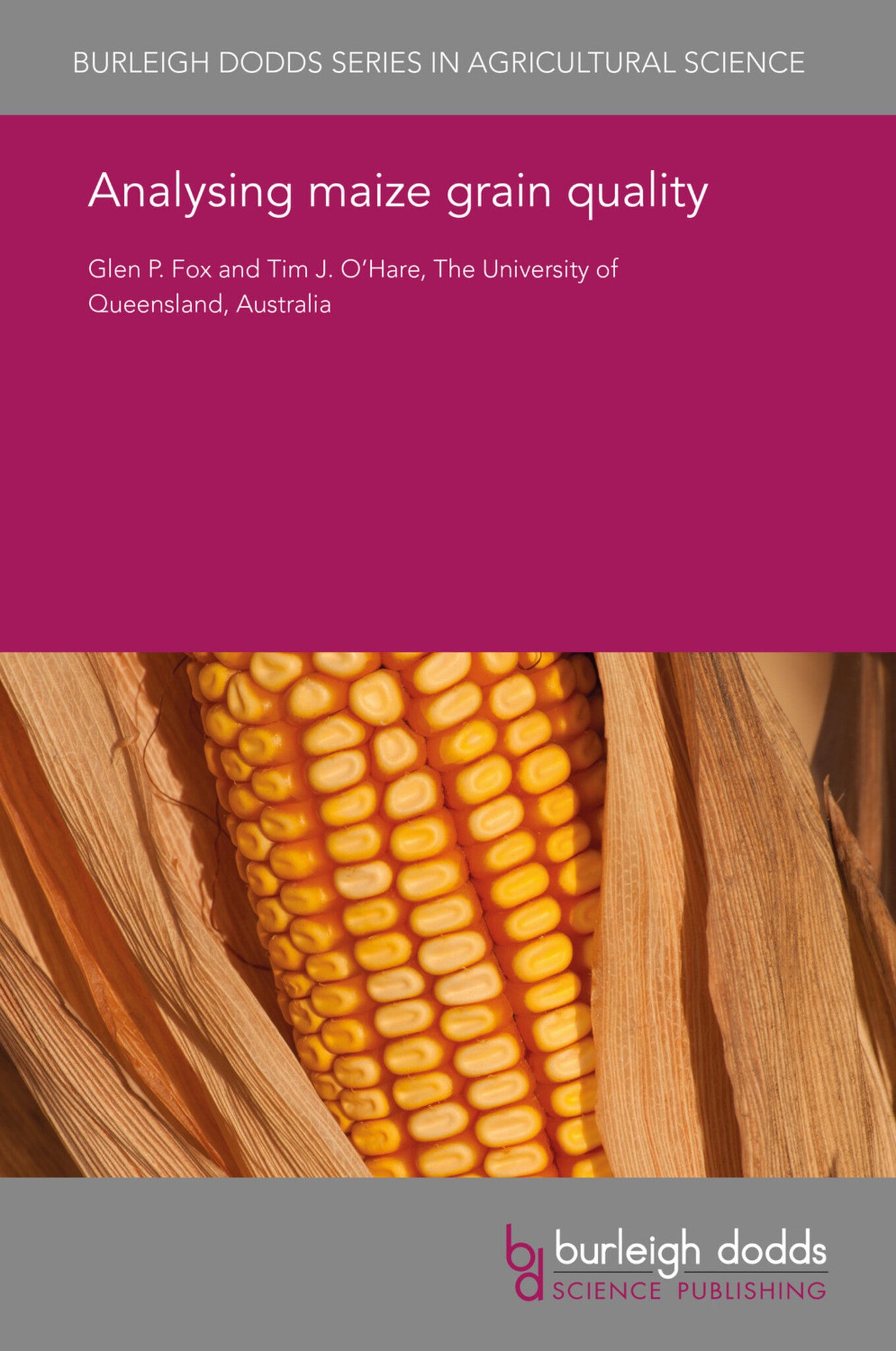
Analysing maize grain quality
Advances in the technologies and methods for analysing the quality characteristics of maize grains can help us determine the contribution of maize products to human health, as well as help in the development of maize cultivars with improved characteristics. This chapter reviews a range of methods...
Read MoreRegular price £25.00Sale price £25.00 Regular price £25.00Unit price per -


Assessing and improving the nutritional quality of maize
Conventional marker-assisted and GM breeding contribute to the production of new maize varieties to compete in the complex global agricultural marketplace. Breeders aim to improve quality and yield, create varieties that are suited to particular agricultural practices and raise the nutritional va...
Read MoreRegular price £25.00Sale price £25.00 Regular price £25.00Unit price per -


Advances in cold-tolerant maize varieties
Maize, a thermophilic plant species, originates from subtropical highlands. Maize cultivation, however, has spread to temperate regions of the world that experience low temperatures during the early development of the plants. Maize genotypes that are cultivated in cooler climates need to have a s...
Read MoreRegular price £25.00Sale price £25.00 Regular price £25.00Unit price per -


Detecting and preventing contamination of dairy cattle feed
Dairy feed has direct and indirect impacts on the safety of milk and milk products; feed also has implications for animal health and welfare, and the profitability of the dairy sector. This chapter starts with a brief outline of the role of feed in dairy cattle diets, emphasizing the common hazar...
Read MoreRegular price £25.00Sale price £25.00 Regular price £25.00Unit price per -


Setting environmental targets for dairy farming
Environmental targets for dairy farming are necessary to help ensure that milk is produced in a sustainable way. However, setting such targets is not an easy task due to the variety of both dairy farming systems and methods for assessing environmental impacts. The IDF and FAO have undertaken impo...
Read MoreRegular price £25.00Sale price £25.00 Regular price £25.00Unit price per -
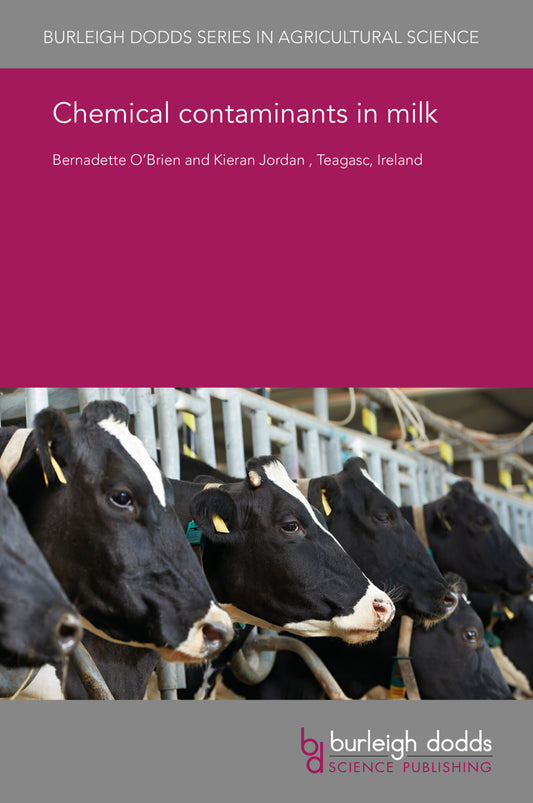
Chemical contaminants in milk
Developments in analytical technology now allow the identification of some contaminants in milk that were not previously considered. It is critically important that mechanisms are devised to eliminate or reduce these contaminants below the maximum limit allowed by food safety regulations. Thus, t...
Read MoreRegular price £25.00Sale price £25.00 Regular price £25.00Unit price per -


Improved energy and water management to minimize the environmental impact of dairy farming
As demand for animal products such as milk increases, the livestock sector places increasing demands on already scarce resources such as land, water and fossil fuels, while also contributing to environmental problems such as climate change. In this chapter, we consider how dairy farms can manage ...
Read MoreRegular price £25.00Sale price £25.00 Regular price £25.00Unit price per -


Organic dairy farming in developing countries
In countries in the global south, often referred to as ‘developing countries’, organic dairy farming faces some challenges, but also has huge potential. Even without having a premium price for organic dairy products, organic management of smallholder farms can often be beneficial in terms of low ...
Read MoreRegular price £25.00Sale price £25.00 Regular price £25.00Unit price per -
Mastitis, milk quality and yield
Mastitis is one of the most economically important diseases in dairy production and it is defined as an inflammation of the mammary gland. This chapter examines the impact of clinical and subclinical mastitis in cows on milk quality, and provides a detailed account of indicators of mastitis. In a...
Read MoreRegular price £25.00Sale price £25.00 Regular price £25.00Unit price per -


Improving smallholder dairy farming in Africa
An estimated 80% of the milk produced in Africa is from smallholder farming systems where producers rear less than 10 head of cattle on land sizes that vary from 0.2 to 4 hectares. Smallholder farmers rear a wide variety of genotypes in a variety of mixed crop and livestock systems, reflecting th...
Read MoreRegular price £25.00Sale price £25.00 Regular price £25.00Unit price per -


‘Towards’ sustainability of dairy farming: an overview
There are many challenges to be faced in making dairy farming sustainable for feeding 9–10 billion people by 2050. This chapter defines what sustainability may mean for the dairy industry and assesses the current sustainability of dairy farming today, before going on to consider visions for a sus...
Read MoreRegular price £25.00Sale price £25.00 Regular price £25.00Unit price per -


Organic dairy farming: towards sustainability
Ruminants play a key role in organic systems, due to their ability to use grassland resources, legumes from crop rotations and crop residues, and to supply manure for the soil. Grassland-based milk production therefore is likely to be the most sustainable system for dairy cattle in organic agricu...
Read MoreRegular price £25.00Sale price £25.00 Regular price £25.00Unit price per -


Managing sustainable food safety on dairy farms
Within the dairy food chain, the production of milk is the first phase in a series of steps resulting in dairy food products ready to be consumed. At farm level, it is critical to ensure that good management practices minimize the risk of contamination in order to reach a level of risk acceptable...
Read MoreRegular price £25.00Sale price £25.00 Regular price £25.00Unit price per -


Advances in molecular breeding techniques for rice
For the last two decades, marker-assisted selection has reshaped breeding programmes and facilitated gains from selection. Recent developments in genomic technologies, including the advent of high-throughput DNA sequencing technologies and cost-effective genotyping platforms, are effecting shifts...
Read MoreRegular price £25.00Sale price £25.00 Regular price £25.00Unit price per -


Improving photosynthesis in rice: from small steps to giant leaps
Current strategies for boosting rice productivity encounter diminishing returns as rice crops approach yield ceilings. This chapter describes how improvement of photosynthetic efficiency is needed to boost yield ceilings. This can be in the context of C3 photosynthesis, overcoming single limitati...
Read MoreRegular price £25.00Sale price £25.00 Regular price £25.00Unit price per

We're sorry. An error has occurred
Please cancel or retry.


