


-
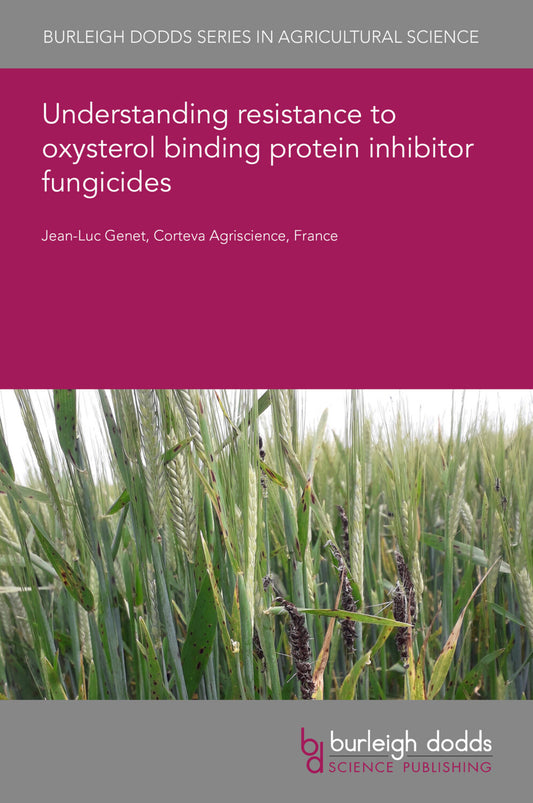

Understanding resistance to oxysterol binding protein inhibitor fungicides
Downy mildews and late blight are important crop diseases caused by oomycetes which often require the use of fungicides with a cost of control estimated at $2 billion annually. In recent years, the crop protection industry has been rather successful in discovering and introducing plant protection...
Read MoreRegular price £25.00Sale price £25.00 Regular price £25.00Unit price per -
Instant insights: septoria tritici blotch in cereals
This collection features four peer-reviewed reviews of septoria tritici blotch in cereals.
Regular price £37.99Sale price £37.99 Regular price £37.99Unit price per -
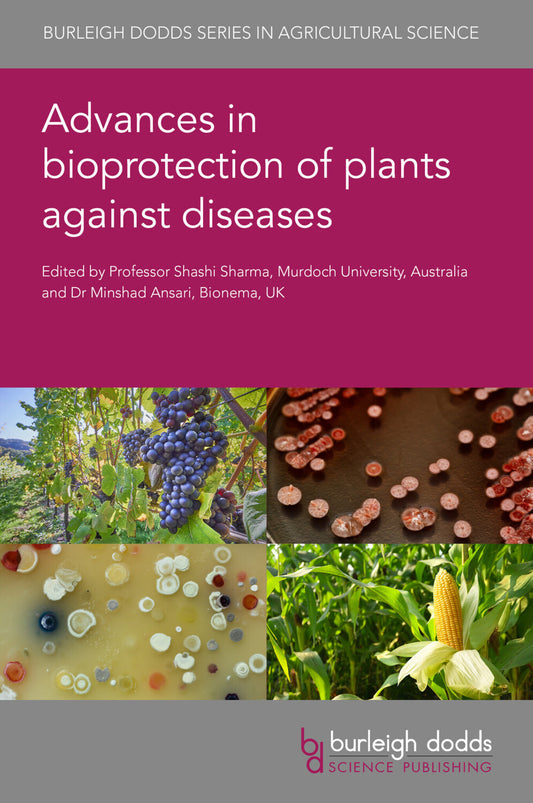
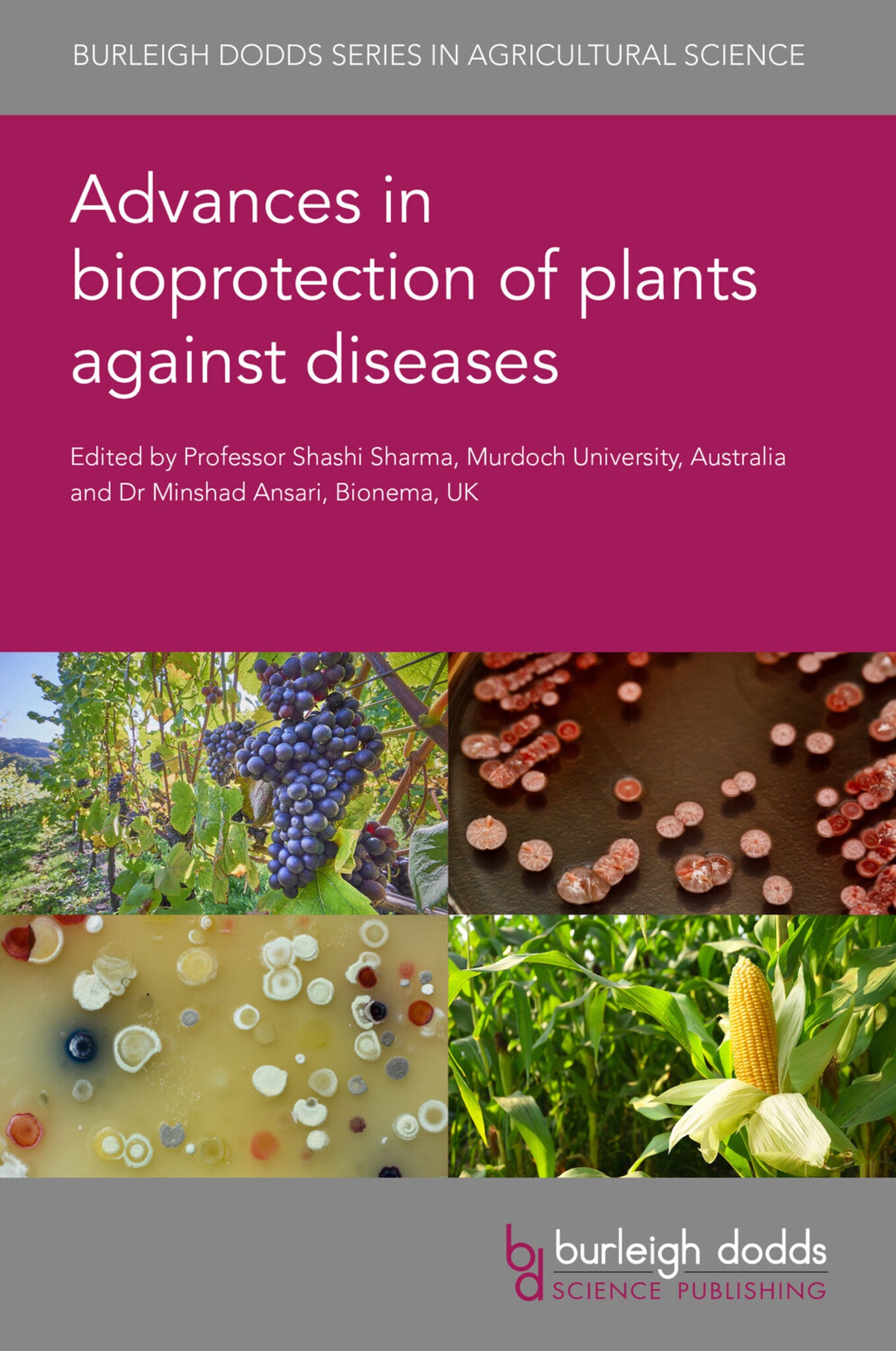
Advances in bioprotection of plants against diseases
This book reviews some of the latest trends in the bioprotectants sector, looking at advances in techniques, the development of new and emerging biocontrol agents, as well as the growing range of applications.
Regular price £145.00Sale price £145.00 Regular price £145.00Unit price per -
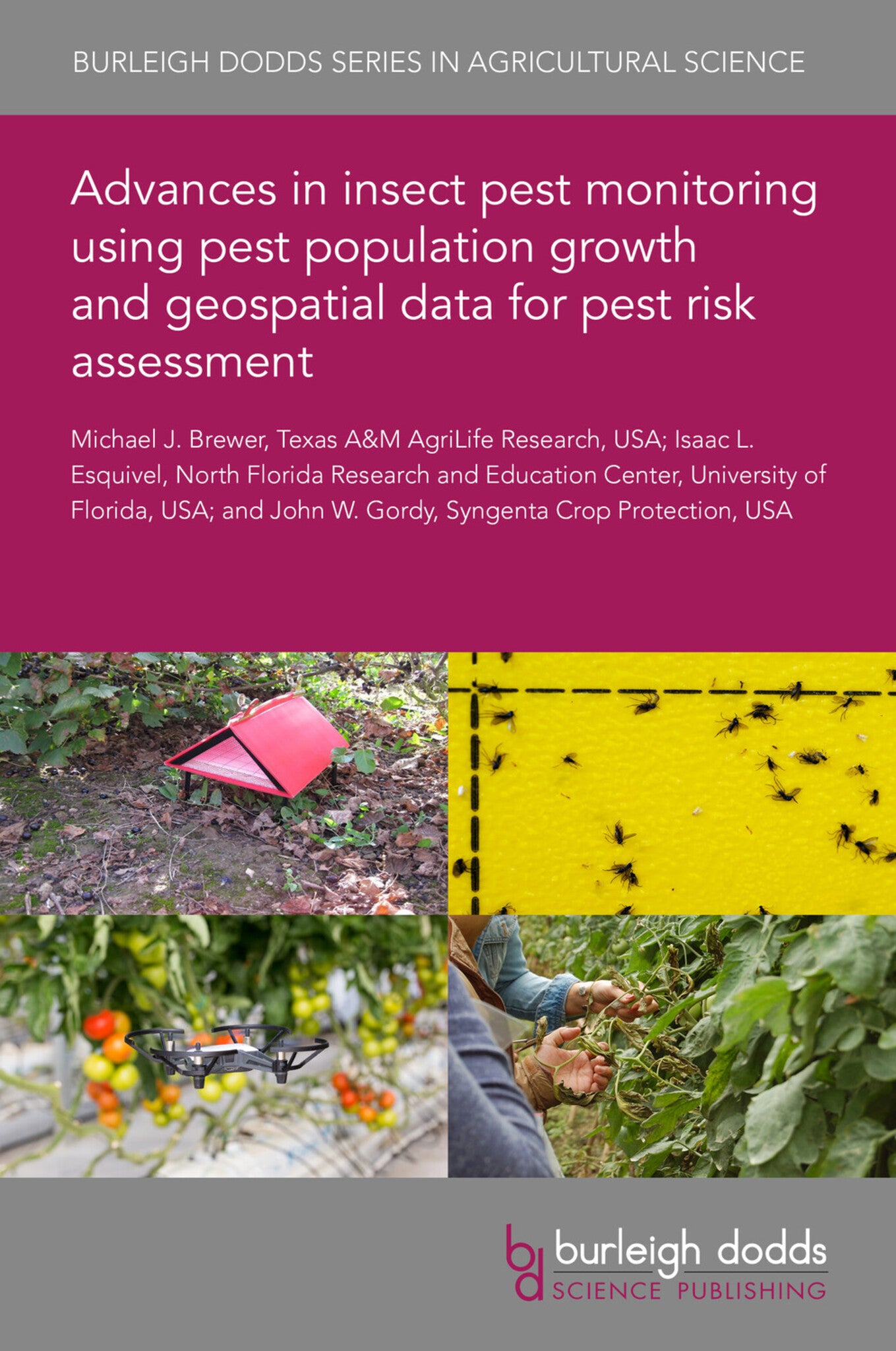
Advances in insect pest monitoring using pest population growth and geospatial data for pest risk assessment
Insect pest monitoring serves to evaluate pest severity over time and space. Special attention is given to acquiring and estimating pest population levels and affiliated variables that may influence trajectory of pest severity within and across crops and other habitat. The chapter reviews approac...
Read MoreRegular price £25.00Sale price £25.00 Regular price £25.00Unit price per -
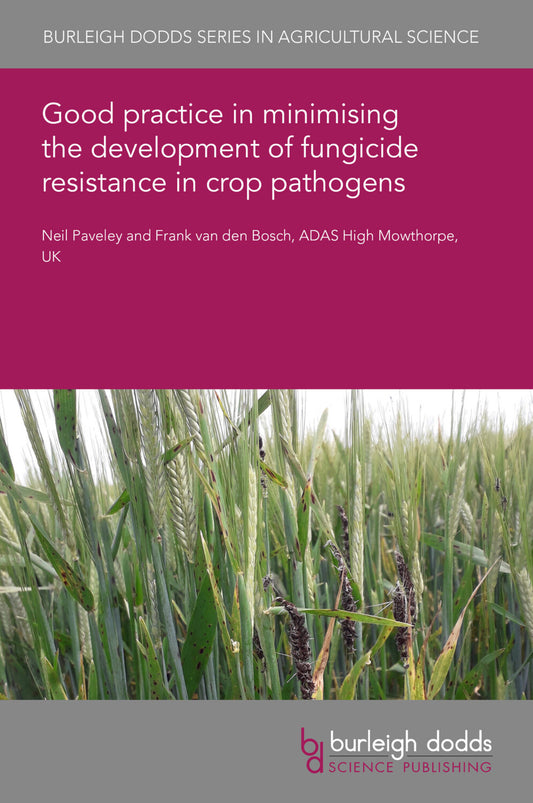
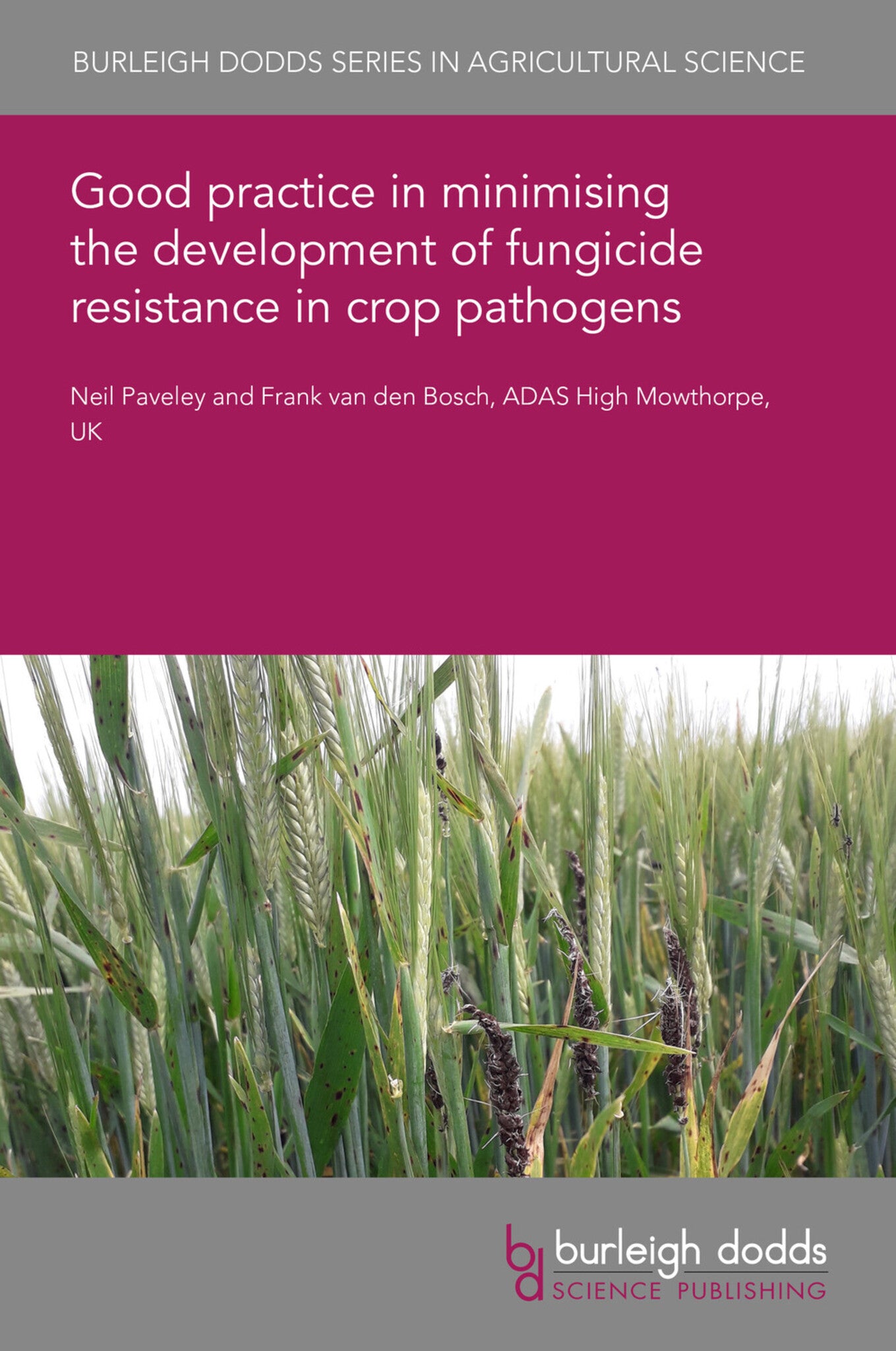
Good practice in minimising the development of fungicide resistance in crop pathogens
Good practice requires consistent resistance management messages, based on sound evidence, communicated to farmers and advisers by key stakeholders. Understanding of resistance has been revolutionised by a combination of new techniques for genotyping, phenotyping, experimentation and modelling. Y...
Read MoreRegular price £25.00Sale price £25.00 Regular price £25.00Unit price per -
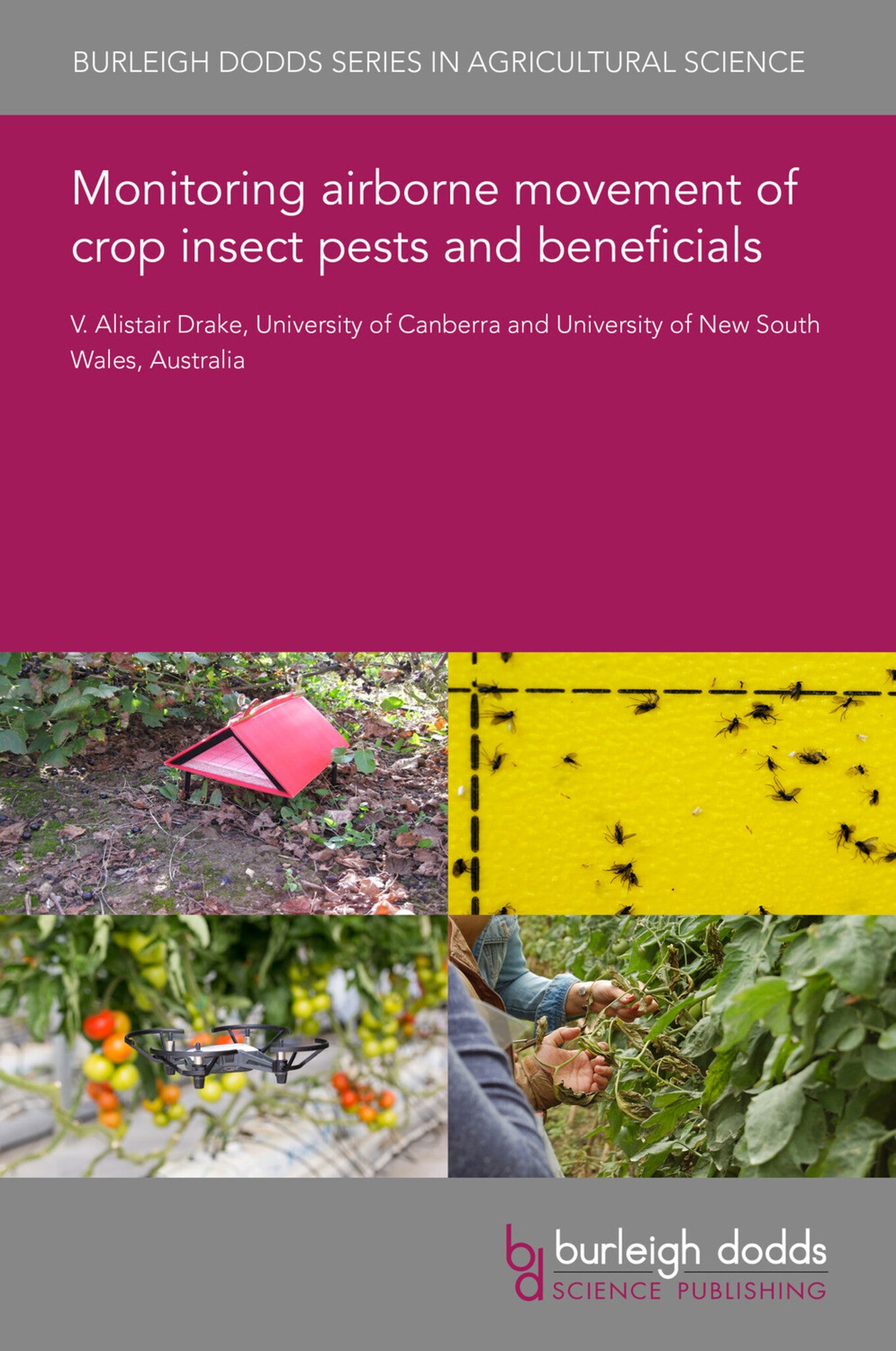
Monitoring airborne movement of crop insect pests and beneficials
This chapter explores monitoring airborne movement of crop insect pests and beneficials. The chapter begins by highlighting the importance of trapping methods when it comes to monitoring specimens. This is then followed by a review of the visual observation of insects and a discussion of various ...
Read MoreRegular price £25.00Sale price £25.00 Regular price £25.00Unit price per -
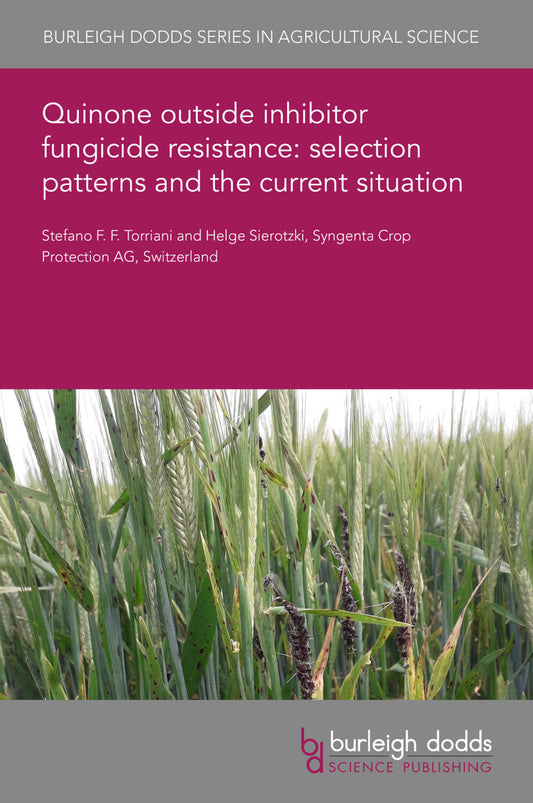
Quinone outside inhibitor fungicide resistance: selection patterns and the current situation
This chapter focuses on Qol fungicide resistance, specifically drawing attention to selection patterns and the current situation of Qol resistance. The chapter begins by describing the history of resistance and resistance mechanisms, then goes on to provide three case studies to describe differen...
Read MoreRegular price £25.00Sale price £25.00 Regular price £25.00Unit price per -
Advances in pest risk assessment techniques focusing on invertebrate pests of european outdoor crops
Pest Risk Assessments (PRAs) provide a simple evidence-based evaluation of risk posed by one or more pests to crops and can support farmers and farm advisors in developing integrated pest management strategies. By providing a structured approach to estimating the likelihood of pests infesting cro...
Read MoreRegular price £25.00Sale price £25.00 Regular price £25.00Unit price per -
Fungicide resistance risk assessment
New fungicide active substances are at risk of losing efficacy due to the development of resistance in target pathogen populations. In the European Union, an assessment of resistance risk is required by regulatory authorities for the approval of each fungicide product This chapter will review the...
Read MoreRegular price £25.00Sale price £25.00 Regular price £25.00Unit price per -
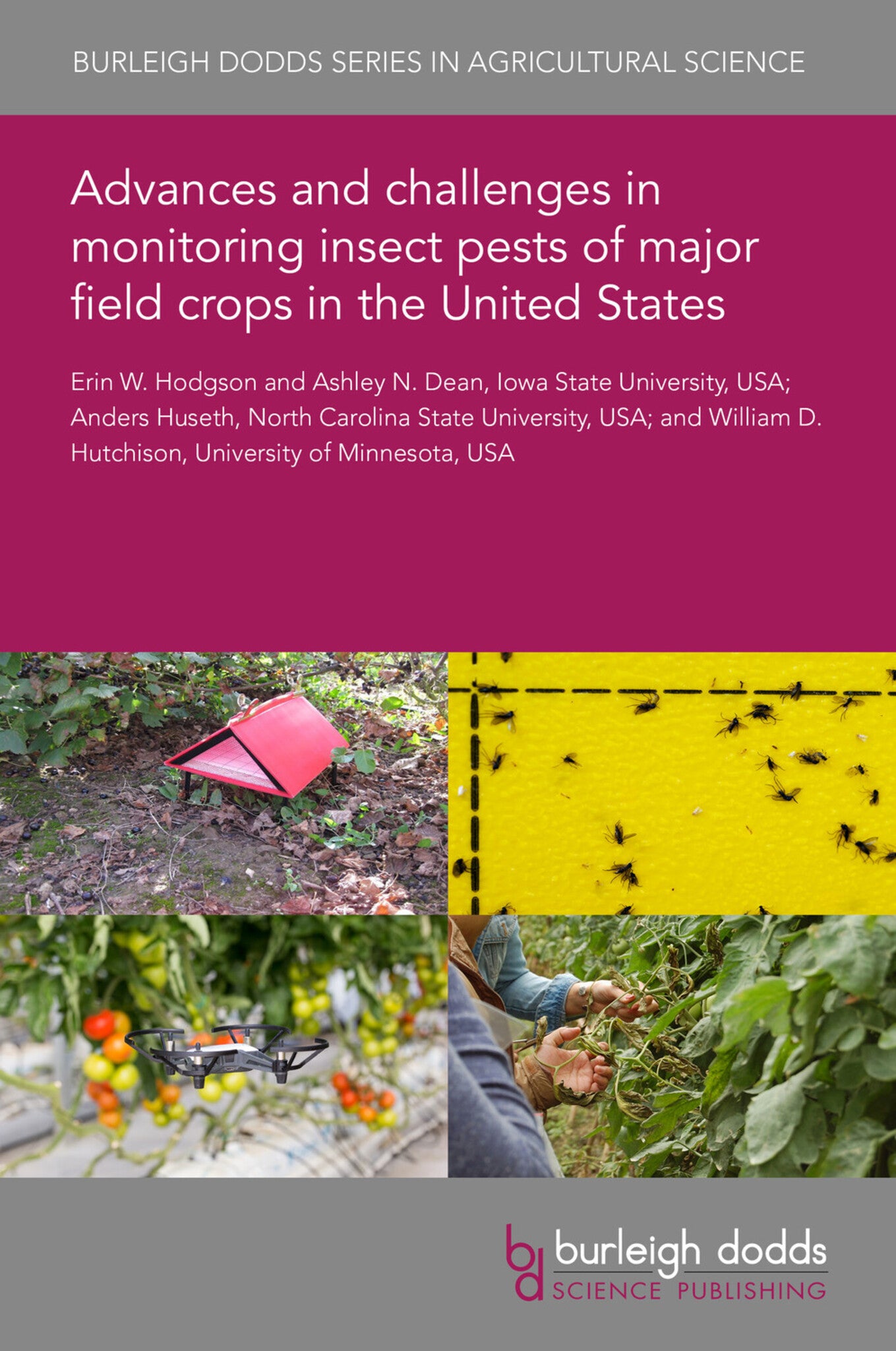
Advances and challenges in monitoring insect pests of major field crops in the united states
This chapter will review current insect pest monitoring systems for native and invasive pest species of corn, soybean, and cotton in the U.S. We present case studies of European corn borer, corn earworm, western bean cutworm, and corn rootworm as pests of corn; soybean aphid, stink bugs, and Japa...
Read MoreRegular price £25.00Sale price £25.00 Regular price £25.00Unit price per -
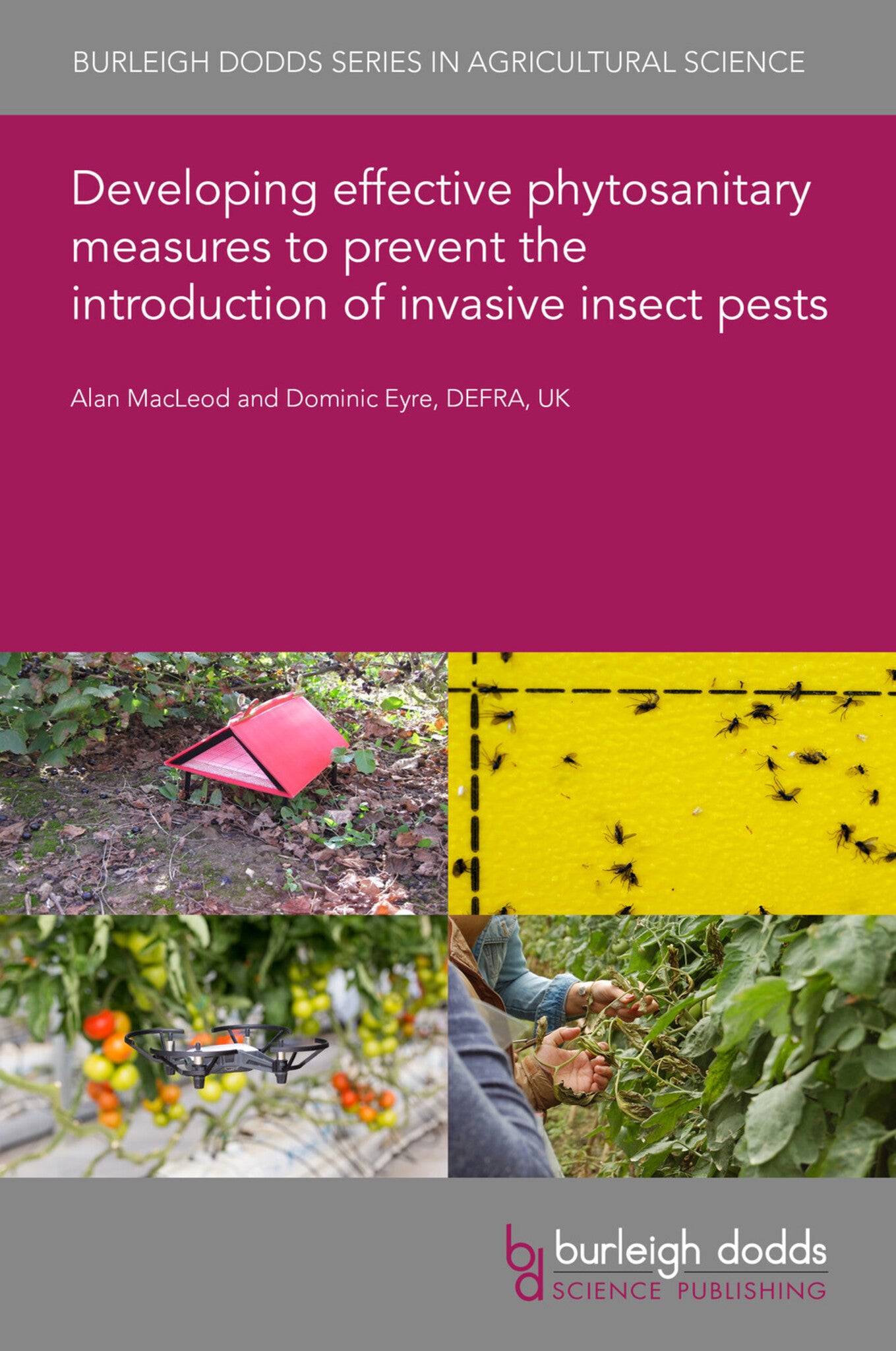
Developing effective phytosanitary measures to prevent the introduction of invasive insect pests
This chapter aims to provide a definition of phytosanitary measures, why they are needed, how standards for phytosanitary measures developed through international cooperation and how they relate to international agreements. It aims to explain how policy decision making and the management of invas...
Read MoreRegular price £25.00Sale price £25.00 Regular price £25.00Unit price per -
Key challenges in developing new fungicides
The use of fungicides to provide effective economic control of plant diseases has been an integral component of crop production systems since their widespread introduction from the 1940s onwards. Despite industry having been very successful in discovering and bringing new fungicides to the market...
Read MoreRegular price £25.00Sale price £25.00 Regular price £25.00Unit price per -
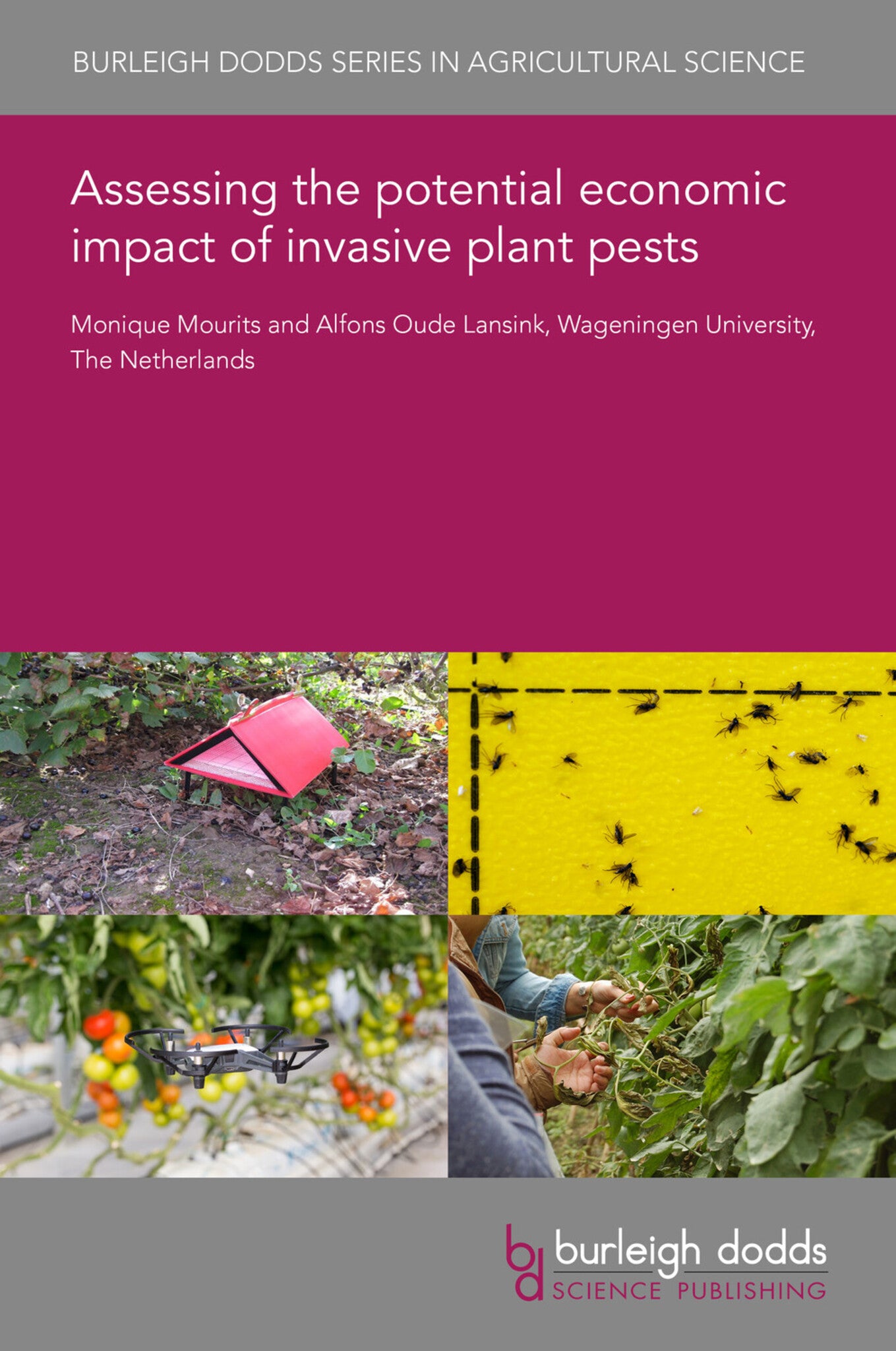
Assessing the potential economic impact of invasive plant pests
Economic impact assessments are performed as part of a pest risk analysis to determine whether the introduction of a plant pest will result in unacceptable economic consequences. This often triggers phytosanitary measures to reduce the economic risk to an acceptable level. Appropriate techniques ...
Read MoreRegular price £25.00Sale price £25.00 Regular price £25.00Unit price per -
Instant insights: integrated weed management in cereal cultivation
This collection features five peer-reviewed literature reviews on integrated weed management in cereal cultivation.
Regular price £37.99Sale price £37.99 Regular price £0.00Unit price per -
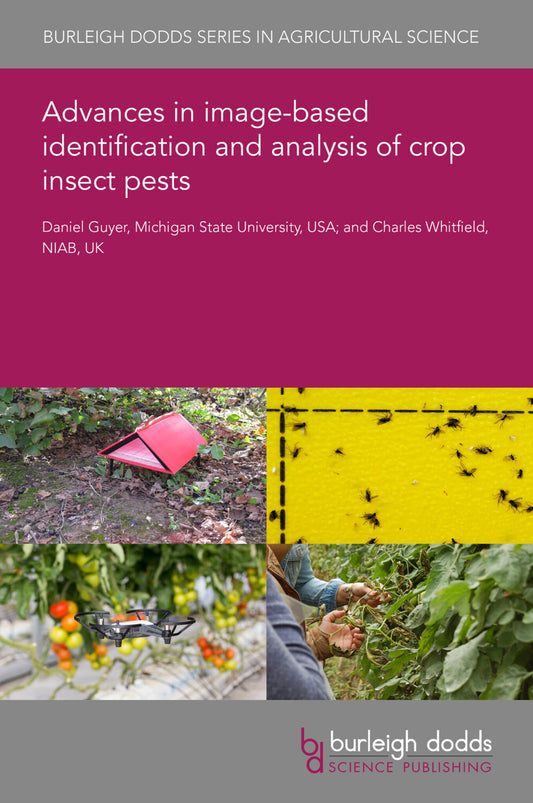
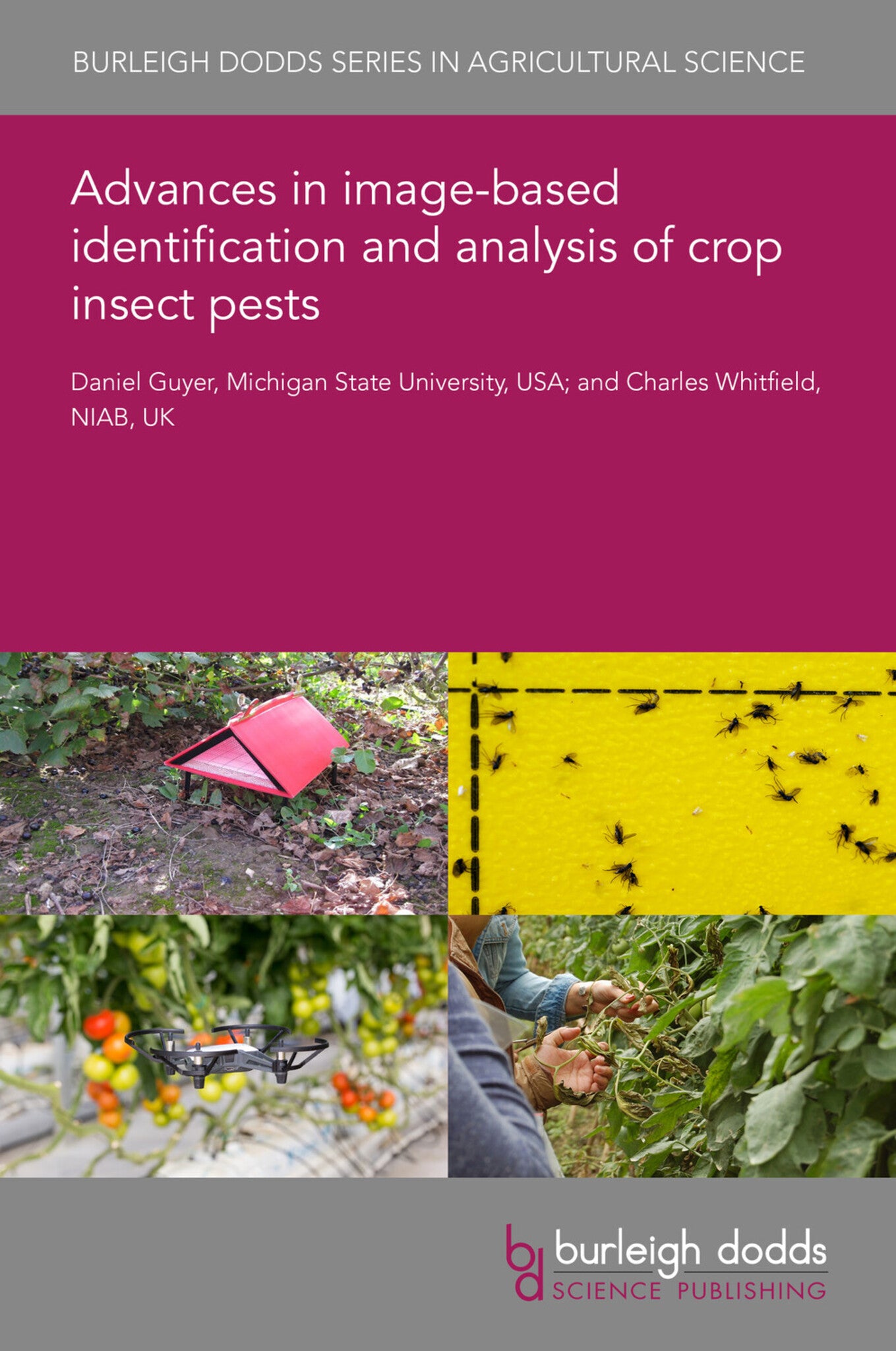
Advances in image-based identification and analysis of crop insect pests
This chapter reviews progress in developing automated image-based systems for identifying crop insect pests. It identifies the challenges in distinguishing insect pests in field conditions and ways they can be addressed. The chapter outlines key steps in image-based identification (image capture,...
Read MoreRegular price £25.00Sale price £25.00 Regular price £25.00Unit price per -
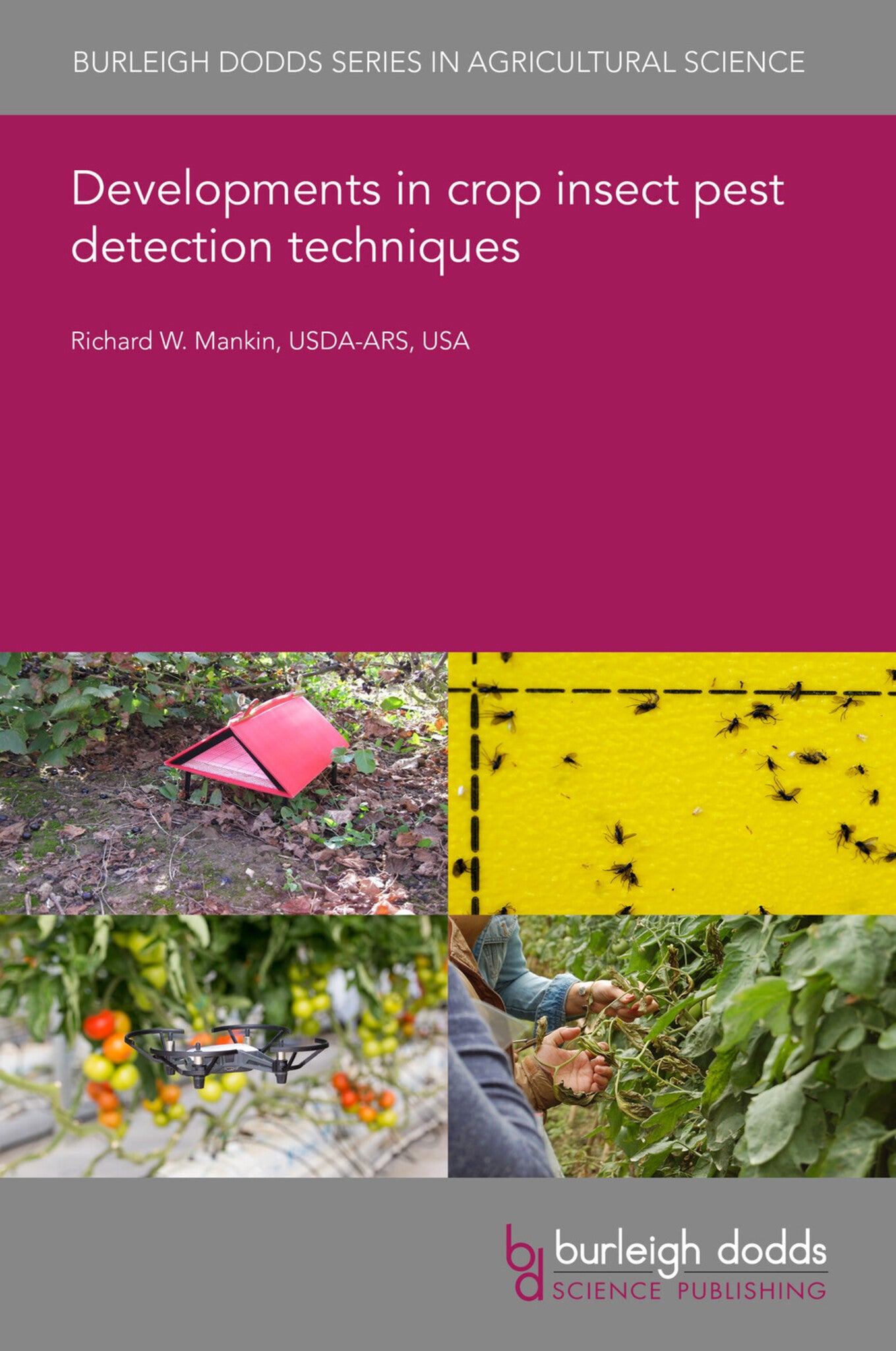
Developments in crop insect pest detection techniques
Early detection of crop insect pests is indispensable to farmers and managers. Researchers are increasing exploration of technology that improves capability to sense insect presence and maximize the timeliness, accuracy, and interpretability of the sensed data for targeted management. Traditional...
Read MoreRegular price £25.00Sale price £25.00 Regular price £25.00Unit price per -
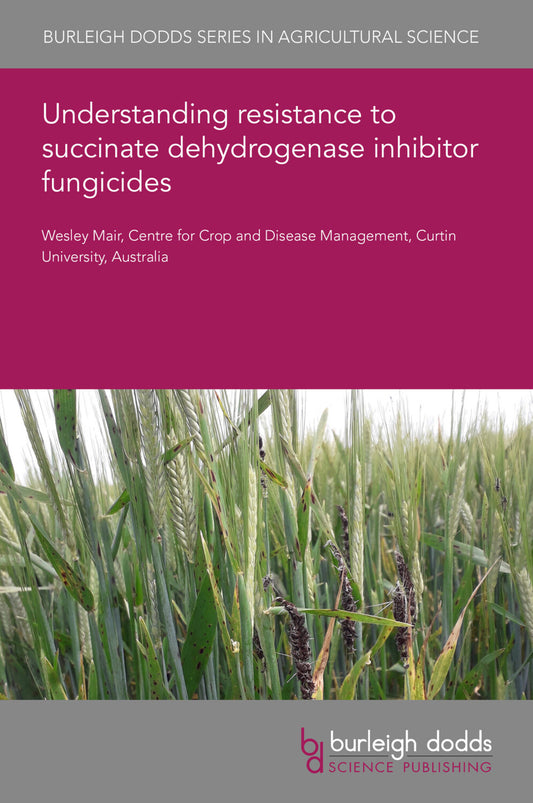
Understanding resistance to succinate dehydrogenase inhibitor fungicides
The Succinate Dehydrogenase Inhibitor (SDHI, Carboxamide, Group 7) compounds represent the fastest growing fungicide class. The spectrum of activity of SDHIs encompasses Ascomycete, Basidiomycete, and Deuteromycete pathogens on a wide variety of hosts. SDHIs are a structurally diverse class, curr...
Read MoreRegular price £25.00Sale price £25.00 Regular price £25.00Unit price per -
Crop disease control efficacy and selection for resistance: two sides of the same coin?
Fungicides are used to control plant disease, so any resistance management strategy of practical relevance needs to provide effective disease control. In general, a more intense treatment programme, with higher dosages and/or more applications will exert a higher selection pressure to the pathoge...
Read MoreRegular price £25.00Sale price £25.00 Regular price £25.00Unit price per -
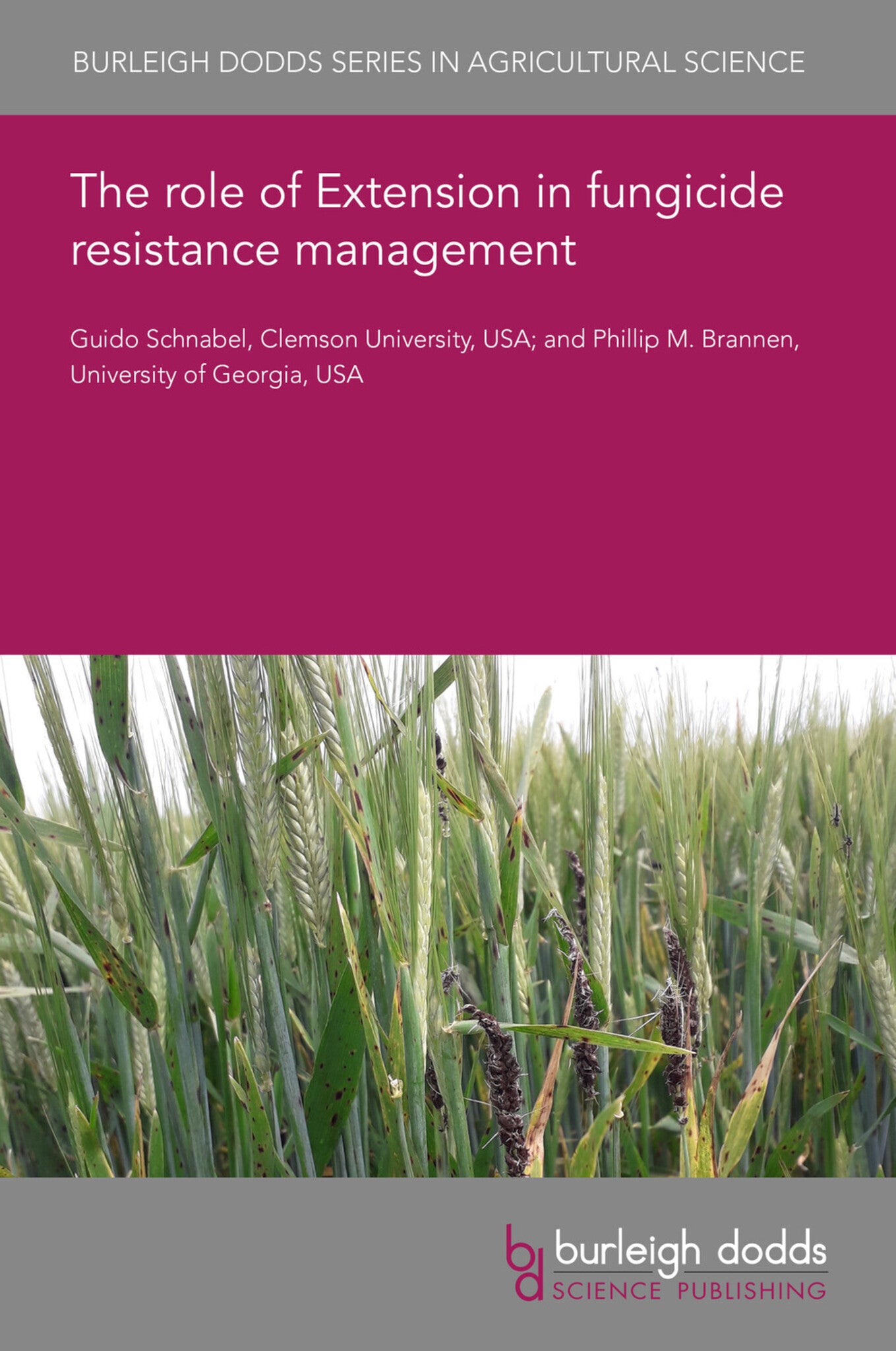
The role of extension in fungicide resistance management
Extension specialists and agents have played an integral part in proactively relaying resistance management information to fruit producers – generally through face-to-face meetings, farm visits, phone calls, newsletter articles and a myriad of traditional venues. This chapter features three case ...
Read MoreRegular price £25.00Sale price £25.00 Regular price £25.00Unit price per -
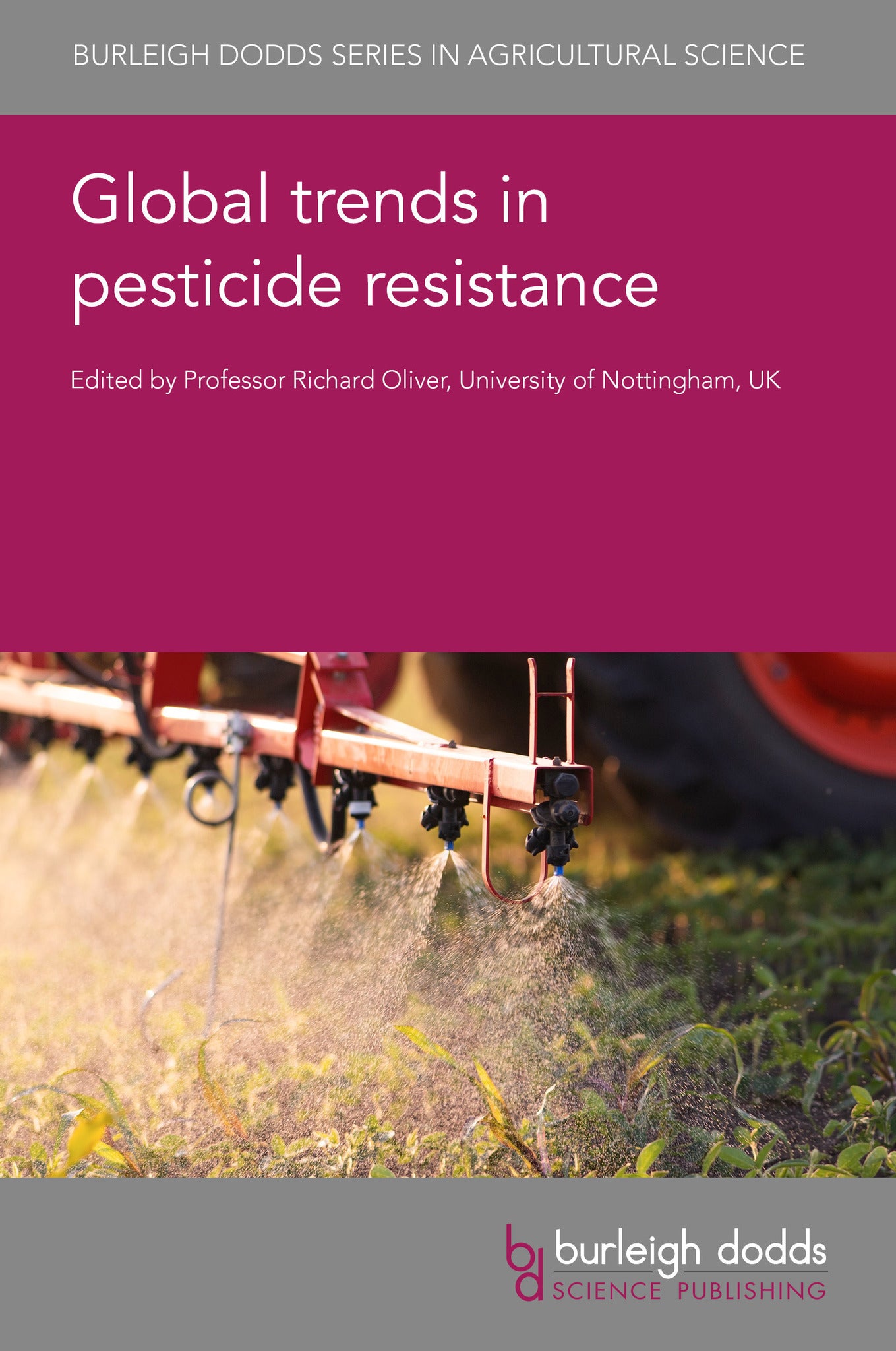
Global trends in pesticide resistance
Pesticide resistance remains a growing problem in the agricultural sector worldwide, with reports suggesting that more than 600 species of pests have developed some level of resistance to the key groups of pesticides, including fungicides, insecticides and herbicides. A greater research effort is...
Read MoreRegular price £175.00Sale price £175.00 Regular price £175.00Unit price per -
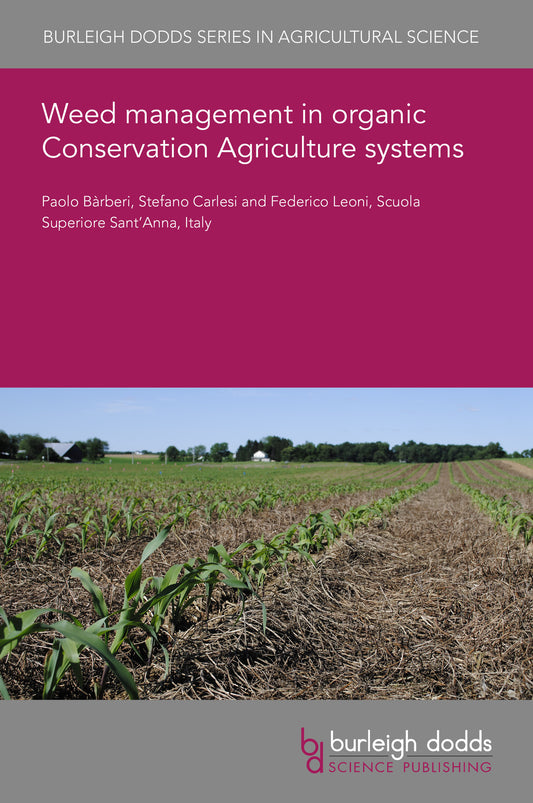
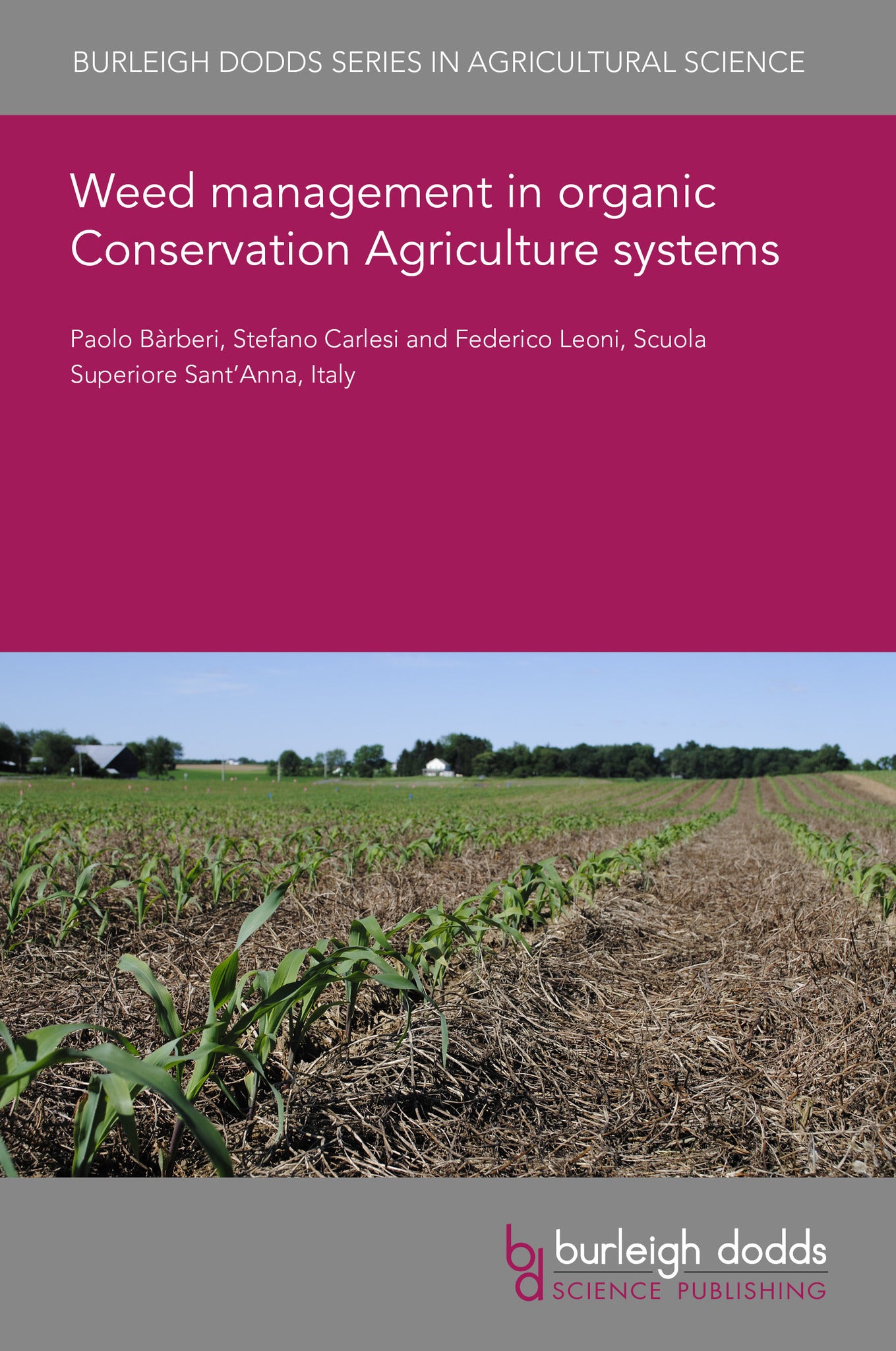
Weed management in organic conservation agriculture systems
Organic conservation agriculture can potentially contribute to meeting many urgent technical and environmental issues related to agricultural soil degradation; however, its uptake has been so far quite limited. After having shed some light on the similarities and differences between (organic) con...
Read MoreRegular price £25.00Sale price £25.00 Regular price £25.00Unit price per -
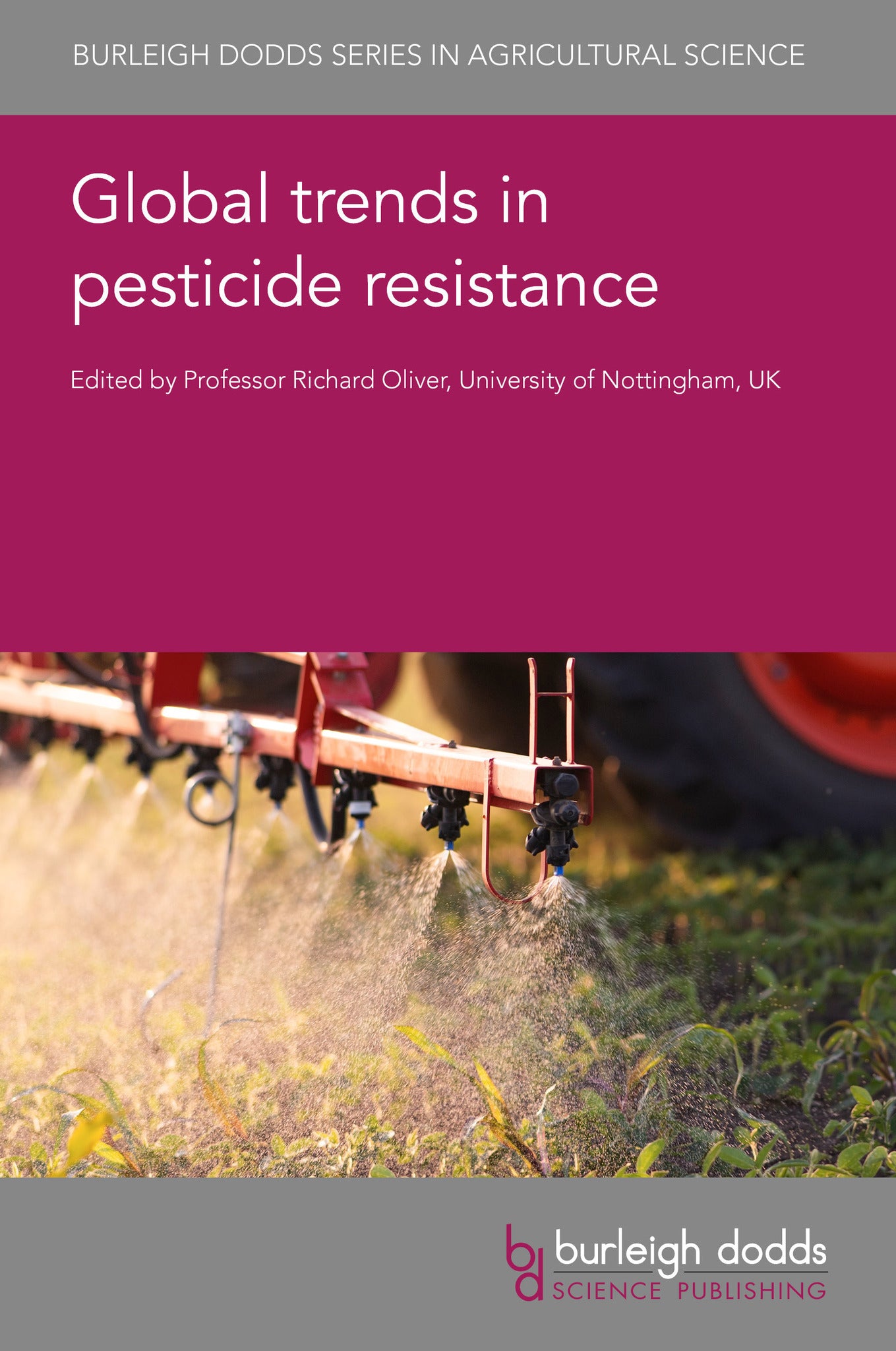
Global trends in pesticide resistance
This book provides a detailed overview of regional trends in the development of resistance to key groups of fungicides, insecticides and herbicides and their implications for future pesticide use.
Regular price £175.00Sale price £175.00 Regular price £175.00Unit price per -
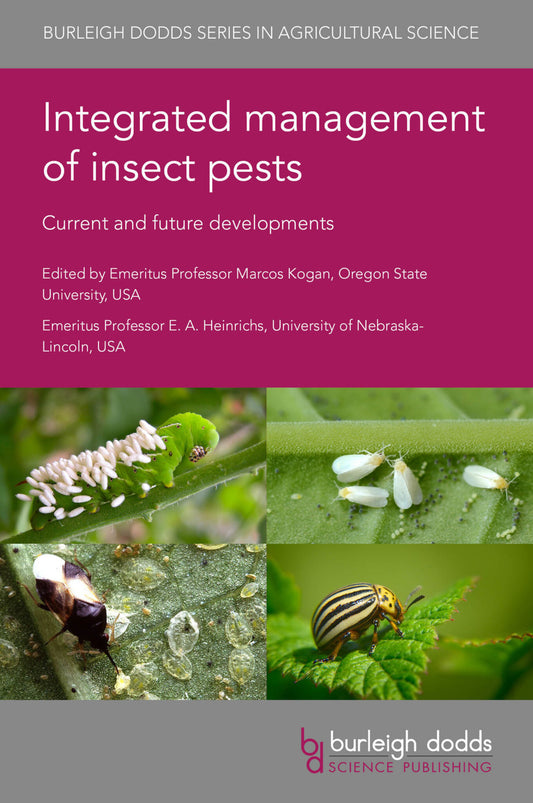
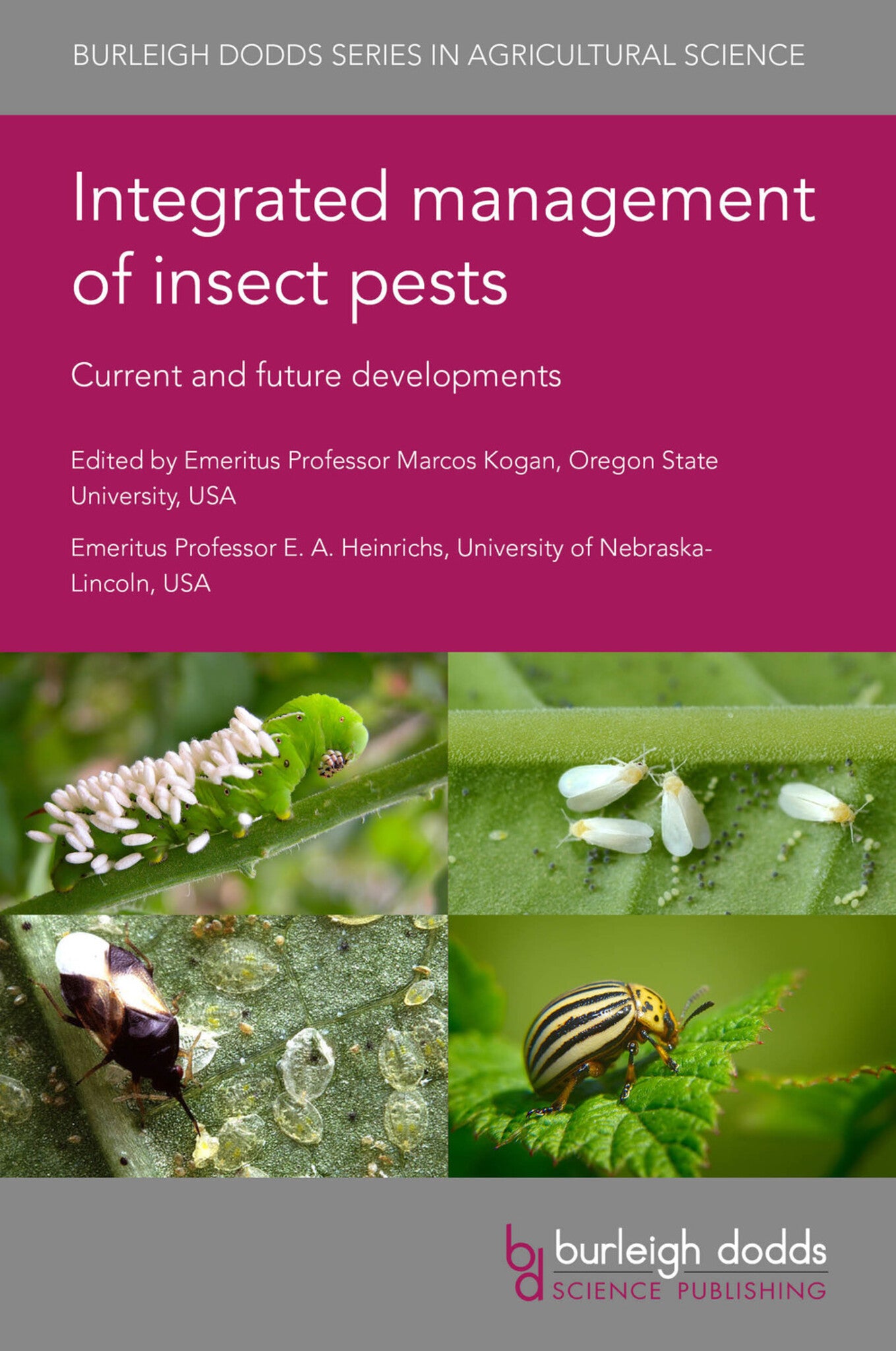
Integrated management of insect pests: current and future developments
This volume reviews current developments in integrated pest management (IPM), focussing on insect pests. It discusses advances in understanding species and landscape ecology on which IPM is founded, as well as advances in cultural, physical and biological methods of control.
Regular price £190.00Sale price £190.00 Regular price £190.00Unit price per -
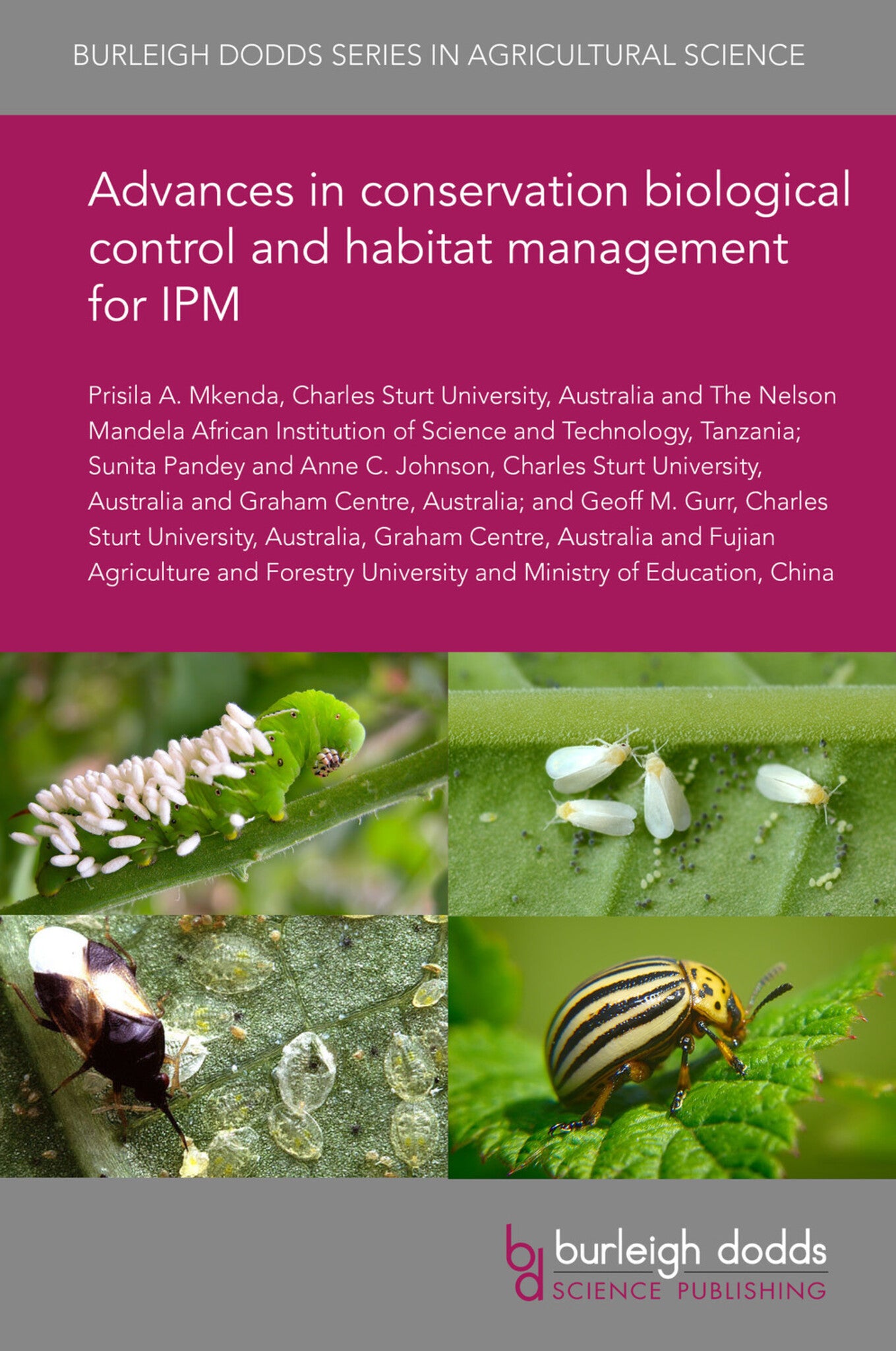
Advances in conservation biological control and habitat management for ipm
Conservation biological control and habitat management are key components of integrated pest management (IPM). These related approaches suppress pests by promoting natural enemy survival and impact and by exploiting direct, suppressive effects on pests from vegetation structure. During this centu...
Read MoreRegular price £25.00Sale price £25.00 Regular price £25.00Unit price per -
Ecological impacts of pesticides and their mitigation within ipm systems
Chemicals, frequently the main method of pest control in agriculture, have negative effects on natural enemies that also control pests. Mitigation of pesticide impacts depends on increasing the role of natural enemies, reducing chemical application while still controlling pests and maintaining yi...
Read MoreRegular price £25.00Sale price £25.00 Regular price £25.00Unit price per -
Advances in use of entomopathogenic nematodes in integrated pest management
Entomopathogenic nematodes in the genera Heterorhabditis and Steinernema are potent biological control agents that have been commercialized widely for control of economically important insect pests. This chapter describes the foraging and infection behavior of nematodes and the production technol...
Read MoreRegular price £25.00Sale price £25.00 Regular price £25.00Unit price per -
Integrated pest management of mites
Plant feeding mites are major pests of agricultural crops and ornamentals. They disrupt physiological processes, change the physical appearance of the plant, and transmit diseases to crops. This chapter takes a holistic approach to integrated mite management by reviewing the basics of mite taxono...
Read MoreRegular price £25.00Sale price £25.00 Regular price £25.00Unit price per -
Monitoring and minimizing health risks related to pesticides
Pesticide poisoning is a cause of many human deaths, either via deliberate self-poisoning or via occupational exposure. This chapter looks at monitoring exposure to pesticides and how to minimize human health risks related to their use/exposure. Following an introduction, a section on data-collec...
Read MoreRegular price £25.00Sale price £25.00 Regular price £25.00Unit price per -
Economic assessment of integrated pest management (ipm) implementation
Besides reducing health and the ecological risks of pest control, integrated pest management (IPM) seeks to increase farm income. Economic constraints also act as barriers to adoption of IPM practices. An understanding of how IPM affects the farm “bottom line” is crucial to efforts to encourage I...
Read MoreRegular price £25.00Sale price £25.00 Regular price £25.00Unit price per -
Advances in classical biological control to support ipm of perennial agricultural crops
Scientific advances in classical biological control and supporting disciplines have provided ‘tools’ that could enable permanent suppression of some seemingly intractable invasive pest problems that limit the effectiveness of Integrated Pest Management (IPM) programmes in perennial crops. This ch...
Read MoreRegular price £25.00Sale price £25.00 Regular price £25.00Unit price per -
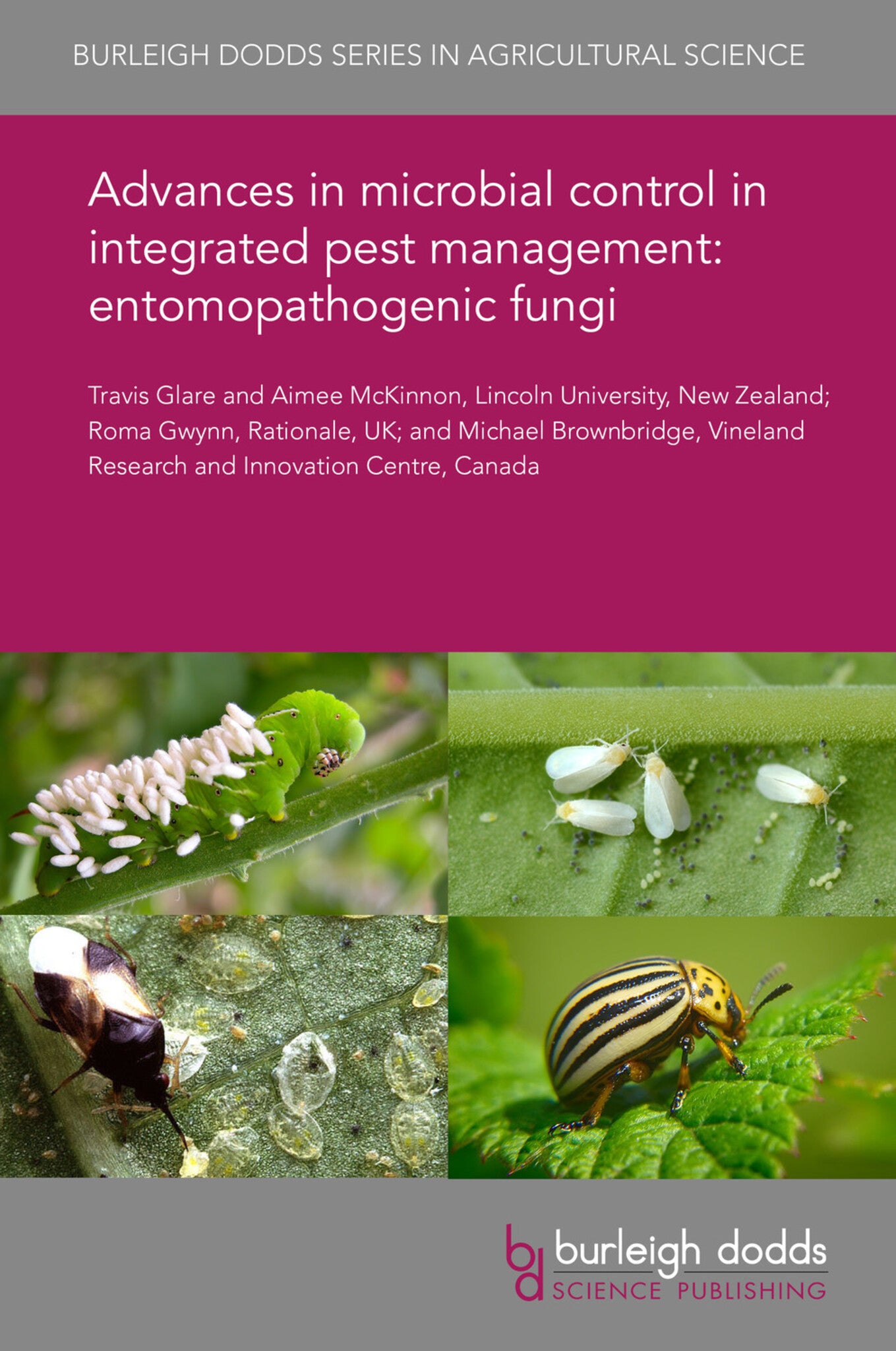
Advances in microbial control in integrated pest management: entomopathogenic fungi
The use of entomopathogenic fungi to control insect pests has been expanding in recent years, with improvements in formulation and more extensive commercialization. However, there are still limitations on their effectiveness in some situations. Combining entomopathogenic fungi with other control ...
Read MoreRegular price £25.00Sale price £25.00 Regular price £25.00Unit price per -
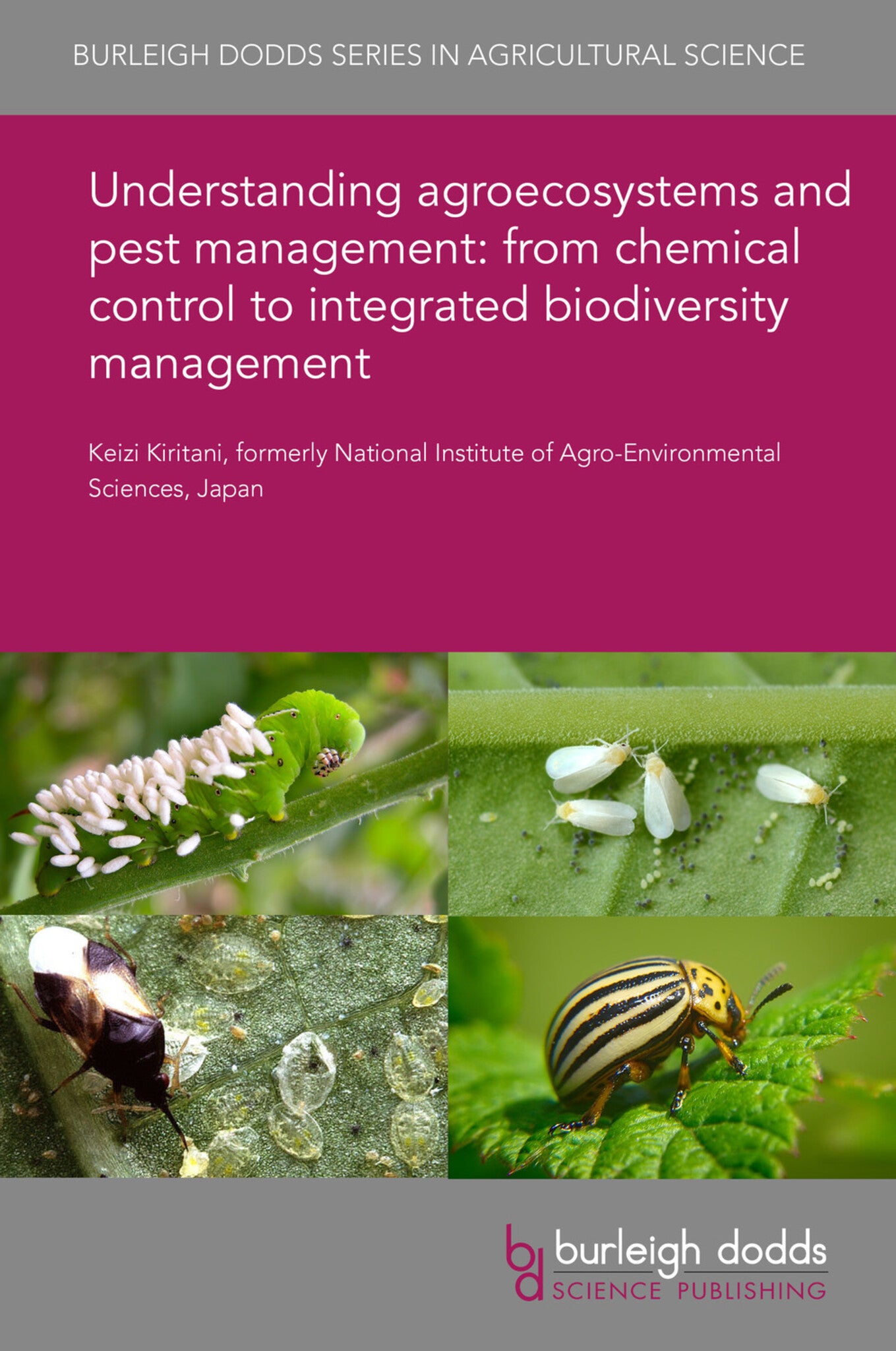
Understanding agroecosystems and pest management: from chemical control to integrated biodiversity management
Agroecology analyzes the different components that make up an ecosystem such as soils, climate, plants and animals, and their interactions within agricultural landscapes. Bringing together a wide range of disciplines, agroecology encompasses different scales from the individual field through to f...
Read MoreRegular price £25.00Sale price £25.00 Regular price £0.00Unit price per -
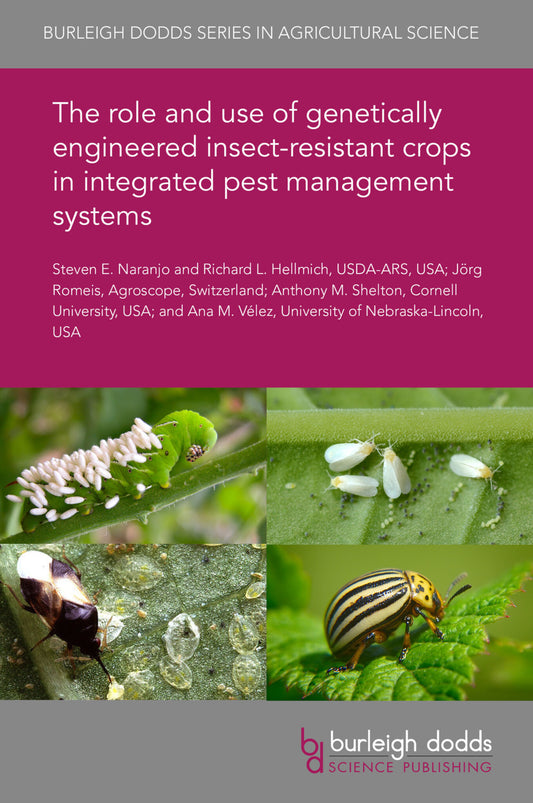
The role and use of genetically engineered insect-resistant crops in integrated pest management systems
Host plant resistance is an important and foundational element of Integrated Pest Management (IPM). The application of genetic engineering (GE) has significantly accelerated the deployment of host plant resistance in several cropping systems. Current GE crops represent powerful forms of antibioti...
Read MoreRegular price £25.00Sale price £25.00 Regular price £25.00Unit price per -
Advances in physical control methods in ipm
The evidence is mounting for pesticide failures on many fronts, including environmental contamination and pest resistance to chemical products. As an alternative, physical management methods are environmentally friendly, are not subject to the development of resistance, leave no residues and requ...
Read MoreRegular price £25.00Sale price £25.00 Regular price £25.00Unit price per -
Robot-enhanced insect pest control: reality or fantasy?
This chapter focusses on the incorporation of robotics and automation to detect insect pests within integrated pest management (IPM) programmes. The chapter reviews current technology that could be utilized for this purpose, and identifies significant barriers to implementing such an approach, in...
Read MoreRegular price £25.00Sale price £25.00 Regular price £25.00Unit price per -
Plant-insect interactions, host-plant resistance, and integrated pest management
The interactions between plants and the arthropod herbivores that feed on them are intricate and multifaceted. Plant-arthropod interactions can be divided, heuristically, into host-plant finding, acceptance and utilization phases. Plant resistance results when a plant expresses traits that disrup...
Read MoreRegular price £25.00Sale price £25.00 Regular price £25.00Unit price per -
Advances in microbial control in ipm: entomopathogenic viruses
Although there are several families of viruses known to include insect pathogens, only a handful are recognised to have species with any potential of being biopesticides. The majority of these are baculoviruses and are an ideal component of an integrated pest management (IPM) programme, as they a...
Read MoreRegular price £25.00Sale price £25.00 Regular price £25.00Unit price per -


Advances in understanding agroecosystems ecology and its applications in integrated pest management
Achieving the theoretical goal of integrated pest management (IPM), maintaining pest populations at levels below an economic threshold through a combination of tactics, has so far proved difficult to attain. Production systems, particularly specialized commodity production based on economies of s...
Read MoreRegular price £25.00Sale price £25.00 Regular price £25.00Unit price per -

The synergism of biocontrol and plant resistance: a path to advance ipm to higher levels of integration
This chapter reviews the future evolution of integrated pest management (IPM). It identifies the ways modern agriculture has disrupted plant defences and the control of pests by their natural enemies. The chapter discusses ways of restoring and enhancing these controls both through breeding and t...
Read MoreRegular price £25.00Sale price £25.00 Regular price £25.00Unit price per -


Advances in understanding the ecology of invasive crop insect pests and their impact on ipm
Invasive species represent one of the greatest threats to agriculture and commercial forestry, worldwide. Examples of invasive pests continue to increase with increasing world trade and human transport, but all biological invasions progress through similar stages of arrival, establishment, spread...
Read MoreRegular price £25.00Sale price £25.00 Regular price £25.00Unit price per -


Advances in understanding species ecology: phenological and life cycle modeling of insect pests
The modeling of insect phenology has been an important component of IPM decision support systems for several decades. This chapter describes general concepts and methods of the systems approach using applied phenology modeling as an example. The authors outline the steps of model construction fro...
Read MoreRegular price £25.00Sale price £25.00 Regular price £25.00Unit price per -


Integrated pest management (ipm) in greenhouse and other protected environments
Production in greenhouses, high tunnels, and other protected environments is expanding worldwide to allow for more intensive and continual cultivation to mitigate the effects of climate change. Growers want to create conditions that are ideal for the plants to thrive, but these are often the same...
Read MoreRegular price £25.00Sale price £25.00 Regular price £25.00Unit price per -
Instant insights: managing arthropod pests in tree fruit
This collection reviews the available methods for managing arthropod pests affecting global tree fruit production. Chapters consider the use of integrated pest management programmes as a more sustainable control method in the face of increasing pesticide regulatory restrictions and concerns surro...
Read MoreRegular price £37.99Sale price £37.99 Regular price £37.99Unit price per -
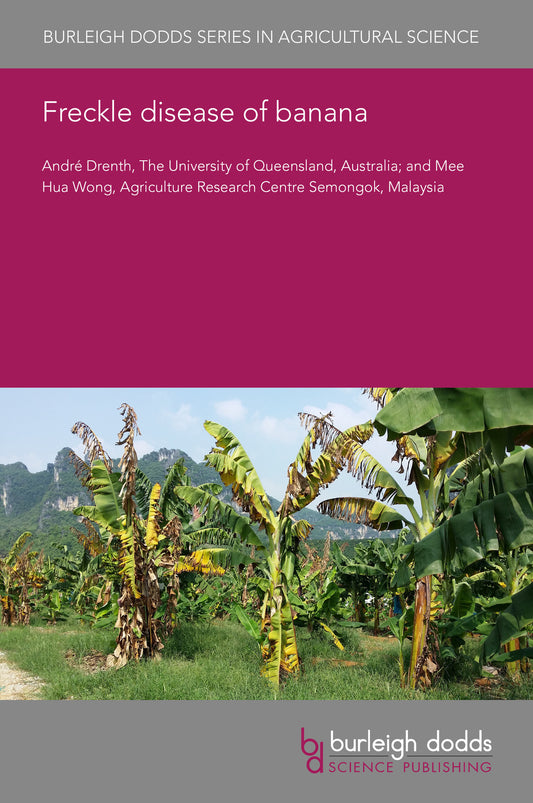

Freckle disease of banana
Freckle disease on banana is becoming more prevalent and in recent years has emerged as a disease of economic importance in some parts of the world. In places where the disease occurs it is a challenge to produce high quality, unblemished banana fruit for export markets. Although freckle disease ...
Read MoreRegular price £25.00Sale price £25.00 Regular price £25.00Unit price per -


The sigatoka leaf disease complex in banana
There are three major leaf diseases, now called Pseudocercospora leaf spot diseases of banana, which form the sigatoka leaf spot complex: Sigatoka disease (yellow Sigatoka) caused by Pseudocercospora musae, black leaf streak disease (black Sigatoka) caused by P. fijiensis and Eumusae leaf spot di...
Read MoreRegular price £25.00Sale price £25.00 Regular price £0.00Unit price per -
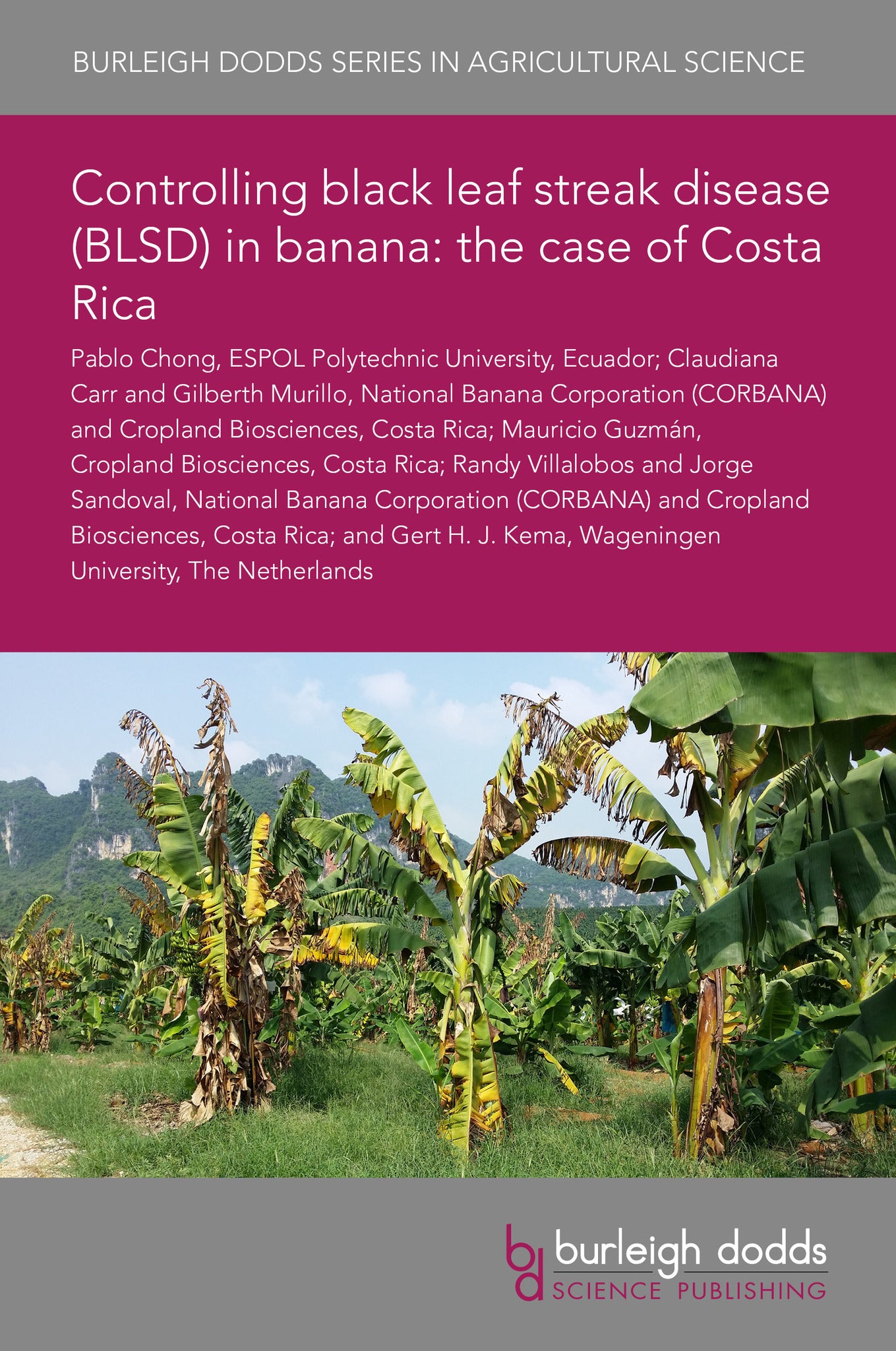
Controlling black leaf streak disease (blsd) in banana: the case of costa rica
The main foliar disease in bananas is black leaf streak disease (BLSD), also known as black Sigatoka, which is caused by the fungus Pseudocercospora fijiensis. Since most commercial banana varieties are susceptible to BLSD, the disease can only be controlled in the wet tropics, with frequent fung...
Read MoreRegular price £25.00Sale price £25.00 Regular price £25.00Unit price per -
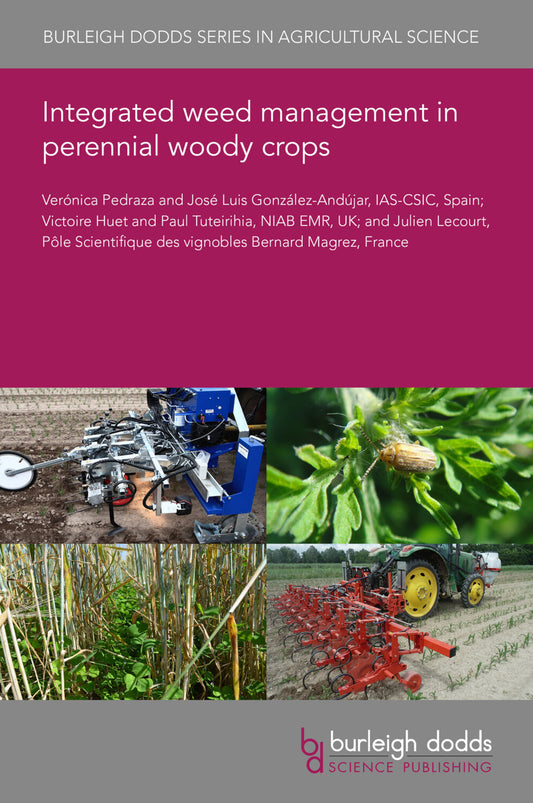
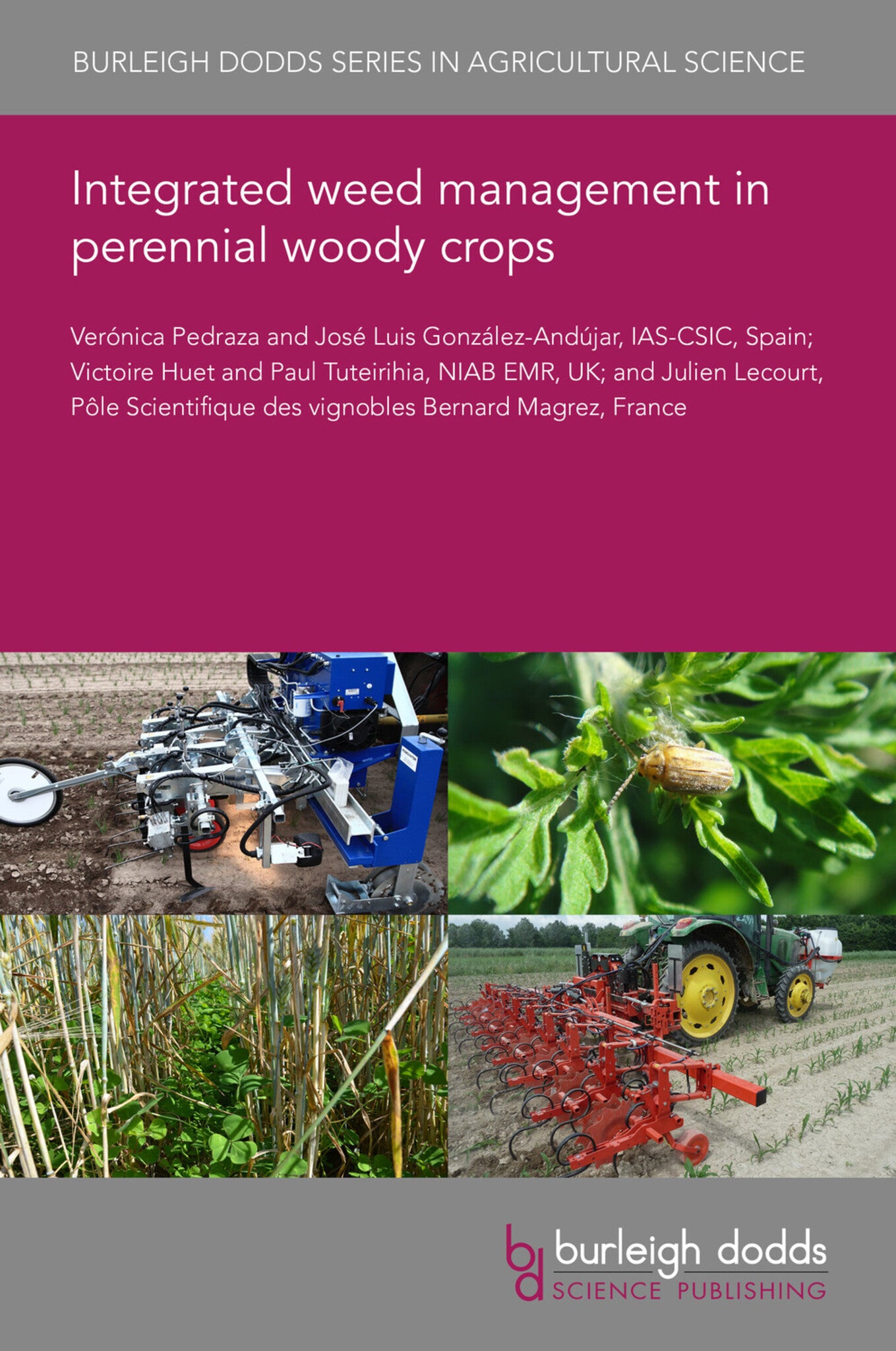
Integrated weed management in perennial woody crops
Perennial woody crops span over a broad variety of species in Europe with olive and vine being the most cultivated tree crops. Nowadays, the increasing problem of herbicide resistance, the possible withdrawal of herbicides from the EU market and their effects on farmland biodiversity are driving ...
Read MoreRegular price £25.00Sale price £25.00 Regular price £25.00Unit price per -
Improving integrated pest management in horticulture
This collection reviews current advances in integrated pest management (IPM) for horticultural crops, including the use of biological control mechanisms, technological developments such as proximal sensors, agronomic practices and physical control.
Regular price £150.00Sale price £150.00 Regular price £150.00Unit price per -
Practical application of integrated pest management in greenhouses and protected cultivation
Greenhouse production is at the forefront of using IPM systems to tackle pests and diseases. The shift to IPM was a challenge for growers, but was overcome through research, extension and demonstration of the strengths of biocontrol. We provide examples from ornamental plant greenhouse horticultu...
Read MoreRegular price £25.00Sale price £25.00 Regular price £25.00Unit price per -
Advances in proximal sensors to detect crop health status in horticultural crops
Advances in proximal sensing for targeted application of bioprotectants and biopesticides are crucial for more sustainable horticultural crop disease management. These technologies can help to identify spatial/temporal patterns of disease and provide data for forecasting models. They rely on opto...
Read MoreRegular price £25.00Sale price £25.00 Regular price £25.00Unit price per -
Advances in decision support systems (dsss) for integrated pest management in horticultural crops
Decision support systems (DSS) are an vital tool in advancing the integrated management of horticultural pests. Whether the DSS support strategic, tactical or operational decisions, they can enable growers and their advisors to make difficult choices based on the best information on potential ris...
Read MoreRegular price £25.00Sale price £25.00 Regular price £25.00Unit price per -
Improving application systems for bioprotectants in integrated pest management (ipm) programmes in horticulture
The fundamental principles of good application are the same whether a biopesticide or chemical pesticide is being used. However, there is a view that biopesticides are more sensitive to application. A good application technique should result in the minimum amount of biopesticide being used, which...
Read MoreRegular price £25.00Sale price £25.00 Regular price £25.00Unit price per -
Advances in bioprotectants for plant disease control in horticulture
Microbial bioprotectants and natural substances have been increasingly available and implemented for disease management in horticultural crops. This chapter presents the status of registered products and their current insufficiency to fulfill farmers’ needs for disease control solutions. It hig...
Read MoreRegular price £25.00Sale price £25.00 Regular price £0.00Unit price per -
The use of agronomic practices in integrated pest management programmes in horticulture
IPM promotes the design of resilient systems that reduce both pest attacks and damage to cultivated plants. It is based on practices that foster plant tolerance and the control of pests by their natural enemies. The challenge is to combine those practices in a coherent system that should associat...
Read MoreRegular price £25.00Sale price £25.00 Regular price £25.00Unit price per -
Assessing the economics of integrated pest management for horticultural crops
Integrated pest management (IPM) is the combination of cropping systems, practices, and pest control tactics to manage pest populations so that they do not cause economic harm to growers nor negative impacts on the environment. The strategies implemented by growers to achieve their goals (for exa...
Read MoreRegular price £25.00Sale price £25.00 Regular price £0.00Unit price per -
Practical application of integrated pest management to control cabbage root fly in vegetables
In north-western Europe cabbage root fly is considered to be an important pest of Brassica crops. Root fly larvae mainly feed on roots of Brassica vegetable crops causing damage and eventually crop loss. Pest damage consequently results in considerable economic losses for these crops. Due to the...
Read MoreRegular price £25.00Sale price £25.00 Regular price £25.00Unit price per -
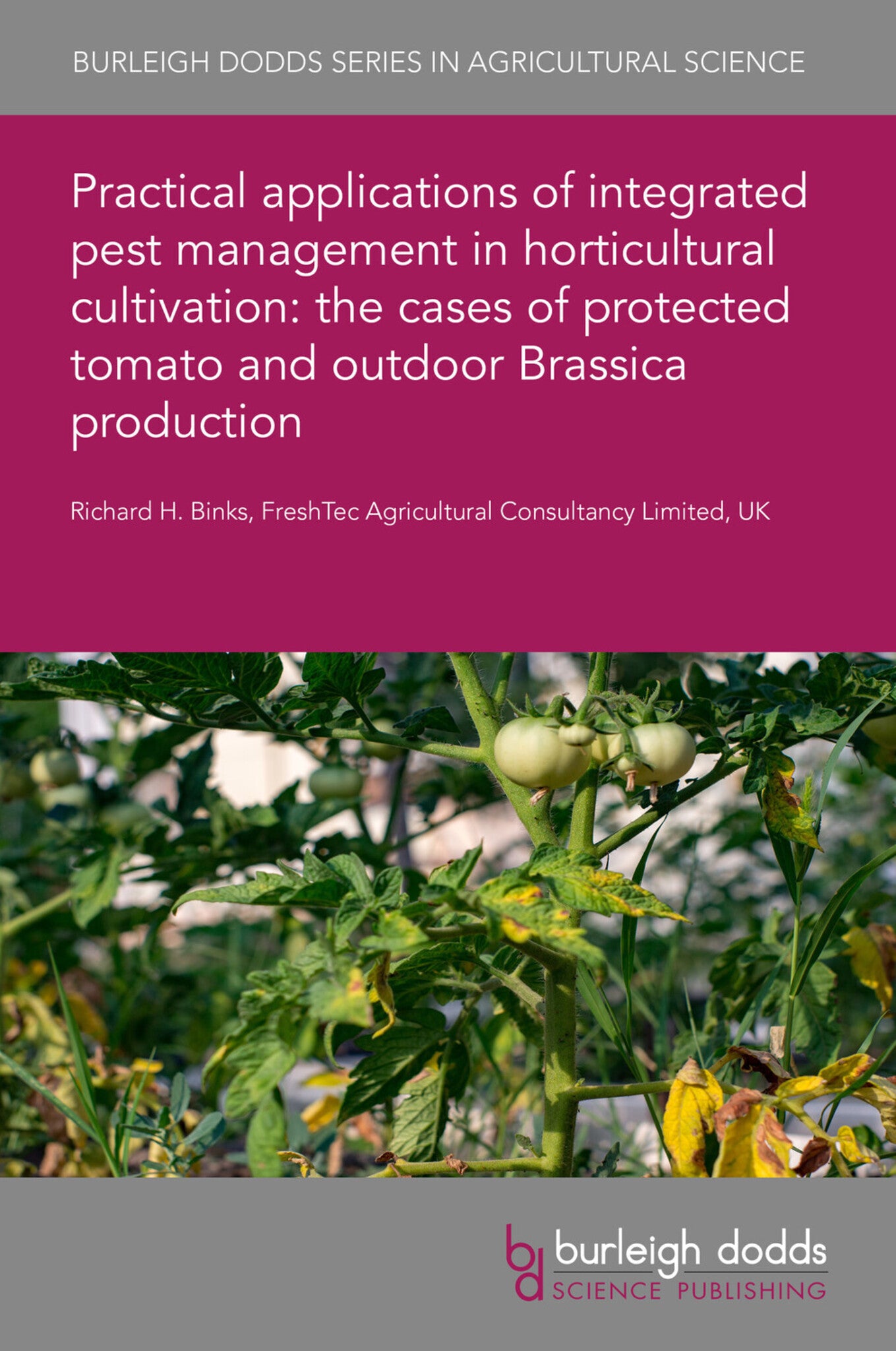
Practical applications of integrated pest management in horticultural cultivation: the cases of protected tomato and outdoor brassica production
This chapter discusses two case studies where integrated pest management strategies and techniques have been implemented to control pest insects in indoor and outdoor horticultural cropping situations. In particular the case studies will highlight the impact that biological control has had on pro...
Read MoreRegular price £25.00Sale price £25.00 Regular price £25.00Unit price per -


Advances in biopesticides for insect control in horticulture
Horticulture covers the production and sale of many of the staple foods of the world; fruit, nuts and vegetables. As pressures on food production increase through a reduction in available land and the increasing population, more intensive production also leads to more issues with pest insects. B...
Read MoreRegular price £25.00Sale price £25.00 Regular price £25.00Unit price per -


Encouraging integrated pest management uptake in horticultural crop production
Despite integrated pest management (IPM) practices being taught and researched for over six decades, farmers' adoption of such practices has been limited. Integrated pest management is a comprehensive management approach that utilizes multiple strategies to keep pest populations below economic th...
Read MoreRegular price £25.00Sale price £25.00 Regular price £0.00Unit price per -


Towards sustainable management of fusarium wilt of banana
Since the start of growing bananas in large plantations the industry has been plagued by the introduction of numerous pathogens and none more troublesome than Fusarium wilt of banana (FWB). The introduction of Fusarium race 1 in the Gros Michel plantations in Latin America led to one of the major...
Read MoreRegular price £25.00Sale price £25.00 Regular price £25.00Unit price per -
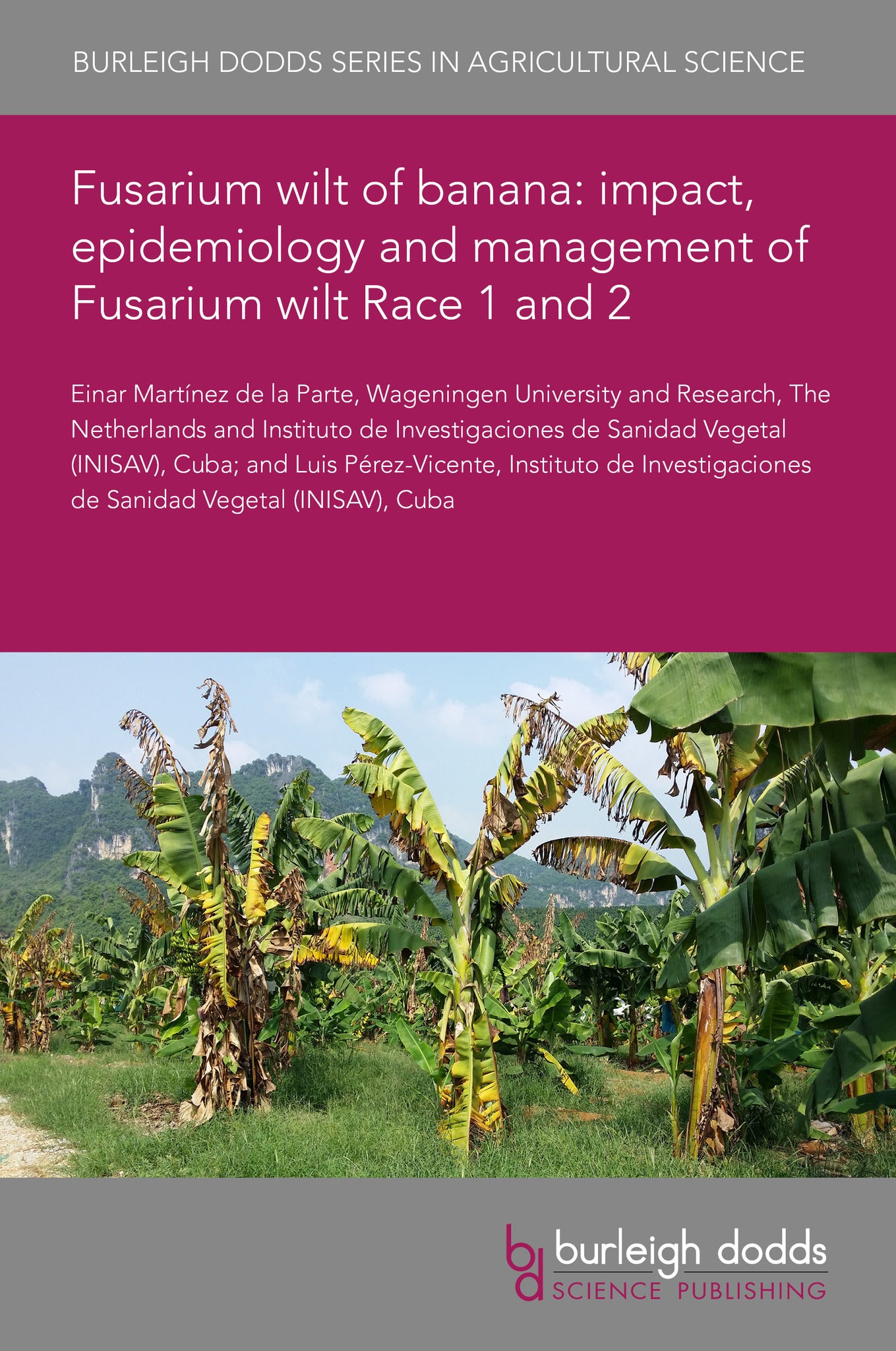
Fusarium wilt of banana: impact, epidemiology and management of fusarium wilt race 1 and 2
The soil-borne fungus F. oxysporum forma specialis cubense (Foc), causing fusarium wilt of banana (FWB), is one of the most devastating diseases affecting banana. The fungus has a polyphyletic origin and strains and races have evolved with different wild banana species in various areas of the Ind...
Read MoreRegular price £25.00Sale price £25.00 Regular price £25.00Unit price per -
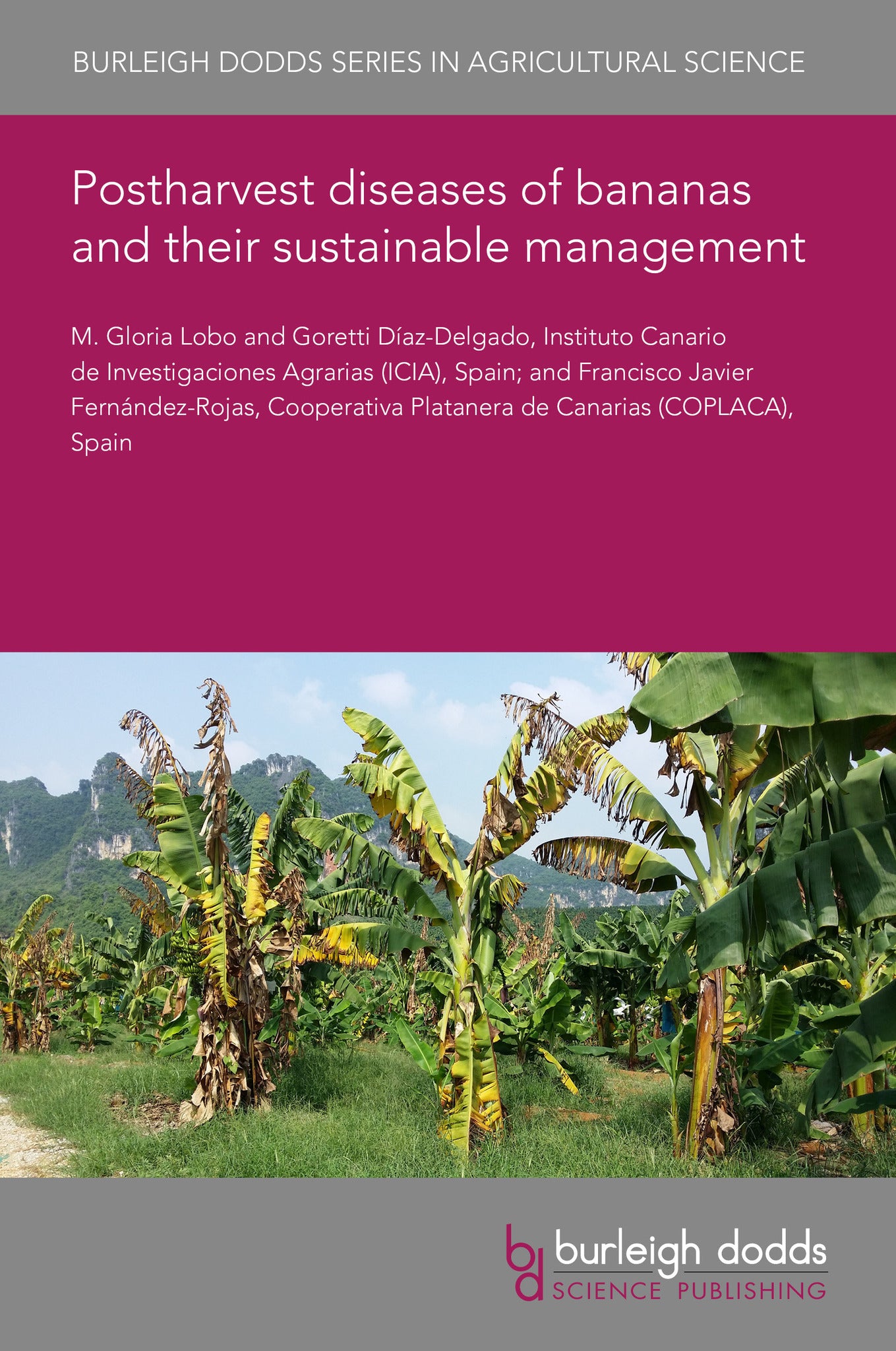
Postharvest diseases of bananas and their sustainable management
This chapter discusses crown rot and anthracnose in detail, with a briefer coverage of the minor diseases such as mokillo fruit speckle, squirter and ceratocystis fruit stem-end rot. These diseases are discussed with regards to their causal agents, described and illustrated symptoms, disease cycl...
Read MoreRegular price £25.00Sale price £25.00 Regular price £25.00Unit price per -
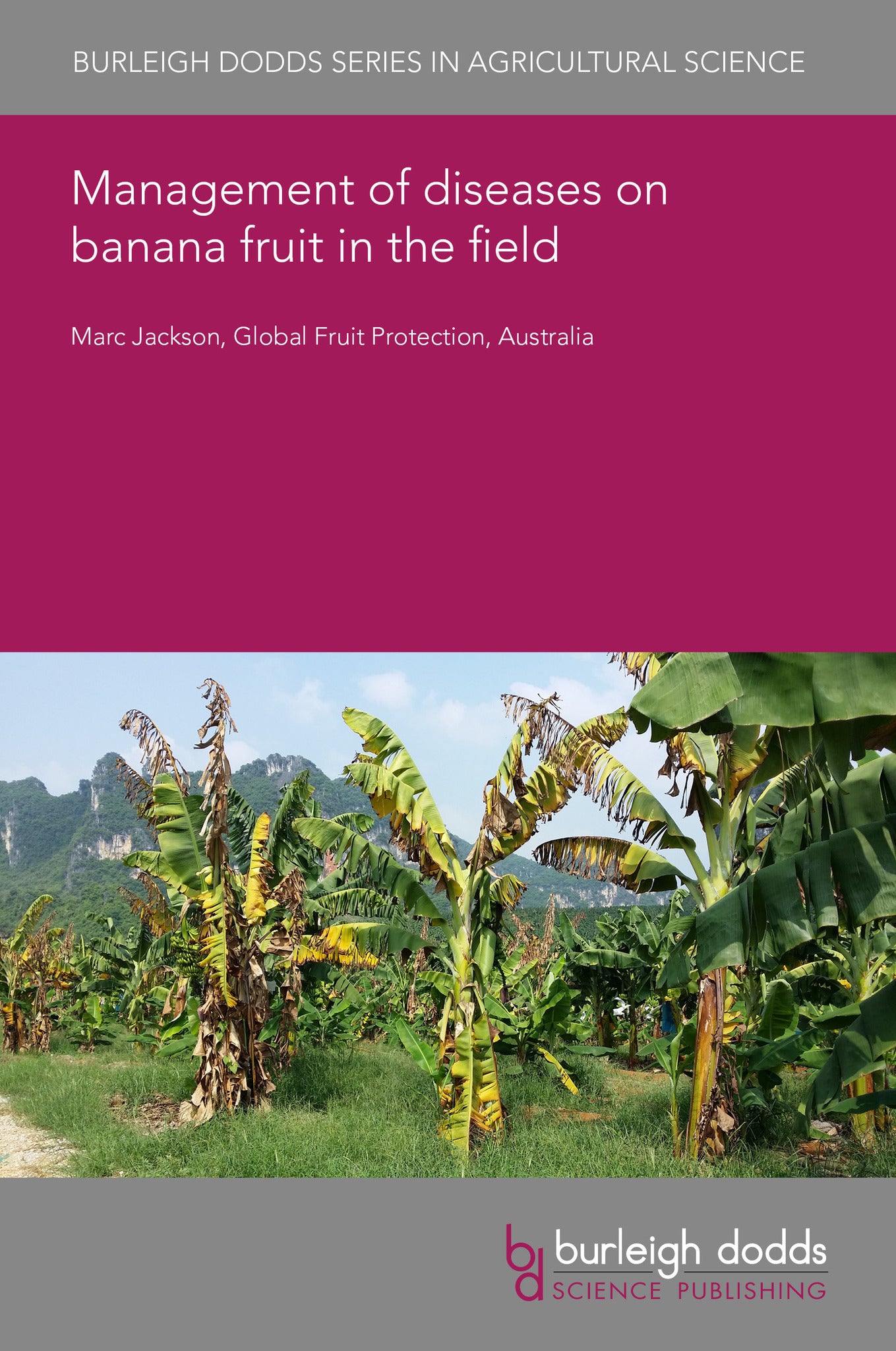
Management of diseases on banana fruit in the field
This chapter outlines the management of bacterial and fungal diseases on banana fruit from a practical and real-life banana farmers perspective and can be used as a guide to identifying diseases occurring on banana fruit. Different options for control and prevention are outlined and discussed fro...
Read MoreRegular price £25.00Sale price £25.00 Regular price £25.00Unit price per -

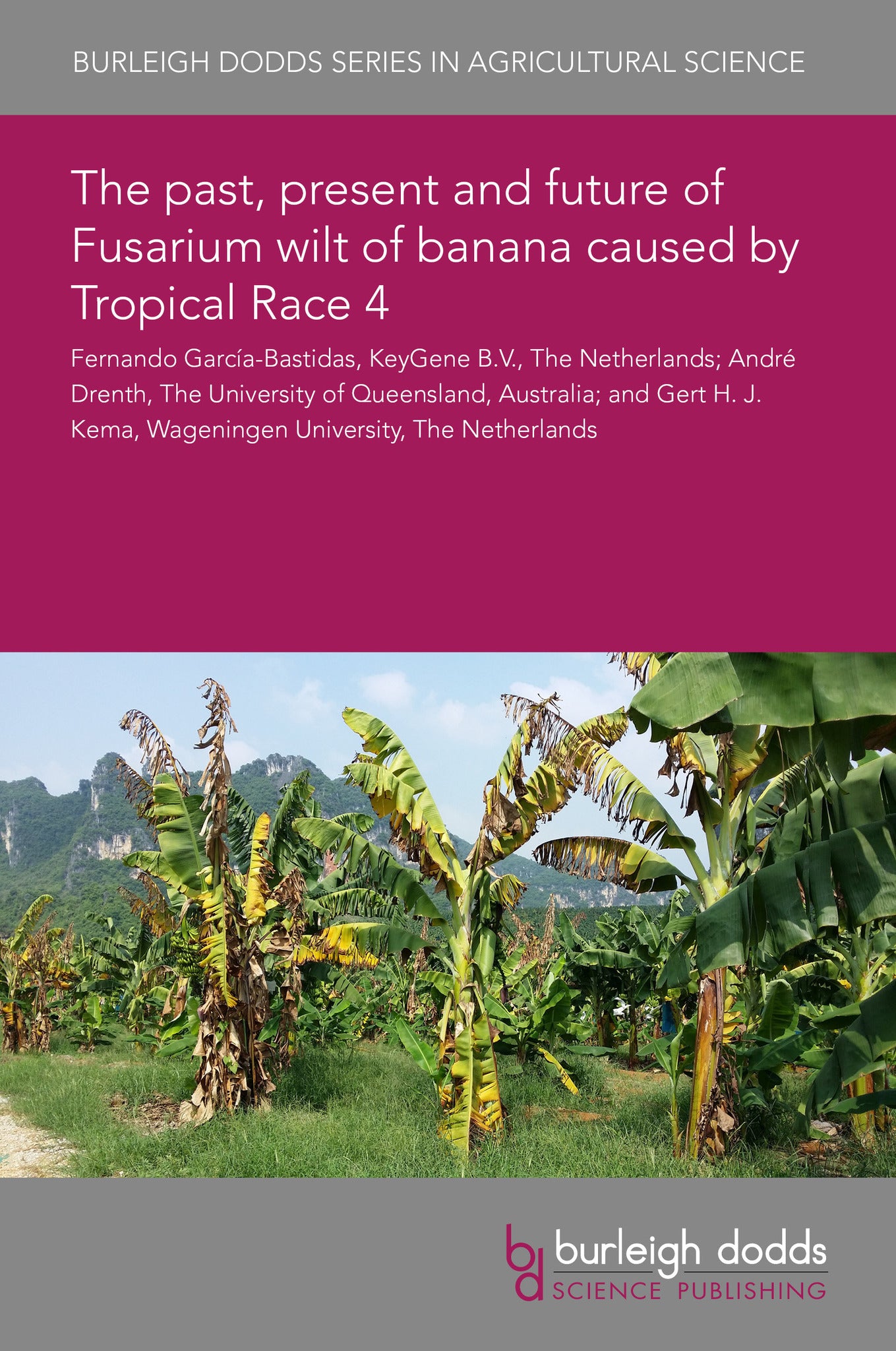
The past, present and future of fusarium wilt of banana caused by tropical race 4
Fusarium wilt of banana (FWB) Tropical Race 4 (TR4) is caused by the plant pathogenic fungus Fusarium odoratissimum. At present, the spread of TR4 has been documented in at least 21 countries throughout all major Cavendish banana-producing regions of the world. It seems inevitable that TR4 will c...
Read MoreRegular price £25.00Sale price £25.00 Regular price £25.00Unit price per -
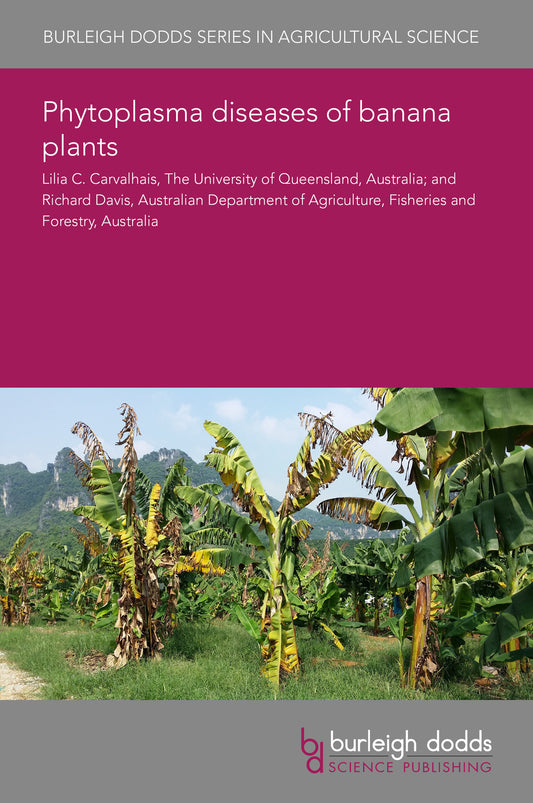
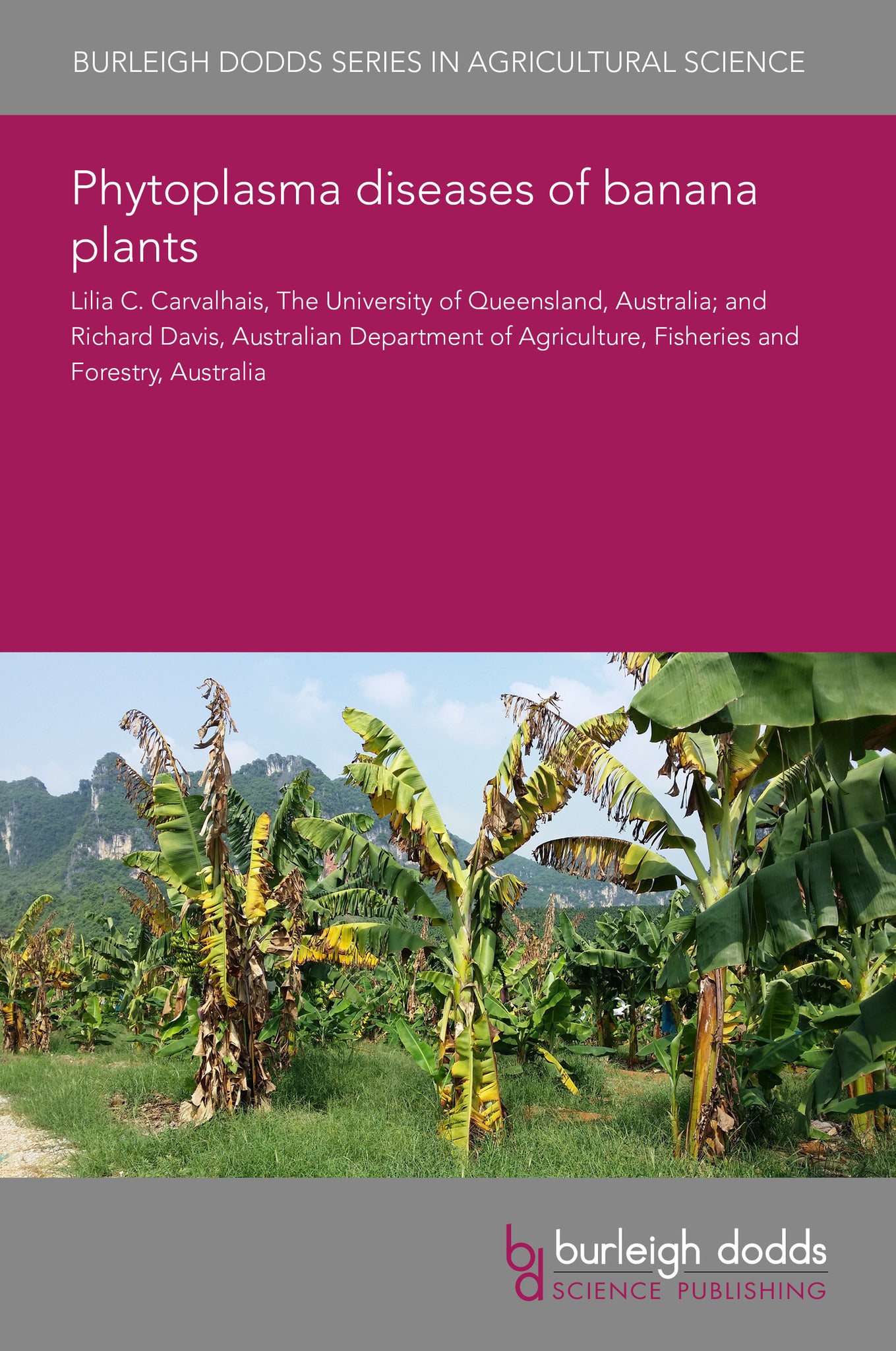
Phytoplasma diseases of banana plants
Phytoplasmas are obligatory bacteria associated with diseases in over 1,000 plant species, which live in phloem tissues and are transmitted between plants by sap-sucking insects. Phytoplasmas have been recorded from banana plants in different parts of the world, but they are still considered a pa...
Read MoreRegular price £25.00Sale price £25.00 Regular price £25.00Unit price per -
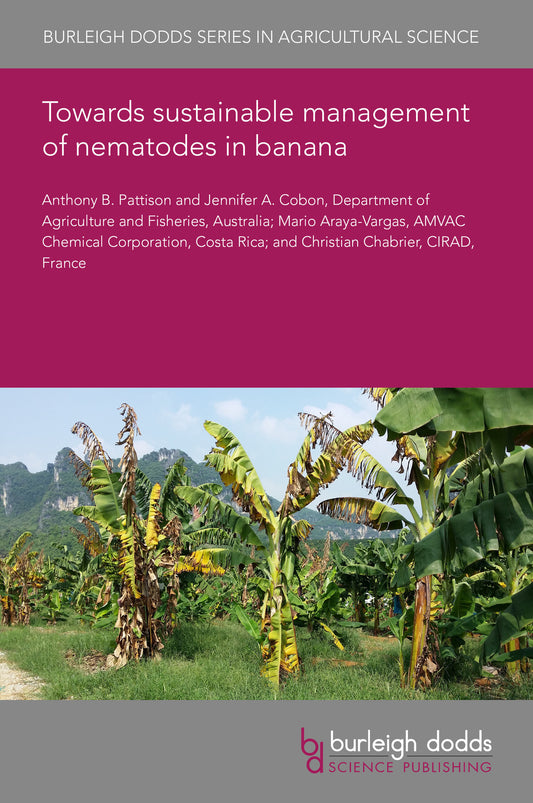
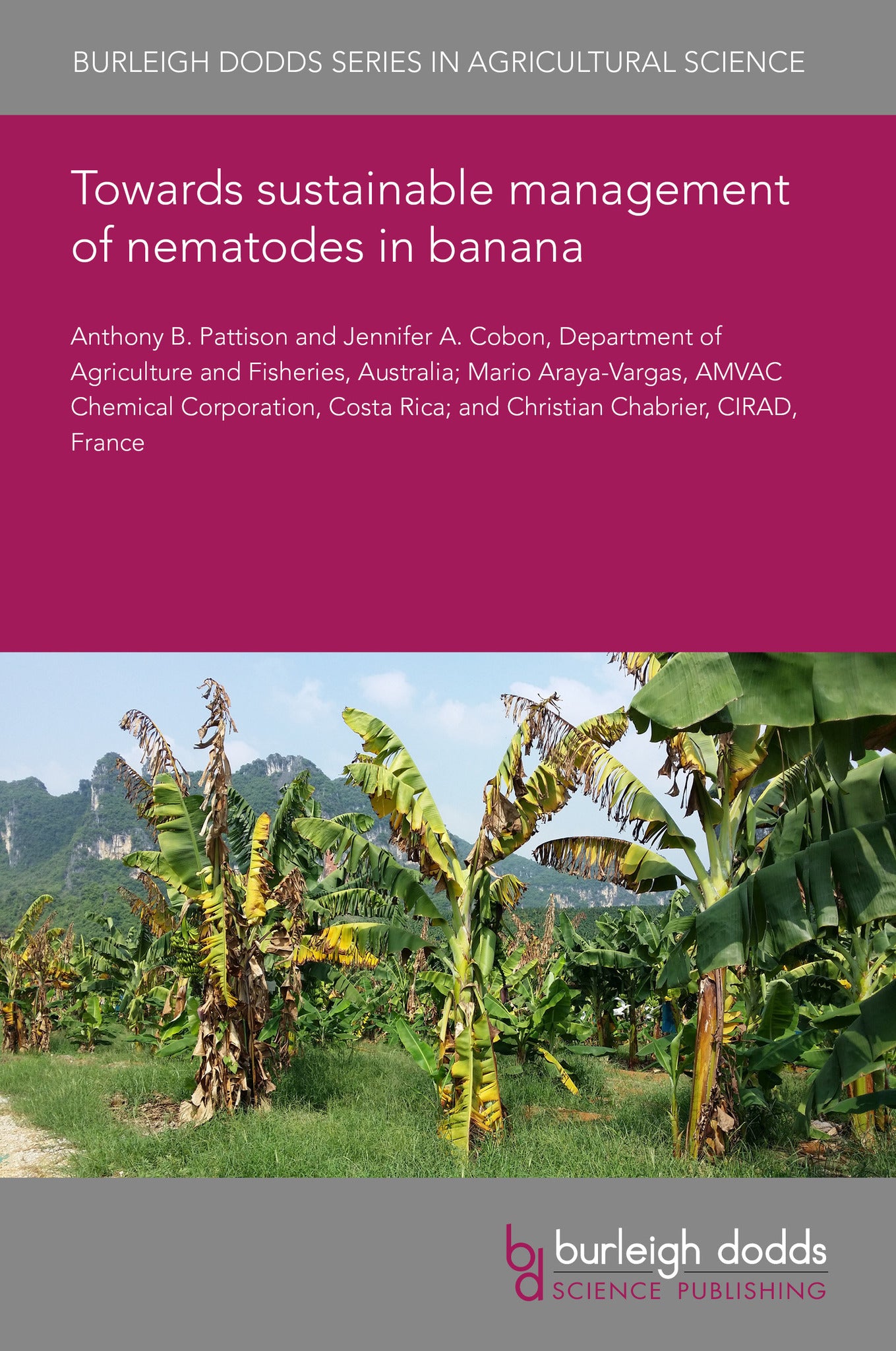
Towards sustainable management of nematodes in banana
Plant-parasitic nematodes present a major constraint to production of bananas and plantains world-wide. Early efforts in management in the mid-twentieth century relied on applications of fumigant nematicides followed by non-fumigant organophosphates and carbamate compounds. The development of int...
Read MoreRegular price £25.00Sale price £25.00 Regular price £25.00Unit price per -
The banana weevil borer
This chapter discusses the impact of the banana weevil borer (Banana black weevil), Cosmopolites sordidus (Germar, 1824) (Coleoptera: Curculionidae). It provides an overview of the spread of the pest, its life cycle and the impact on plant health and yields. The chapter then discusses control mea...
Read MoreRegular price £25.00Sale price £25.00 Regular price £25.00Unit price per -
Banana bunchy top virus
This chapter reviews current knowledge on banana bunchy top disease, the most important virus disease of banana, worldwide. It provides an overview of the historical aspects of the disease and the early studies, outlines the symptoms of the disease and biological characteristics of the pathogen r...
Read MoreRegular price £25.00Sale price £25.00 Regular price £25.00Unit price per -
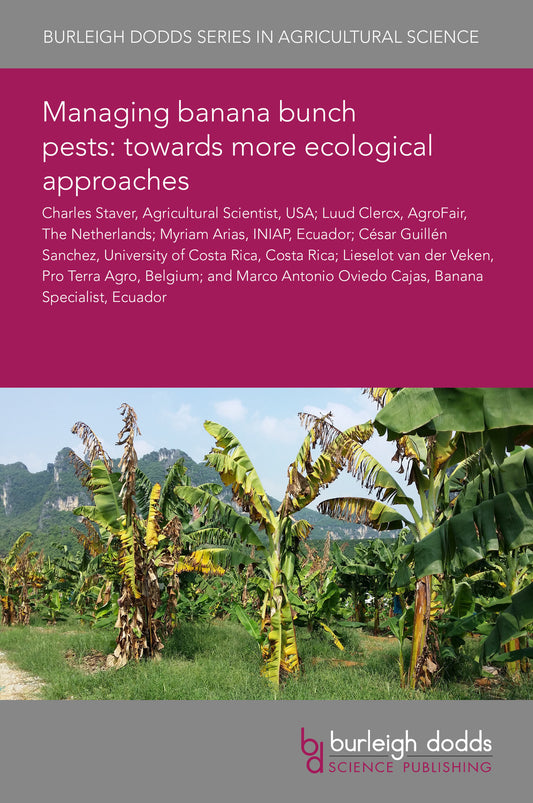
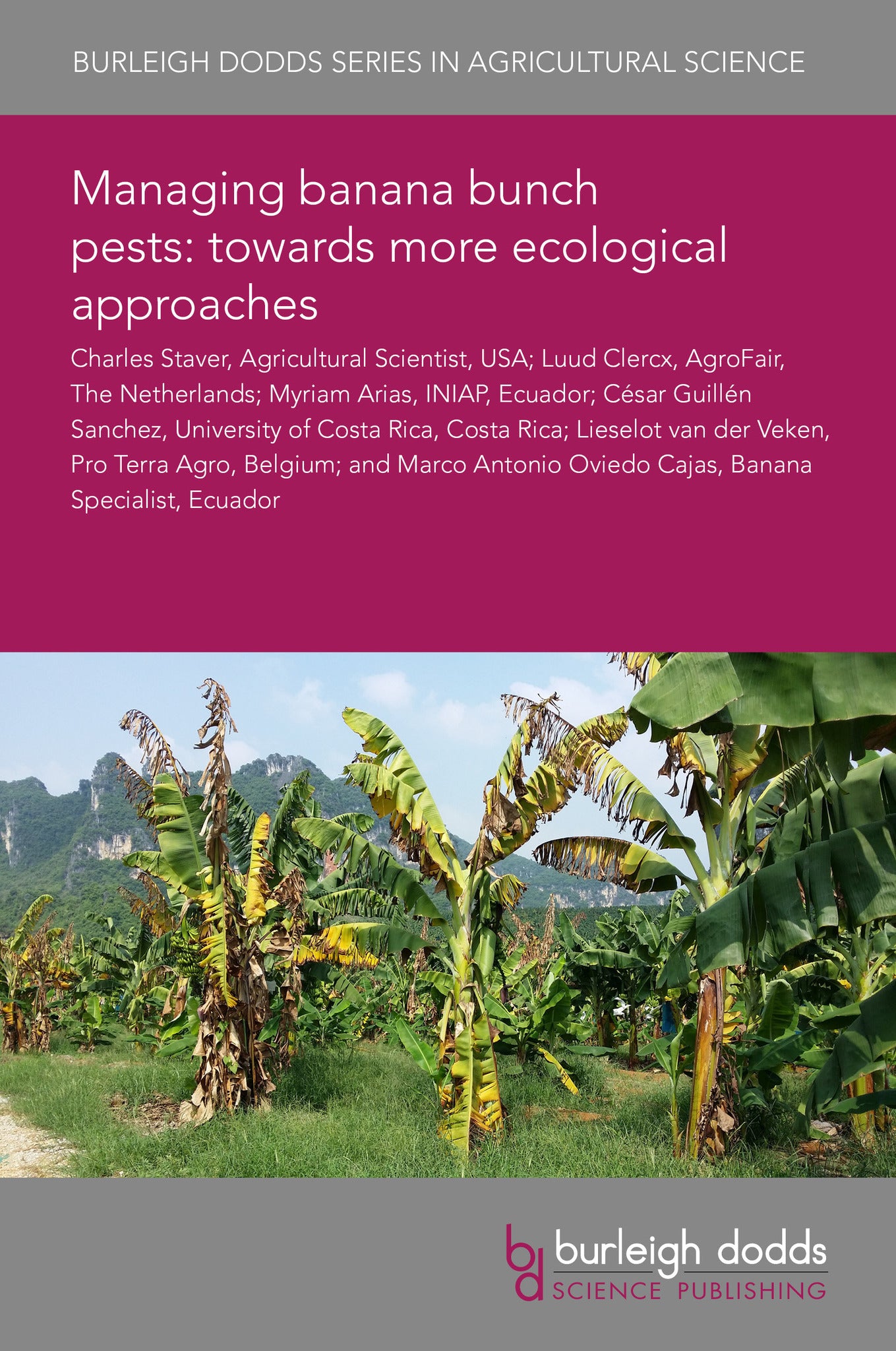
Managing banana bunch pests: towards more ecological approaches
Blemish-free bananas are a modern life staple. This chapter reviews management trends of bunch pests of bananas for export which cause cosmetic damage or trigger quarantine prohibitions in the context of changing regulatory and market requirements. The authors review six major insect pests of the...
Read MoreRegular price £25.00Sale price £25.00 Regular price £25.00Unit price per -
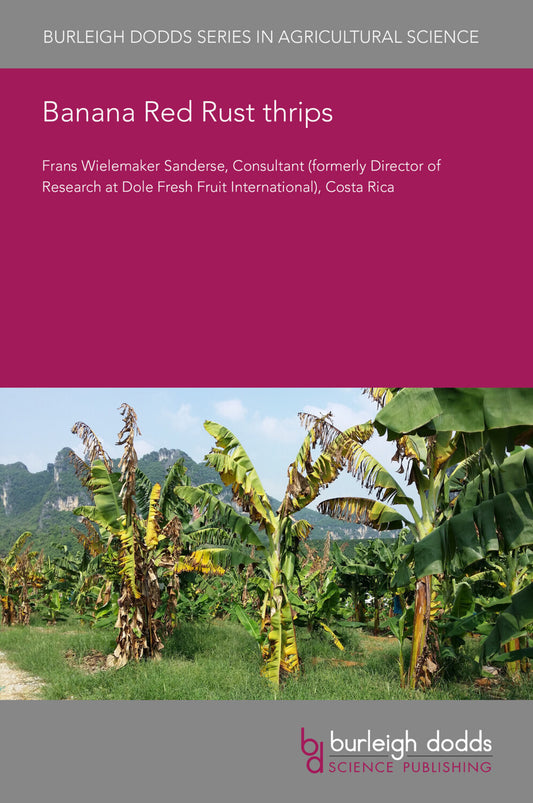
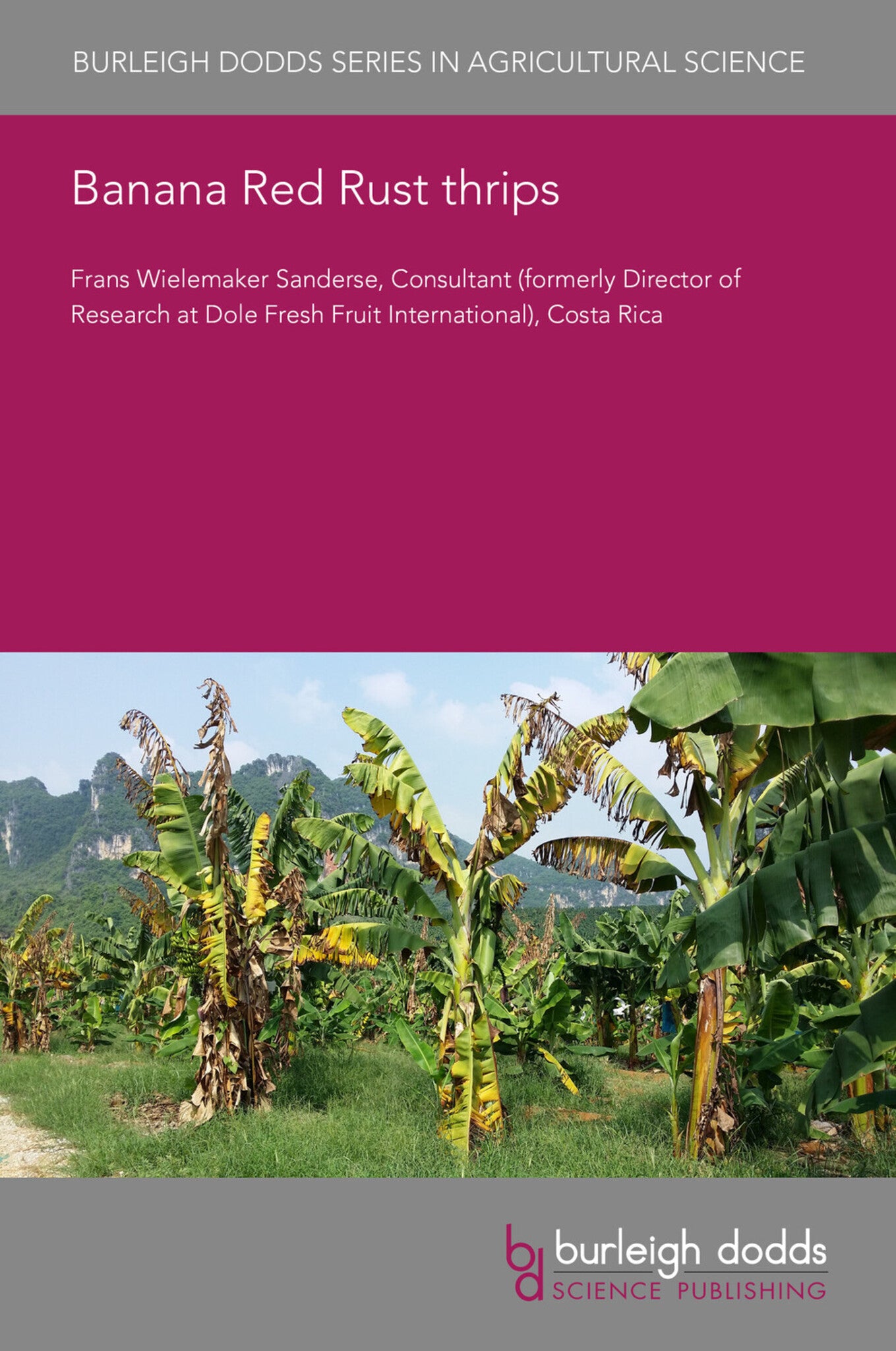
Banana red rust thrips
This chapter gives an in depth overview of what the pest management practices are in conventional banana production systems before outlining the alternative practices in organic banana production systems. An overview is provided of the challenges and limitations of Red Rust thrips control, while ...
Read MoreRegular price £25.00Sale price £25.00 Regular price £25.00Unit price per -


Banana blood disease
Blood disease of banana is a bacterial wilt caused by Ralstonia syzygii subsp. celebesensis. The symptoms of Blood disease include wilting, chlorosis and necrosis of leaves, red/brown vascular staining, and pulp-rot of the fruit. The disease was first reported in 1905 from southern Sulawesi and w...
Read MoreRegular price £25.00Sale price £25.00 Regular price £25.00Unit price per -
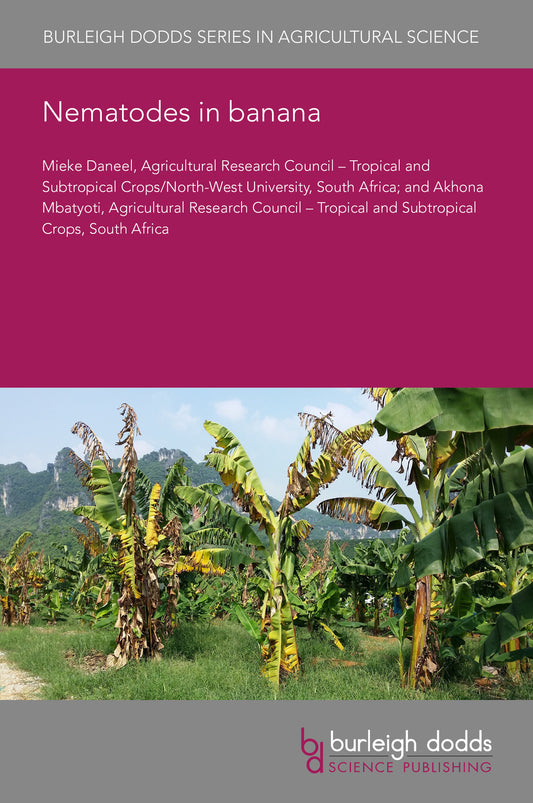
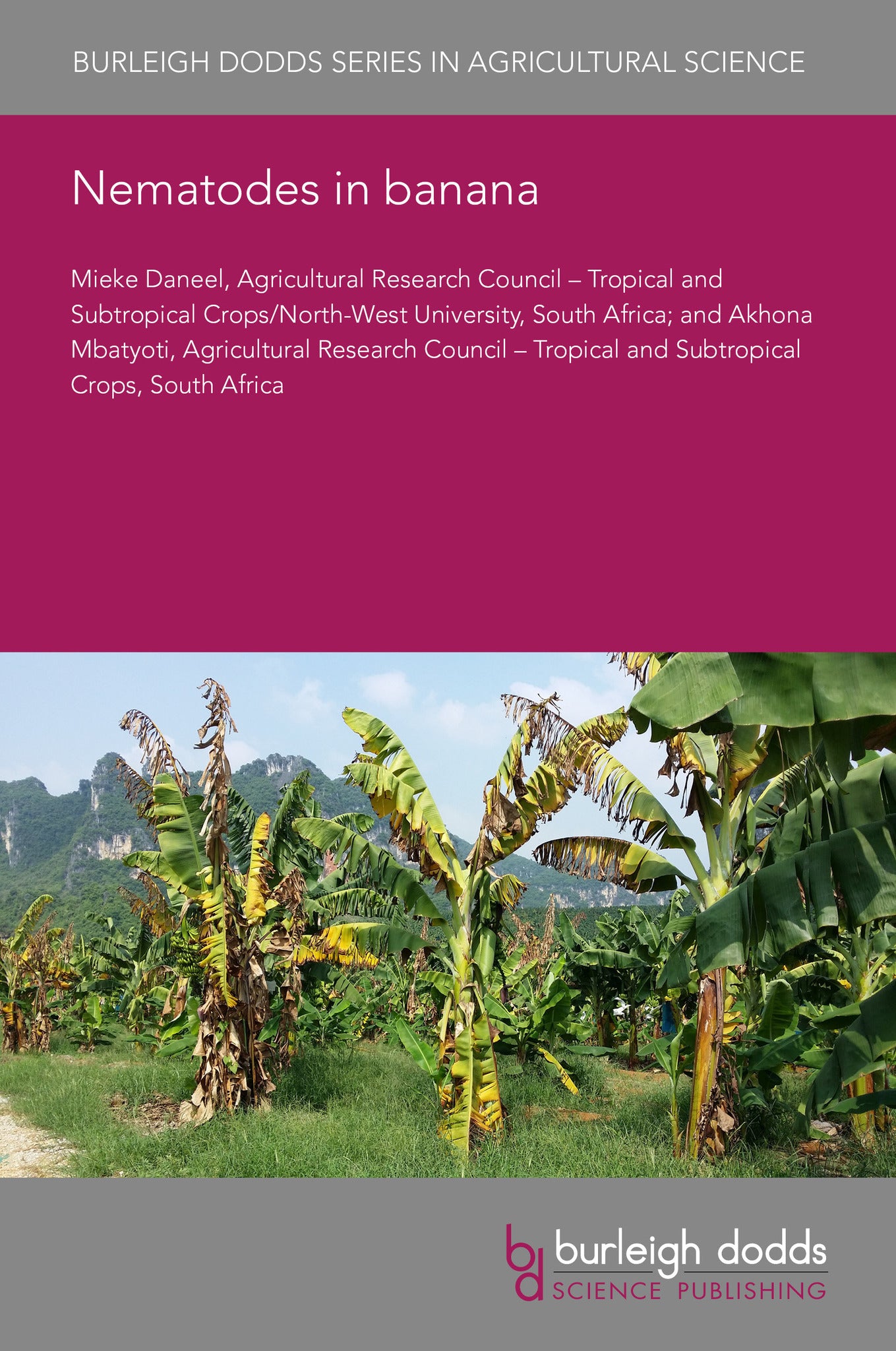
Nematodes in banana
Banana production is threatened by nematodes that parasitize the root system. The damage that nematodes inflict when feeding destroys the banana’s root system, limiting nutrient and water uptake, and reducing the efficiency of the root system to anchor the plant, resulting in toppling, especially...
Read MoreRegular price £25.00Sale price £25.00 Regular price £25.00Unit price per -
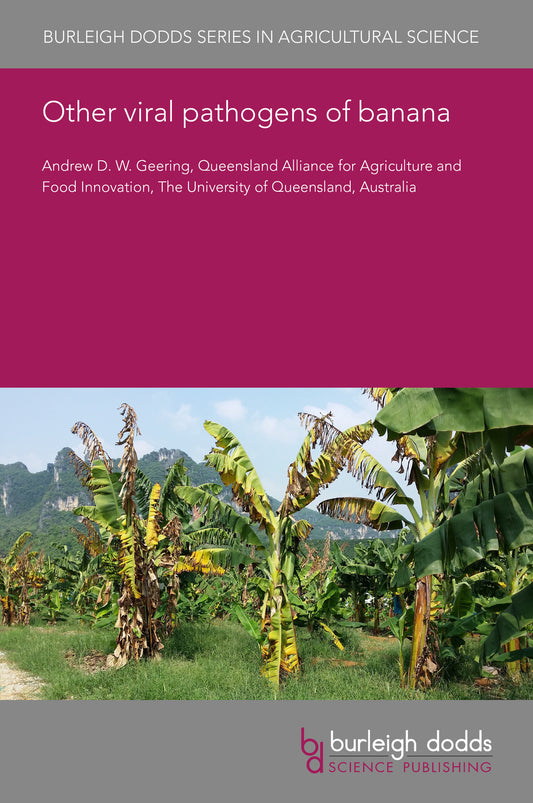
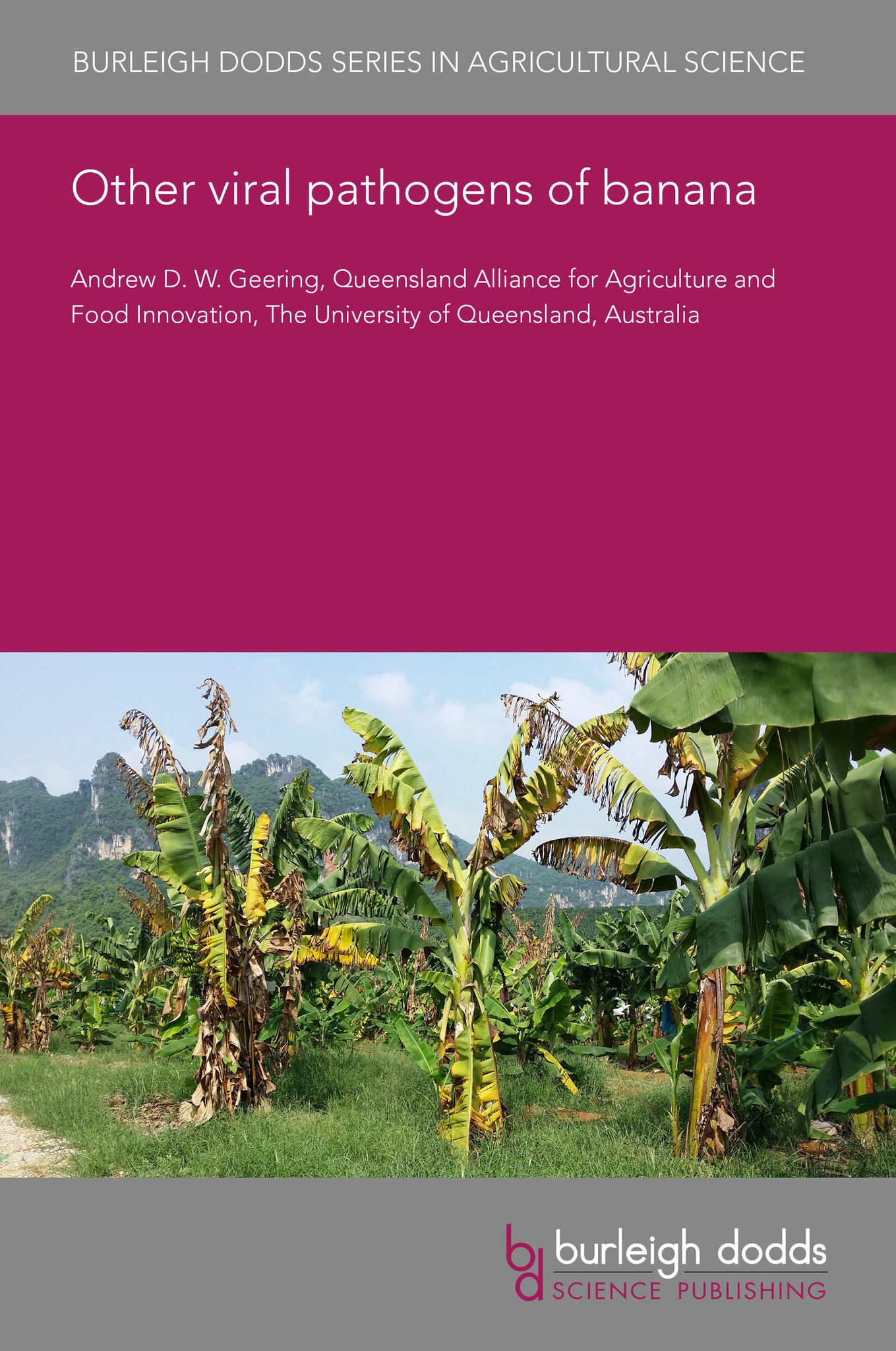
Other viral pathogens of banana
In this chapter, minor viral pathogens of banana, plantain and abacá are discussed. Some such as banana bract mosaic virus and the abacá strain of sugarcane mosaic virus have the potential to cause much more serious problems if they are allowed to spread unchecked around the world. Other viruses ...
Read MoreRegular price £25.00Sale price £25.00 Regular price £25.00Unit price per -
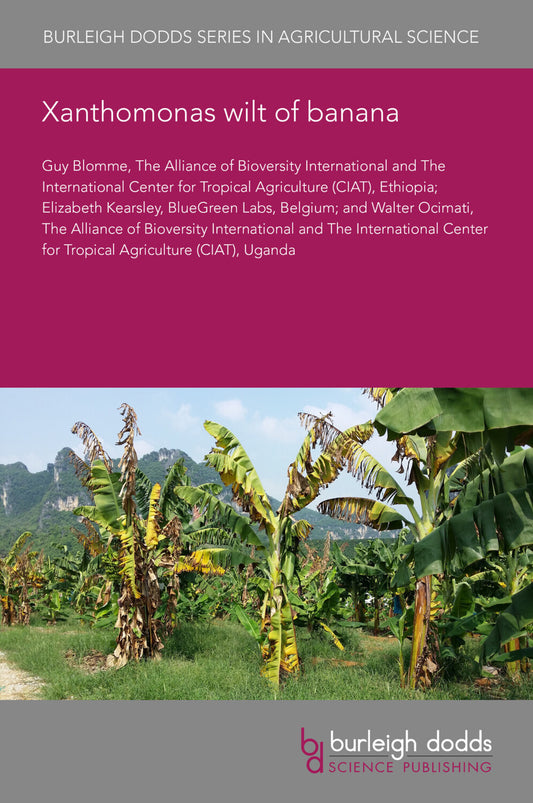

Xanthomonas wilt of banana
Xanthomonas wilt (BXW) is a major banana disease affecting small-holder farms in East and Central Africa. While BXW management practices have been introduced across extensive regions, achieving high levels of disease control and/or eradication has proven difficult. Resurgence of BXW in managed si...
Read MoreRegular price £25.00Sale price £25.00 Regular price £25.00Unit price per -
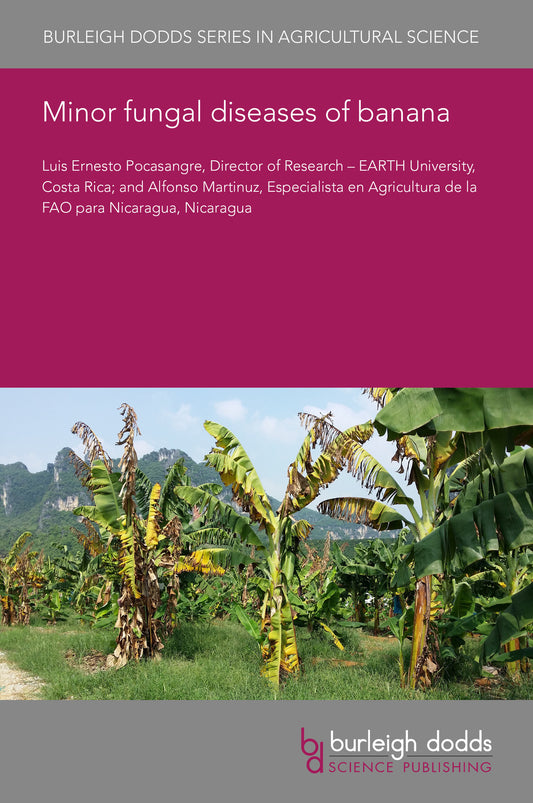
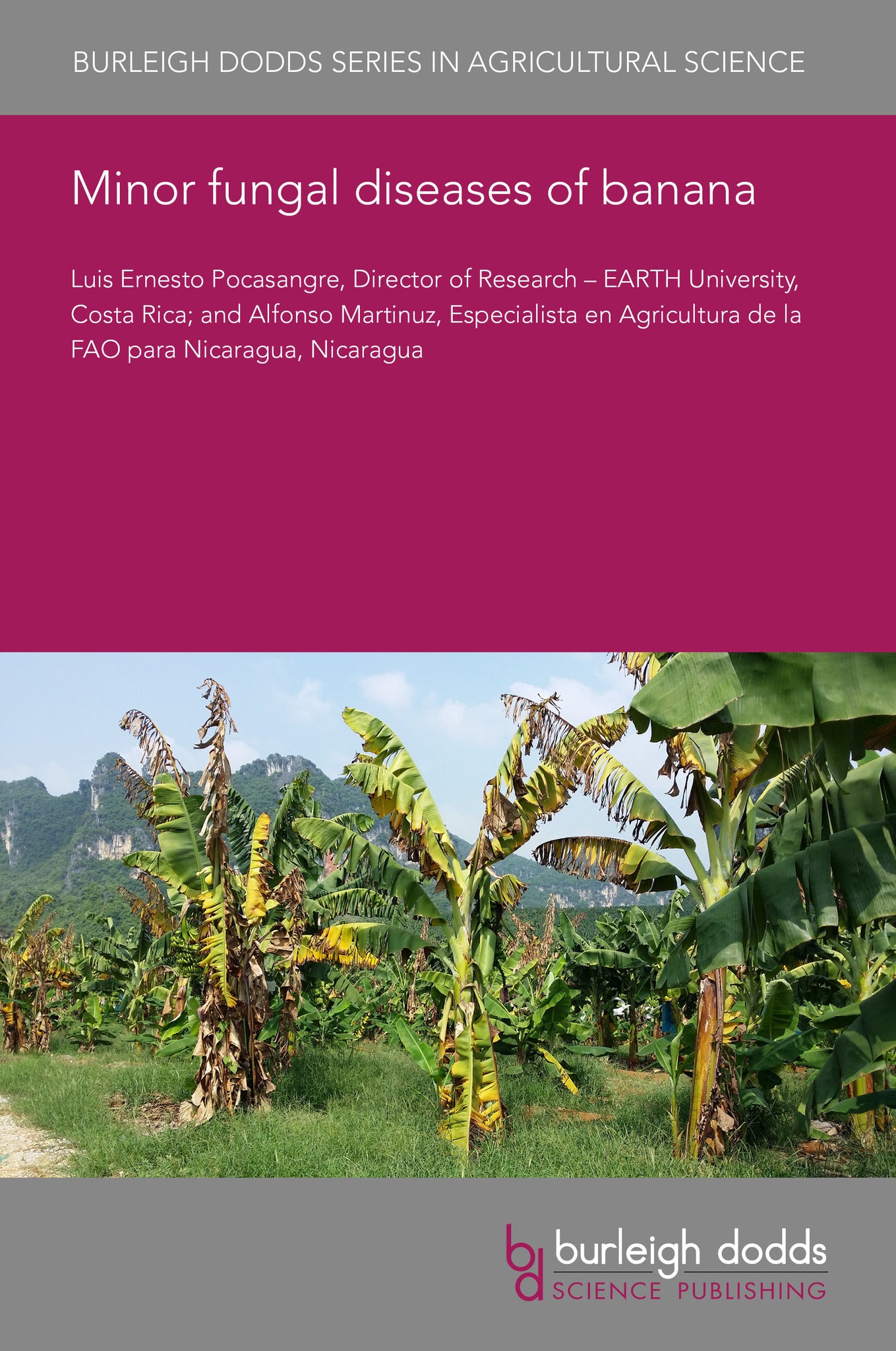
Minor fungal diseases of banana
This chapter gives an overview of a number of minor diseases which affects bananas in different parts of the world. It gives an overview of the occurence, causal agent, key disease symptoms, host susceptibility and control of the the following diseases: Cordana leaf spot, Deightoniella leaf spot,...
Read MoreRegular price £25.00Sale price £25.00 Regular price £25.00Unit price per -
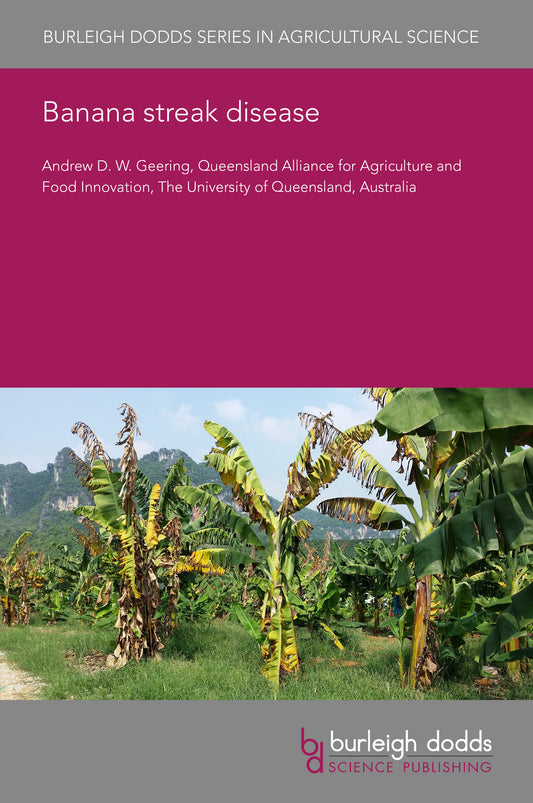
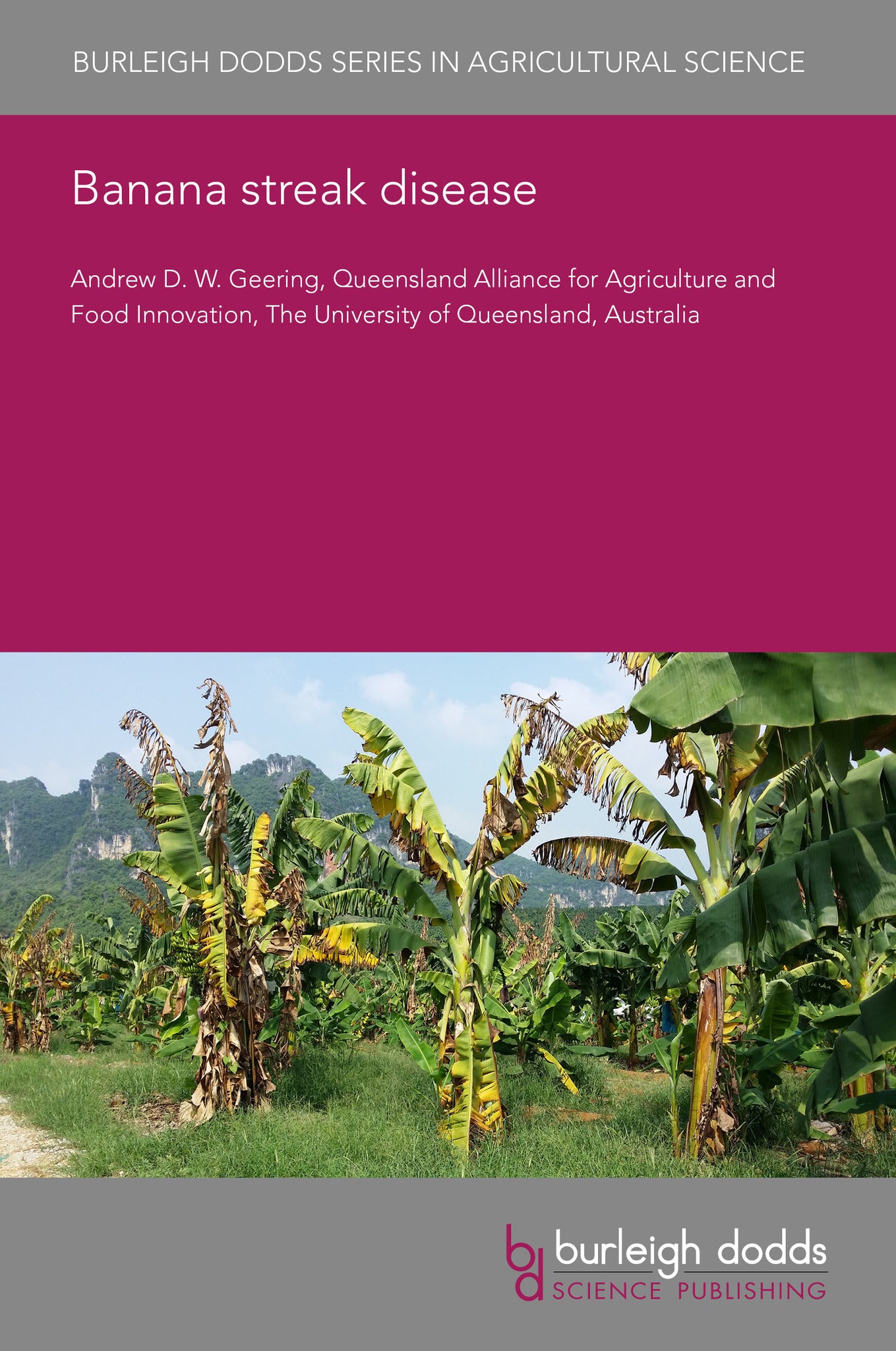
Banana streak disease
The chapter gives an overview of the biology, epidemiology, diagnostics, and control of the banana streak complex of viruses in bananas.
Regular price £25.00Sale price £25.00 Regular price £25.00Unit price per -
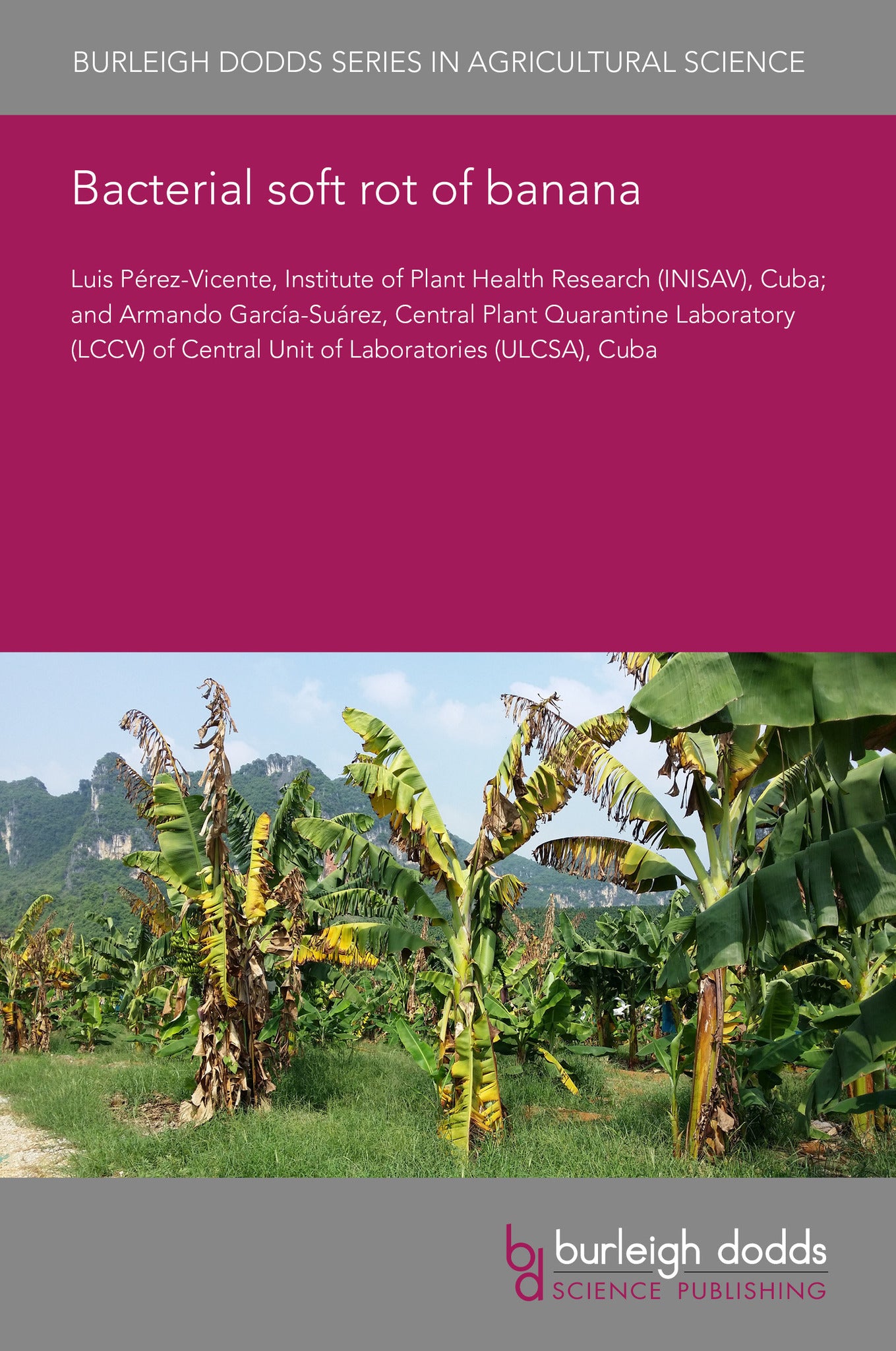
Bacterial soft rot of banana
Bacterial soft rots of banana and plantains involve two different diseases caused by related but distinct pathogens: rhizome soft rot or head rot by Pectobacterium carotovorum. subsp. carotovorum and pseudostem wet rot and rhizome rot - in some parts of the world called rhizome necrosis and corm ...
Read MoreRegular price £25.00Sale price £25.00 Regular price £25.00Unit price per -

-


Sensing the city through television
This is an investigation of the fictional representations of the city in contemporary British and American television drama, assessing their political, sociological and cultural implications. It draws on five key case studies, analyzing the structure, content, characterisation and narrative, and ...
Read MoreRegular price £0.00Sale price £0.00 Regular price £0.00Unit price per -


Sensing the city through television
This is an investigation of the fictional representations of the city in contemporary British and American television drama, assessing their political, sociological and cultural implications. It draws on five key case studies, analyzing the structure, content, characterisation and narrative, and ...
Read MoreRegular price £16.00Sale price £16.00 Regular price £0.00Unit price per -


Journalism and the metaverse
Journalism has been in a state of disruption since the development of the Internet. The Metaverse, or the future of the Internet, is likely to fuel even further disruption in journalism. This book will provide a critical examination of the implications of the Metaverse for the continuing transfor...
Read MoreRegular price £80.00Sale price £80.00 Regular price £0.00Unit price per -


Understanding virtual universities
Anticipating a future in which distance learning and virtual reality tutoring systems play a key role in university teaching, Rada provides guidelines for making the best use of technological opportunities. This book combines managerial, social and technical issues to provide a comprehensive appr...
Read MoreRegular price £12.00Sale price £12.00 Regular price £0.00Unit price per -


Understanding virtual universities
Anticipating a future in which distance learning and virtual reality tutoring systems play a key role in university teaching, Rada provides guidelines for making the best use of technological opportunities. This book combines managerial, social and technical issues to provide a comprehensive appr...
Read MoreRegular price £0.00Sale price £0.00 Regular price £0.00Unit price per -


Nanoart
Nano is Greek for dwarf and the word nanotechnology ‘was first proposed in the early seventies by a Japanese engineer, Norio Taniguchi, implying a new technology that went beyond controlling materials and engineering on the micrometer scale that dominated the 20th Century’. The content for this b...
Read MoreRegular price £36.00Sale price £36.00 Regular price £0.00Unit price per -


Nanoart
Examining art that intersects with science and seeks to make visible what cannot ordinarily be seen with the naked eye, Nanoart provides thorough insight into new understandings of materiality and life. It includes an extensive overview of the history of nanoart from the work of Umberto Boccioni ...
Read MoreRegular price £0.00Sale price £0.00 Regular price £0.00Unit price per -
Improving standards and certification in agri-food supply chains
This collection reviews the range of principles and standards that have been developed and the ways to optimise their contribution to achieving safe, sustainable and socially responsible agricultural production.
Regular price £160.00Sale price £160.00 Regular price £160.00Unit price per -
The role of technology in crisis management and product recall in food supply chains
This chapter considers food governance and how it frames crisis management and product recalls in food supply chains. Effective food recalls following a food safety or legality related incident are supported by traceability systems ranging from paper based to those that apply the newest technolog...
Read MoreRegular price £25.00Sale price £25.00 Regular price £25.00Unit price per -
Advances in identifying and tracking malicious contamination of food in agri-food supply chains
This chapter is about the history of bio-warfare, and how biological and bio-chemical weapons were developed during the two World Wars and afterwards. There are examples of attacks to the food chain of entire communities with biochemical weapons by either single individuals or groups, and attacks...
Read MoreRegular price £25.00Sale price £25.00 Regular price £25.00Unit price per -
Developing smart agri-food supply chains
This collection provides an authoritative assessment of the current issues challenging the safety of agri-food supply chains and the recent technological developments implemented to improve safety and quality at all levels.
Regular price £150.00Sale price £150.00 Regular price £150.00Unit price per -
Advances in techniques for identifying and tracking foreign bodies in agri-food supply chains
Foreign bodies in food can occur at any stage in the agri-food supply chain continuum, and they are recognised as the main single source of customer complaints. From a food safety perspective, these physical contaminants can cause adverse health effects, so food companies strive to have effective...
Read MoreRegular price £25.00Sale price £25.00 Regular price £25.00Unit price per -
The use of internet of things (iot) to improve transparency in agri-food supply chains
Global food production needs to increase by approximately 70% by 2050 to ensure food security and feed the global population which is expected to reach 9.6 billion by 2050. To achieve these objectives in a sustainable manner, there is a need for modernisation and intensification of agricultural p...
Read MoreRegular price £25.00Sale price £25.00 Regular price £25.00Unit price per -
Advances in fingerprint and rapid methods for improved traceability in agri-food supply chains
Agri-food supply and value chain markets have become increasingly complex due to the changes in consumers demands, the development of complex food standards associated with food safety and quality, advances in technology (e.g. big data, machine learning), and changes in the food industry structur...
Read MoreRegular price £25.00Sale price £25.00 Regular price £0.00Unit price per -
Advances in traceability systems in agri-food supply chains
Failure to deliver safe and high-quality food reduces consumer confidence in the food industry and results in costly food crises, foodborne illnesses and disruption to food supply chains. Recent advances in traceability systems, and associated identification and communication technologies hold th...
Read MoreRegular price £25.00Sale price £25.00 Regular price £25.00Unit price per -
Developing decision support systems for crop yield forecasts
This chapter discusses existing yield forecasting systems in which the yield forecasts are driven by integration of different data sources, such as output of crop modeling, remote sensing and gridded climate datasets. It first provides overviews of the two predominant modeling approaches— crop si...
Read MoreRegular price £25.00Sale price £25.00 Regular price £25.00Unit price per -
Key challenges and developments in non-targeted methods or systems to identify food adulteration
Food fraud is an ongoing global challenge that is amplified by the complexity of supply chain networks and fraudsters becoming more innovative in the way they commit fraud. There is a great need for rapid analytical tools that offer broad product screening. Non-targeted methods provide an approac...
Read MoreRegular price £25.00Sale price £25.00 Regular price £0.00Unit price per

We're sorry. An error has occurred
Please cancel or retry.


