





Some error occured while loading the Quick View. Please close the Quick View and try reloading the page.
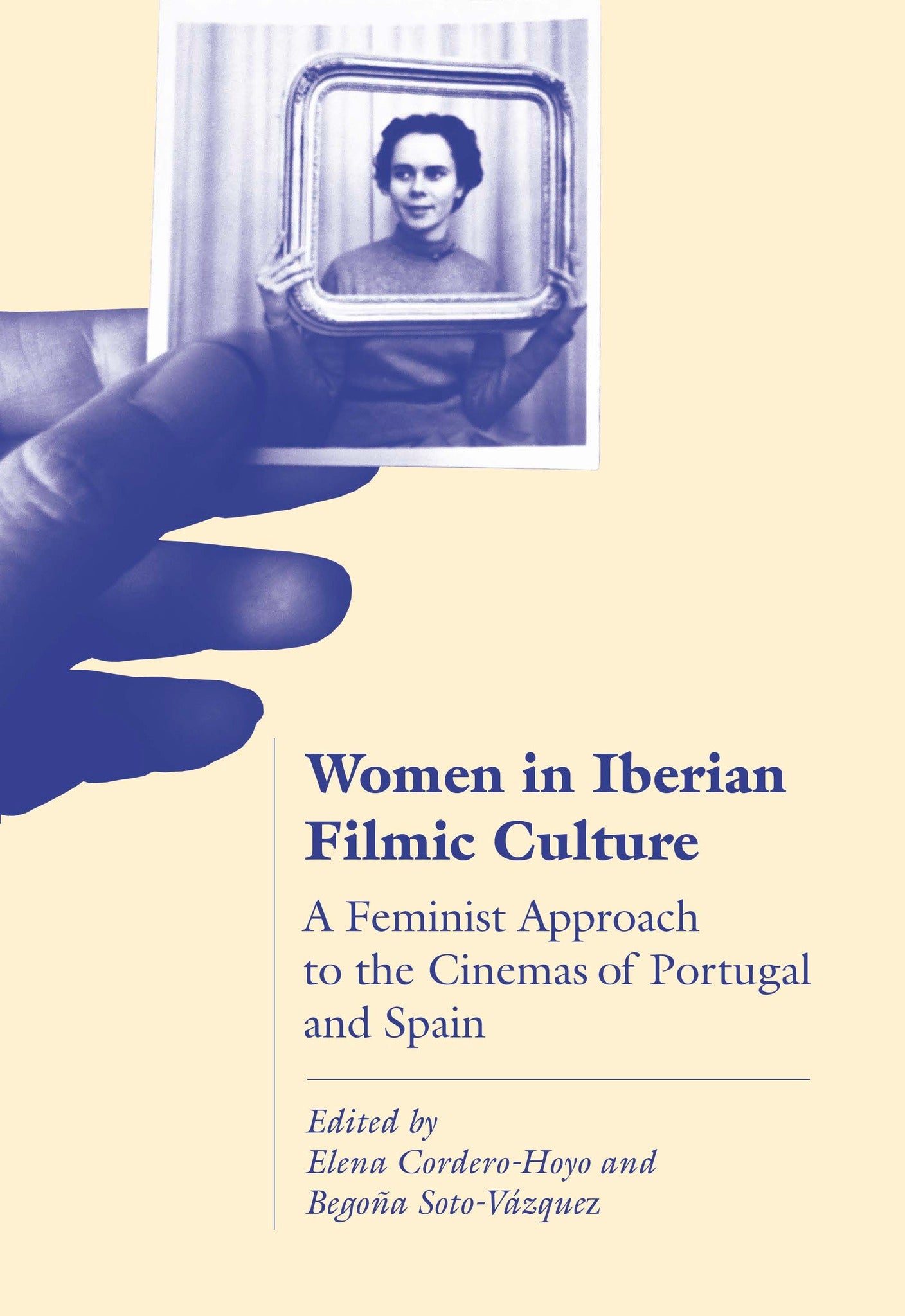
Though cinema arrived in Spain and Portugal at the end of the nineteenth century, national and industrial problems as well as the dictatorships of Salazar and Caetano (in Portugal) and Franco (in Spain) meant Iberian cinemas were isolated from European cultural trends. Strict censorship in both countries limited the themes and artistic practices adopted, while a specific cinematographic language, in many cases full of metaphors and symbolism, sought alternatives to the imposed official discourse and preconceived definitions of supposed national identities. By contrast, the arrival of democracy from the 1970s onwards widened not just the panorama of film production and criticism, but also opened the film industry to women’s participation in areas historically assigned to men.
Focusing on Portuguese and Spanish cinema, this collection brings together research about women and their status in relation to Iberian filmic culture. The volume contributes to ongoing debates about the position of women in the cinemas of Portugal and Spain from interdisciplinary and feminist perspectives as well as new accounts of film history. It also aims to promote comparisons between Iberian cinemas and visual culture, a topic that is almost unexplored in academia, despite the similar histories of the two countries, particularly throughout the twentieth century.


'What Women in Iberian Filmic Culture does particularly well is to bring together various perspectives that cover the less obvious aspect of women’s contributions to the Iberian film industries. Forming some unusual connections between disciplines that rarely feature in history books, and focusing on contributions that often happen in the background and remain unaccounted for, we are effectively presented with an alternative vision of female resistance (and persistence), while also making a difficult journey through an otherwise male dominated field. [...] Women in Iberian Filmic Culture is therefore a refreshing read, appreciating the input that generations of women have made to shape the filmmaking industry on the Iberian Peninsula.'
Introduction: Women in Iberian cinemas, a singular tour in Spain and Portugal – Elena Cordero-Hoyo and Begoña Soto-Vázquez
Part 1: The presence of women in Iberian cinemas
Fiction as a Place of Power: The Presence of Female Directors Throughout the History of Portuguese Cinema – Ana Catarina Pereira
The Invisible Women of Spanish Cinema – Annette Scholz
Três dias sem Deus by Bárbara Virgínia, a Different Way of Representation – Ricardo Vieira Lisboa
Part 2: Killing the muse: Women as creator
Gender Violence and Historical Memory in Margarida Cardoso and Isabel Coixet – Estela Vieira
‘People Don’t Understand [the] World’: The Limits of Transnational Authorship in the Cinema of Isabel Coixet – Katarzyna Paszkiewicz
Murmuring Colonial Ghosts in Margarida Cardoso’s Filmography – Adriana Martins
Part 3: Beyond the author: Recognizing other cinematographic professions
Weaving a Cinematographic Culture and Writing about Film or How to Reconstruct the Subject of Women in Spanish Silent Cinema – Begoña Soto-Vázquez
A Woman Censor during the Portuguese Dictatorship (1968–74) – Ana Bela Morais
Costume Designers in Portugal: A Trade Between Art and Technique Relegated to the Status of ‘a Woman’s Thing’ – Caterina Cucinotta
Part 4: Historical memory and the gendered archive
Paradigms – Women Filmmakers in 1970s Revolutionary Portugal – Delgado, Nordlund, Cordeiro and Serra – Érica Faleiro Rodrigues
The Mother Awaits: Woman and Landscape in Galician Non-Fiction Cinema – Mª Soliña Barreiro González
Exploring the Portuguese Memory through Appropriation Film: A toca do lobo (Mourão, 2015) – Elena Cordero-Hoyo
Notes on contributors