





Some error occured while loading the Quick View. Please close the Quick View and try reloading the page.
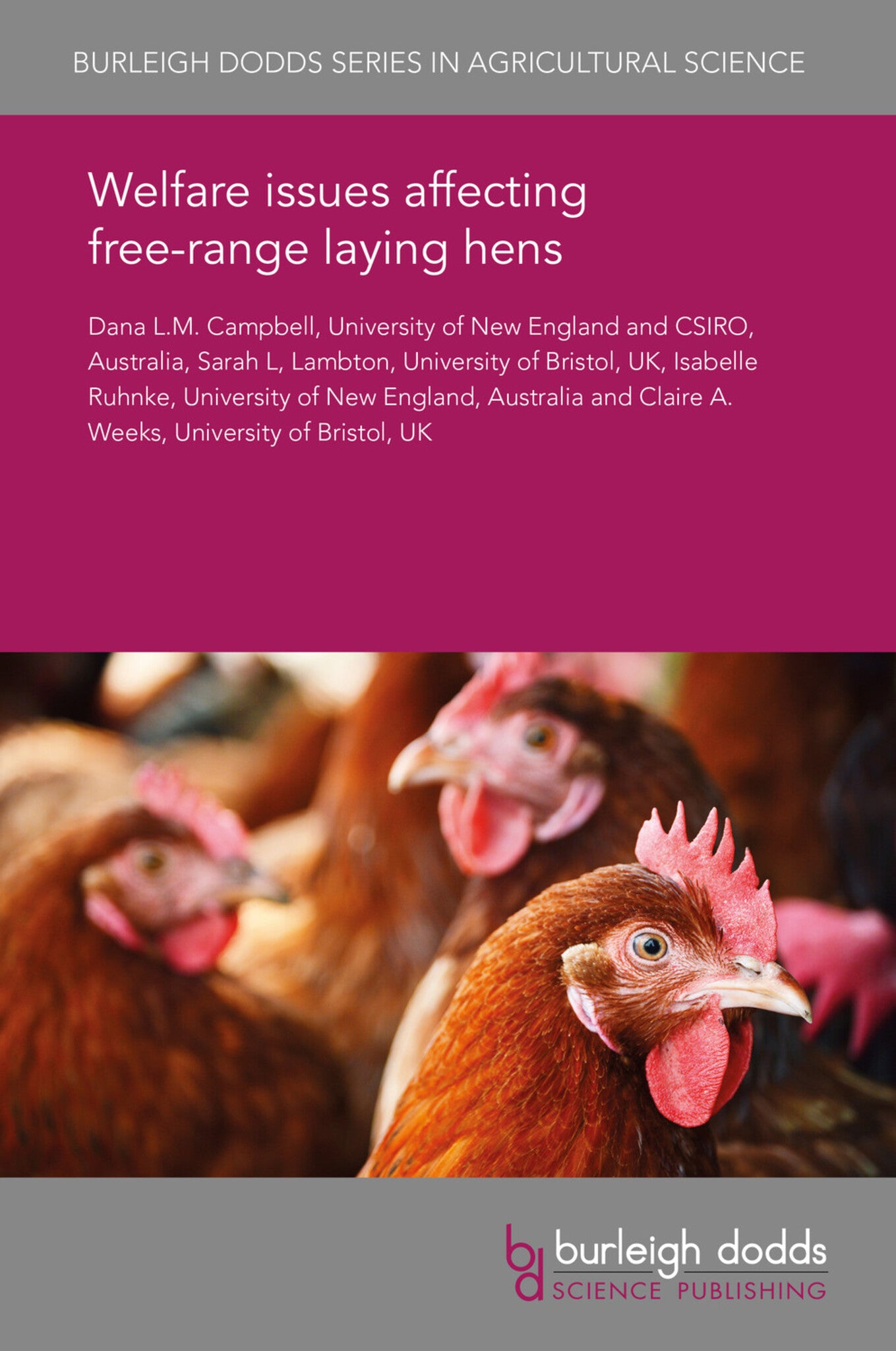
Free-range laying hen production systems involve providing flocks of hens with the chance to use minimally controlled outdoor areas, rather than keeping them in intensive, environmentally controlled, indoor housing. Such systems are considered more natural and ethical. However, highly productive modern genotypes, selected for cage production, are harder to manage in large flocks and outdoor environments. To sustainably improve free-range housing and management, we must understand how hens behave in these systems, the welfare challenges they face and what modifications will, in practice, adequately address hens’ needs. This chapter reviews the following areas of significance and concern: individual differences in range use, behavioural expression on the range, correlations between ranging and health variables, parasite loads, adequate nutrition, grass impaction, feather pecking and cannibalism.

Price: £25.00
Publisher: Burleigh Dodds Science Publishing
Imprint: Burleigh Dodds Science Publishing
Series: Burleigh Dodds Series in Agricultural Science
Publication Date:
07 April 2017
ISBN: 9781838790967
Format: eBook
BISACs:

1 Introduction 2 Use of the outdoor range 3 Mortality, health and correlations with range use 4 Predators and pathogens 5 Ranging, nutrition and grass impaction 6 Feather pecking and cannibalism 7 Summary 8 Future trends in research 9 Where to look for further information 10 References