Skip to product information
1 of 1

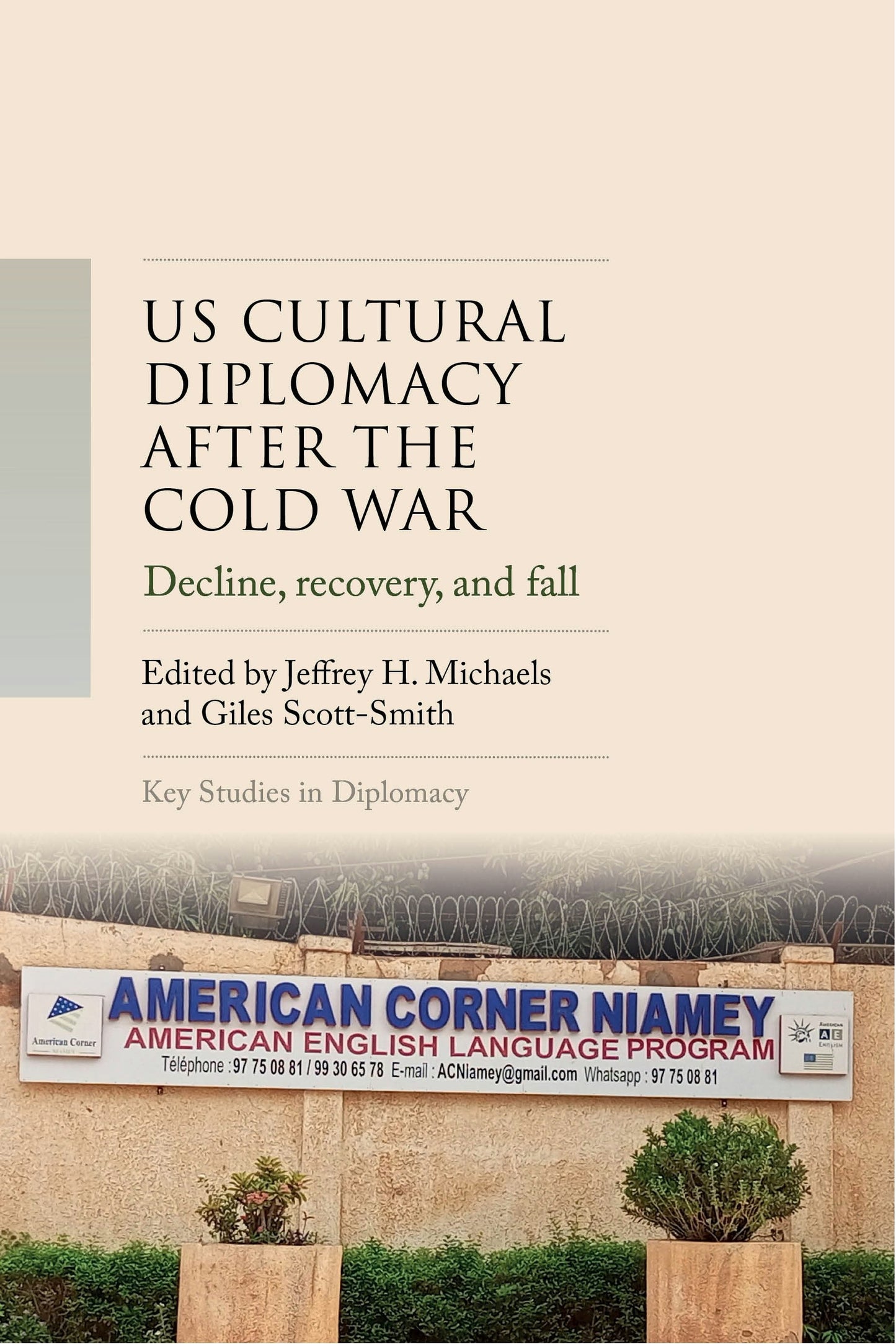
US cultural diplomacy after the Cold War

Regular price £90.00
Sale price £90.00 Regular price £90.00
Sale Sold out
In the decades following the USSR’s collapse, the United States has shifted from unrivalled hegemon to a position of relative decline. Although America appeared dominant after 1991, its culture—lik...
Read More
  • Format:
  • 10 March 2026
View Product Details
In the decades following the USSR’s collapse, the United States has shifted from unrivalled hegemon to a position of relative decline. Although America appeared dominant after 1991, its culture—like its diplomatic, military, and economic power—faced little competition. Such favourable conditions reduced the perceived need for cultural diplomacy; the government saw little reason to promote a cultural product that seemed to sell itself. After 9/11, however, it became clear that global attitudes toward the United States were less positive than assumed, prompting a renewed emphasis on cultural diplomacy. Despite internal and external challenges, officials supported a range of cultural initiatives to strengthen the American brand abroad. Cultural diplomacy has since adopted new forms of expression to build positive foreign relations. The arrival of the second Trump administration in 2025 has signalled a retreat from using cultural diplomacy to promote empowerment and diversity, leaving its future uncertain.
files/i.png Icon
Price: £90.00
Pages: 272
Publisher: Manchester University Press
Imprint: Manchester University Press
Series: Key Studies in Diplomacy
Publication Date: 10 March 2026
ISBN: 9781526188397
Format: Hardcover
BISACs:

POLITICAL SCIENCE / International Relations / General, International relations, POLITICAL SCIENCE / International Relations / Diplomacy, HISTORY / United States / 20th Century, Diplomacy

REVIEWS Icon

Jeffrey H. Michaels is the IEN Senior Fellow at the Institut Barcelona d’Estudis Internacionals
Giles Scott-Smith is Professor of Transnational Relations and New Diplomatic History and Dean of Leiden University College, Leiden University

Introduction
Jeffrey H. Michaels and Giles Scott-Smith

Part I: Sites
1 Designing, displaying and engaging for reputational security: The death and resurrection of US expo diplomacy, from Seville 1992 to Dubai 2020
Nicholas J. Cull

2 Museums and US cultural diplomacy in the twenty first century
Hyojung Cho

3 Cultural platforms beyond the compound: American Corners and US diplomacy
Jeffrey H. Michaels

Part II: Sounds and Screens
4 Still ‘120,000 American ambassadors’?: Hollywood, the US Department of State and 21st century cultural diplomacy
Paul Moody

5 ‘A sixteen-inch broadside of soft power’: The New York Philharmonic in Pyongyang
Jonathan Rosenberg

6 Unresolved dissonances: Tensions and motivations in Next Level and OneBeat
Erica Fedor

Part III: Policy Settings
7 The president as cultural diplomat: Donald Trump, the presidency, and American cultural diplomacy
Andrew J. Gawthorpe

8 Washington’s see-saw: US public diplomacy and climate change
Mara Oliva

9 Bending the arc of history: Racial equity and protest in US cultural diplomacy
Oliver Elliott

10 Measuring the impact of 21st-century US cultural diplomacy
Mark Katz

Conclusion
Giles-Scott Smith and Jeffrey H. Michaels