





Some error occured while loading the Quick View. Please close the Quick View and try reloading the page.
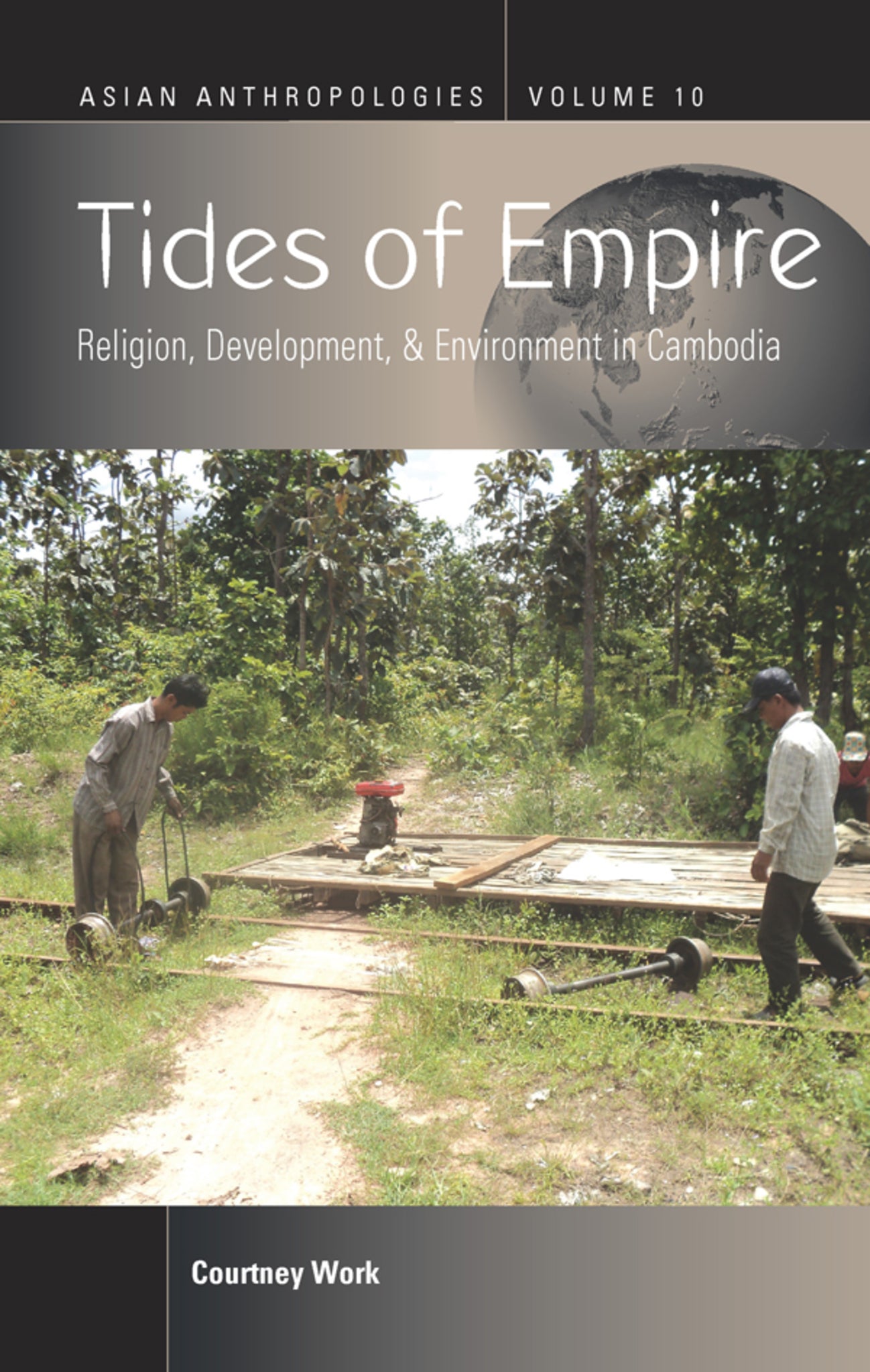
At the forested edge of Cambodia’s development frontier, the infrastructures of global development engulf the land and existing social practices like an incoming tide. Cambodia’s distinctive history of imperial surge and rupture makes it easier to see the remains of earlier tides, which are embedded in the physical landscape, and also floating about in the solidifying boundaries of religious, economic, and political classifications. Using stories from the hybrid population of settler-farmers, loggers, and soldiers, all cutting new social realities from the water and the land, this book illuminates the contradictions and continuities in what the author suggests is the final tide of empire.


“The book contains exciting discussions, especially for studying religion and environment…It is a provocative book that promises to reopen debates about state–society–environment arrangements in Cambodia both past and present and to enrich the anthropological study of human–nature relationships.” • South East Asisa Research
“Tides of Empire is a provocative book that advances long submerged connections among state development, layered religious practices, and ecological or place-making endeavors in Southeast Asia.” • Lorraine V. Aragon, University of North Carolina
List of Illustrations
Acknowledgements
Note on Transliteration
Chapter 1. Shaping the Space: Movement, Stories, and Structure
Chapter 2. A Roadology: Intentional Acts of Movement and Transformation
Chapter 3. Neak Ta: Articulating the Boundaries
Chapter 4. The Cham: History, Memory, and Practice
Chapter 5. Merit in Motion: Temple Building and Other Powerful Acts
Conclusion
Glossary of Non-English Terms
References
Index