





Some error occured while loading the Quick View. Please close the Quick View and try reloading the page.
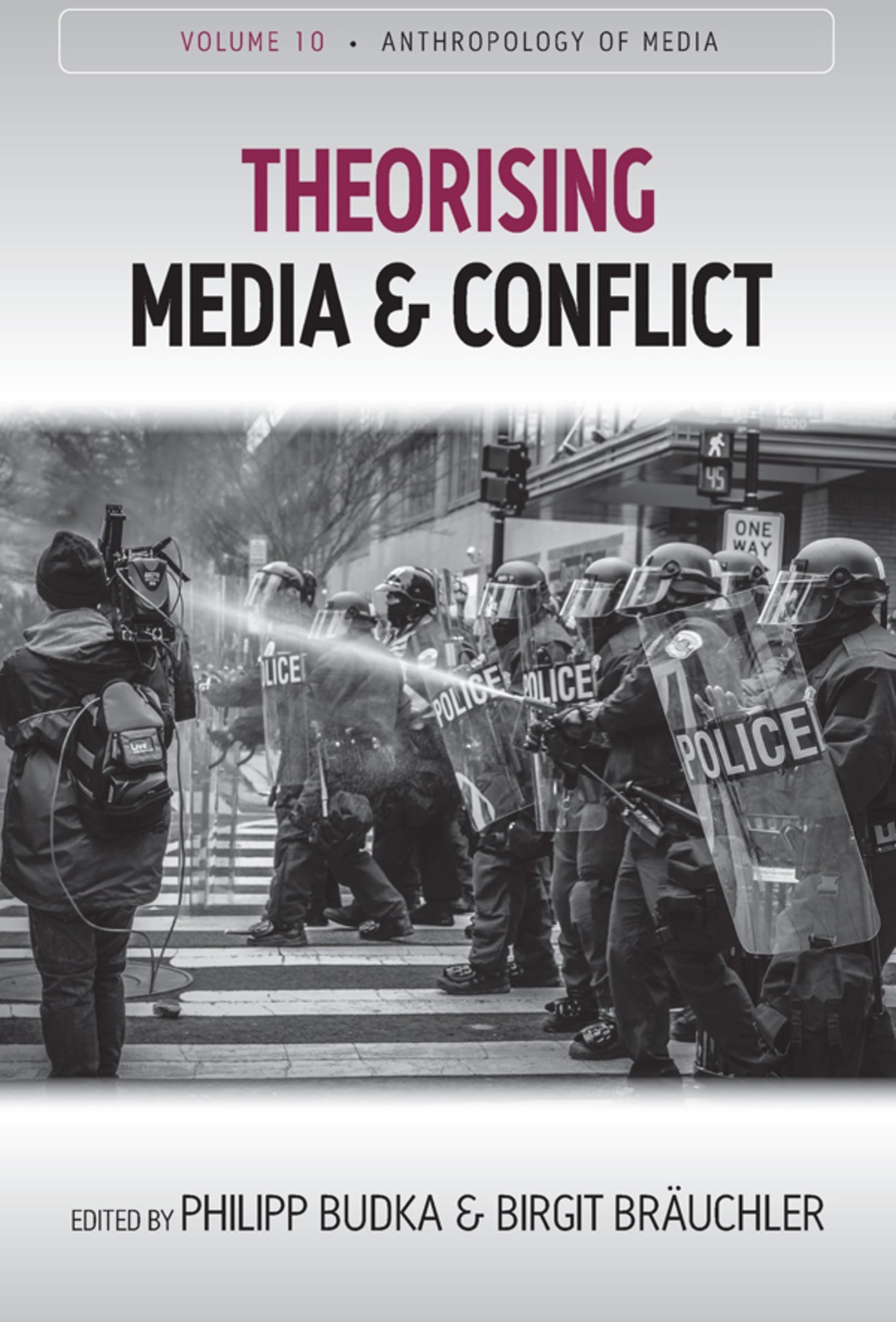
Theorising Media and Conflict brings together anthropologists as well as media and communication scholars to collectively address the elusive and complex relationship between media and conflict. Through epistemological and methodological reflections and the analyses of various case studies from around the globe, this volume provides evidence for the co-constitutiveness of media and conflict and contributes to their consolidation as a distinct area of scholarship. Practitioners, policymakers, students and scholars who wish to understand the lived realities and dynamics of contemporary conflicts will find this book invaluable.


“The present format does not allow me to do justice to all the contributions, but I can highly recommend the reader to take a closer look at [this volume that] brings new perspectives to the table and helps us move our attention from quantitative evaluations of the role of media in conflicts to the everyday media practices in conflict areas… The book is an ethnographic contribution to the study of media and conflict, adding qualitative research to a field where quantitative studies traditionally have dominated. It is easily accessible,and I believe that it is of relevance for students and researchers within the fields of media, communication and conflict. I hope that the volume finds the audience it deserves.” • Global Media Journal
“This volume is a welcome addition to security and war studies, communication, journalism and social sciences at large. All students who wonder how to study conflict without coming under fire could highly benefit from this book.” • Media, War and Conflict
Preface
Philipp Budka
PART I: KEY DEBATES
Introduction: Anthropological Perspectives on Theorising Media and Conflict
Birgit Bräuchler and Philipp Budka
Chapter 1. Transforming Media and Conflict Research
Nicole Stremlau
PART II: WITNESSING CONFLICT
Chapter 2 Just a ‘Stupid Reflex’? Digital Witnessing of the Charlie Hebdo Attacks and the Mediation of Conflict
Johanna Sumiala, Minttu Tikka and Katja Valaskivi
Chapter 3. The Ambivalent Aesthetics and Perception of Mobile Phone Videos: A (De-)Escalating Factor for the Syrian Conflict
Mareike Meis
PART III: EXPERIENCING CONFLICT
Chapter 4. Banal Phenomenologies of Conflict: Professional Media Cultures and Audiences of Distant Suffering
Tim Markham
Chapter 5. Learning to Listen: Theorising the Sounds of Contemporary Media and Conflict
Matthew Sumera
PART IV: MEDIATED CONFLICT LANGUAGE
Chapter 6. Trolling and the Orders and Disorders of Communication in ‘(Dis)Information Society’
Jonathan Paul Marshall
Chapter 7. ‘Your Rockets Are Late. Do We Get a Free Pizza?’: Israeli-Palestinian Twitter Dialogues and Boundary Maintenance in the 2014 Gaza War
Oren Livio
PART V: SITES OF CONFLICT
Chpapter 8. What Violent Conflict Tells Us about Media and Place-Making (and Vice Versa): Ethnographic Observations from a Revolutionary Uprising
Nina Grønlykke Mollerup
Chapter 9. An Ayuujk ‘Media War’ over Water and Land: Mediatised Senses of Belonging between Mexico and the United States
Ingrid Kummels
PART VI: CONFLICT ACROSS BORDERS
Chapter 10. Transnationalising the Nagorno-Karabakh Conflict: Media Rituals and Diaspora Activism between California and the South Caucasus
Rik Adriaans
Chapter 11. Stones Thrown Online: The Politics of Insults, Distance and Impunity in Congolese Polémique
Katrien Pype
PART VII: AFTER CONFLICT
Chapter 12. Mending the Wounds of War: A Framework for the Analysis of the Representation of Conflict-Related Trauma and Reconciliation in Cinema
Lennart Soberon, Kevin Smets and Daniel Biltereyst
Chapter 13. Going off the Record? On the Relationship between Media and the Formation of National Identity in Post-Genocide Rwanda
Silke Oldenburg
Chapter 14. From War to Peace in Indonesia: Transforming Media and Society
Birgit Bräuchler
Afterword
John Postill
Index