





Some error occured while loading the Quick View. Please close the Quick View and try reloading the page.
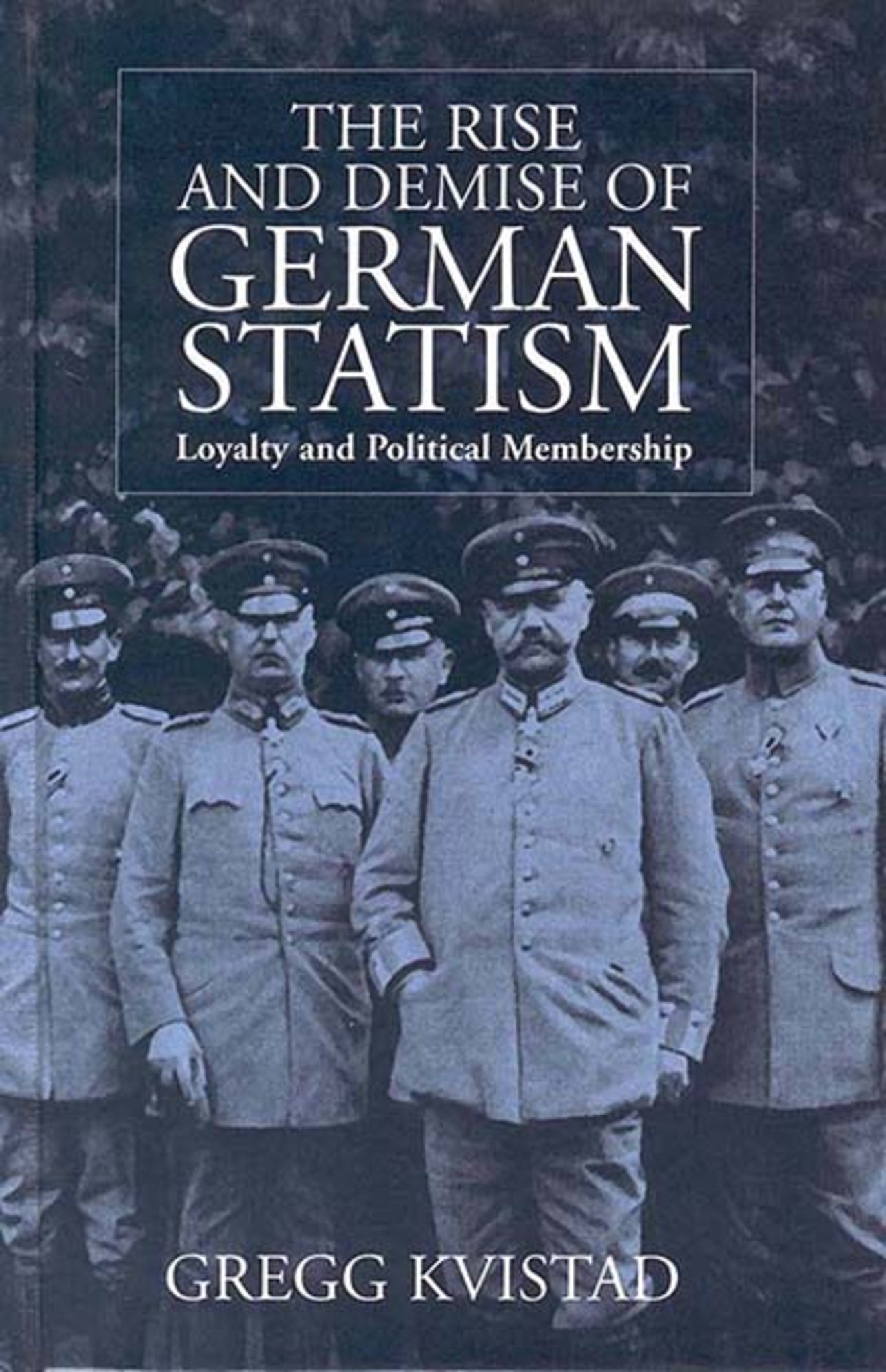
German statism as a political ideology has been the subject of many historical studies. Whereas most of these focus on theoretical texts, cultural works, and vague "traditions", this study understands German statism as a functioning logic of political membership, a logic that has helped to determine who is "in" and who is "out" with regard to the German political community. Tracing statism from the early 19th century through German unification and beyond in the 1990s, the author argues that, with its central concern for a political loyalty that is vetted "from above," it historically served the function of stabilizing the political order and containing democratic mobilization. Beginning in the 1960s, however, a mobilized German democratic consciousness "from below" gradually rejected statism as anachronistic for informing political and policy debate, and German political institutions began to respond to kind.


"There is no comparable treatment available in either English or German." · William E.Paterson, Birmingham University
"No book approaches Kvistad's volume on German statism. It is hard to single out the best parts of this outstanding book. Highly recommended for upper-division undergraduates and above." · CHOICE
Preface
Introduction: Political Membership, Logics of Appropriateness, and Political Loyalty in Germany
Chapter 1. State Bureaucrats before Societal Citizens: The Articulation and Consolidation of German Statism in the Early Nineteenth Century
Chapter 2. “The Most Democratic Democracy in the World”:German Statism Survives the Weimar Republic
Chapter 3. The Institutional Politics of Postwar West Germany: The Parteienstaat, the Professional Civil Service, and the Political Mobilizations of the 1960s and 1970s
Chapter 4. German Statism and West German Political Party and Intellectual Discourse in the 1970s
Chapter 5. The Tensions Endemic to an Alternative Politics in a Statist Context: The West German Greens between State and Society
Chapter 6. The Discourse of German Unification: Between Statist Reassurance and Societalist Risk
Chapter 7. Unified Germany and the New Politics of “Rational” Membership: Civil Service and Naturalization Policy in the 1990s
Conclusion: The Demise of German Statism and the Tensions of Democratic Political Membership
Bibliography