





Some error occured while loading the Quick View. Please close the Quick View and try reloading the page.
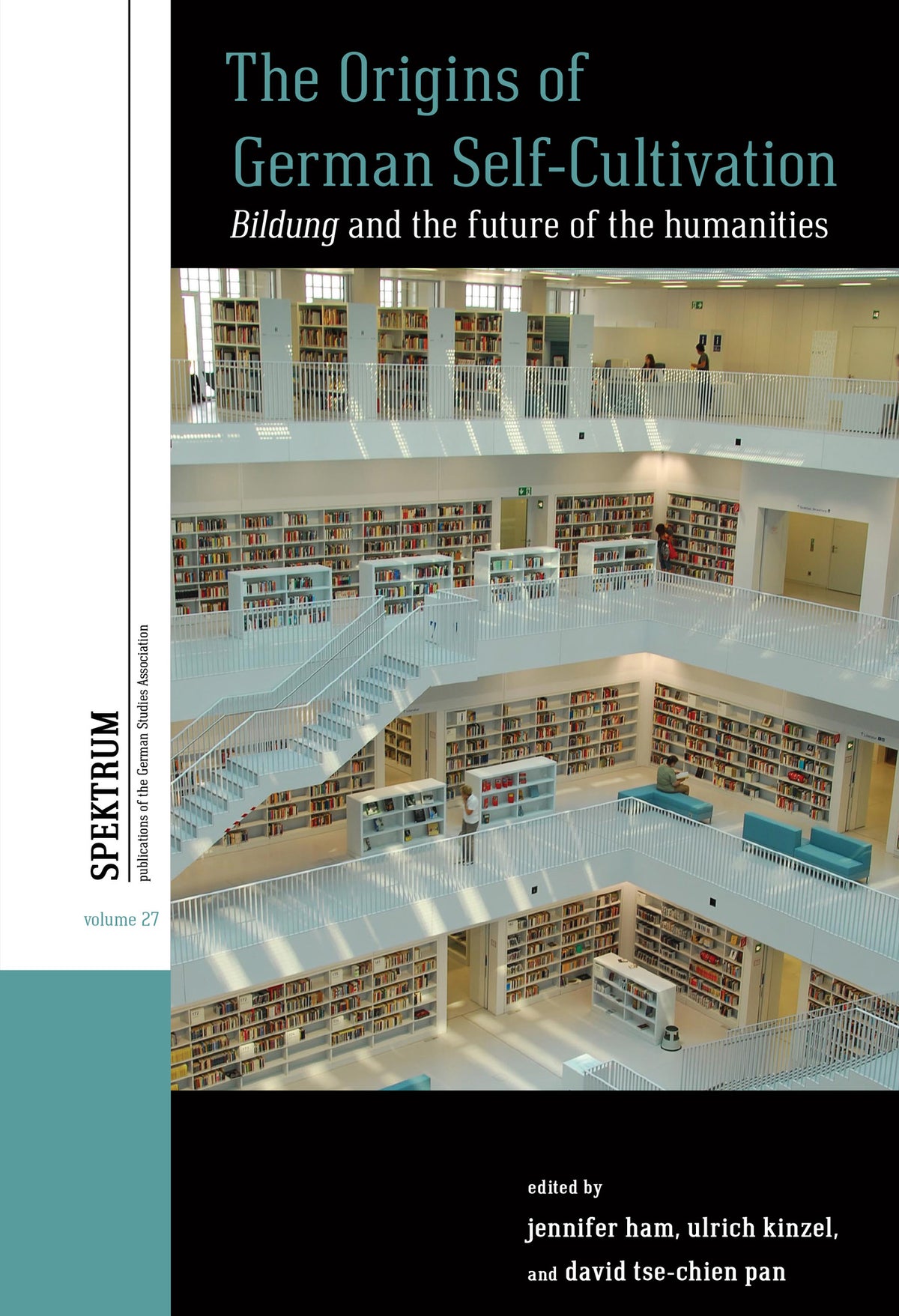
Recent devaluations of a liberal arts education call the formative concept of Bildung, a defining model of self-cultivation rooted in 18th and 19th century German philosophy and culture, into question and force us to reconsider what it once meant and now means to be an “educated” individual. This volume uses an arc of interdisciplinary scholarship to map both the epistemological origins and cultural expressions of the pivotal notion of Bildung at the heart of pursuit in the humanities. From its intriguing original historical manifestations to its continuing resonance in current ongoing debates surrounding the humanities, the editors urge us to ask and discover how the classical concept of Bildung, so central to humanistic inquiry, was historically imagined and applied in its original German context.


Jennifer Ham is Professor of German and Humanities at the University of Wisconsin-Green Bay, where she teaches courses on German literature, culture and language and serves as division Chair of Humanities. Jennifer has also published and presented on subjects such as animal studies, Nietzsche, femininity, cabaret, Frank Wedekind and German cinema, and is also coeditor of Animal Acts: Configuring the Human in Western History (Routledge, 1997).
Ulrich Kinzel is Professor of German Literature at the University of Kiel. His research and teaching include seventeenth to twentieth century German literature and culture as well studies in comparative literature and culture. He is the author of Ethische Projekte. Literatur und Selbstgestaltung im Kontext des Regierungsdenkens. Humboldt, Goethe, Stifter, Raabe (Verlag Vittorio Klostermann, 2000) and edited London – Urban Space and Cultural Experience (Literatur in Wissenschaft und Unterricht, 2010).
David Tse-chien Pan is Professor of European Languages and Studies at the University of California, Irvine, and the editor of Telos. He is the author of Primitive Renaissance: Rethinking German Expressionism (University of Nebraska Press, 2001) and Sacrifice in the Modern World: On the Particularity and Generality of Nazi Myth (Northwestern University Press, 2012).
List of Illustrations
Acknowledgments
Introduction
Jennifer Ham, Ulrich Kinzel, and David Tse-chien Pan
Chapter 1. Self-cultivation and the Police State: The Political Context of Wilhelm von Humboldt’s Concept of Bildung
Ulrich Kinzel
Chapter 2. Fichte’s Conception of Bildung and German National Identity
David Tse-chien Pan
Chapter 3. Becoming Solid: Bildung and Storage Media in Moritz’s and Goethe’s Italian Travels
Sean Franzel
Chapter 4. Schinkel’s Altes Museum as “Bildungsmuseum”: The Aesthetic Education of a National Community and the Makings of the Modern Museum
Andrea Meyertholen
Chapter 5. From Bildungsmaschine to Willenserziehung: Nietzsche’s Project of “Heroic Minds”
Jennifer Ham
Chapter 6. The Self-Formation of Poetic Expression: Wilhelm Dilthey’s Geistesgeschichte
Anna Guillemin
Chapter 7. Bildung as Dialectical and Theological Hermeneutics in the Service of the Humanities
John Smith
Conclusion
Index