





Some error occured while loading the Quick View. Please close the Quick View and try reloading the page.
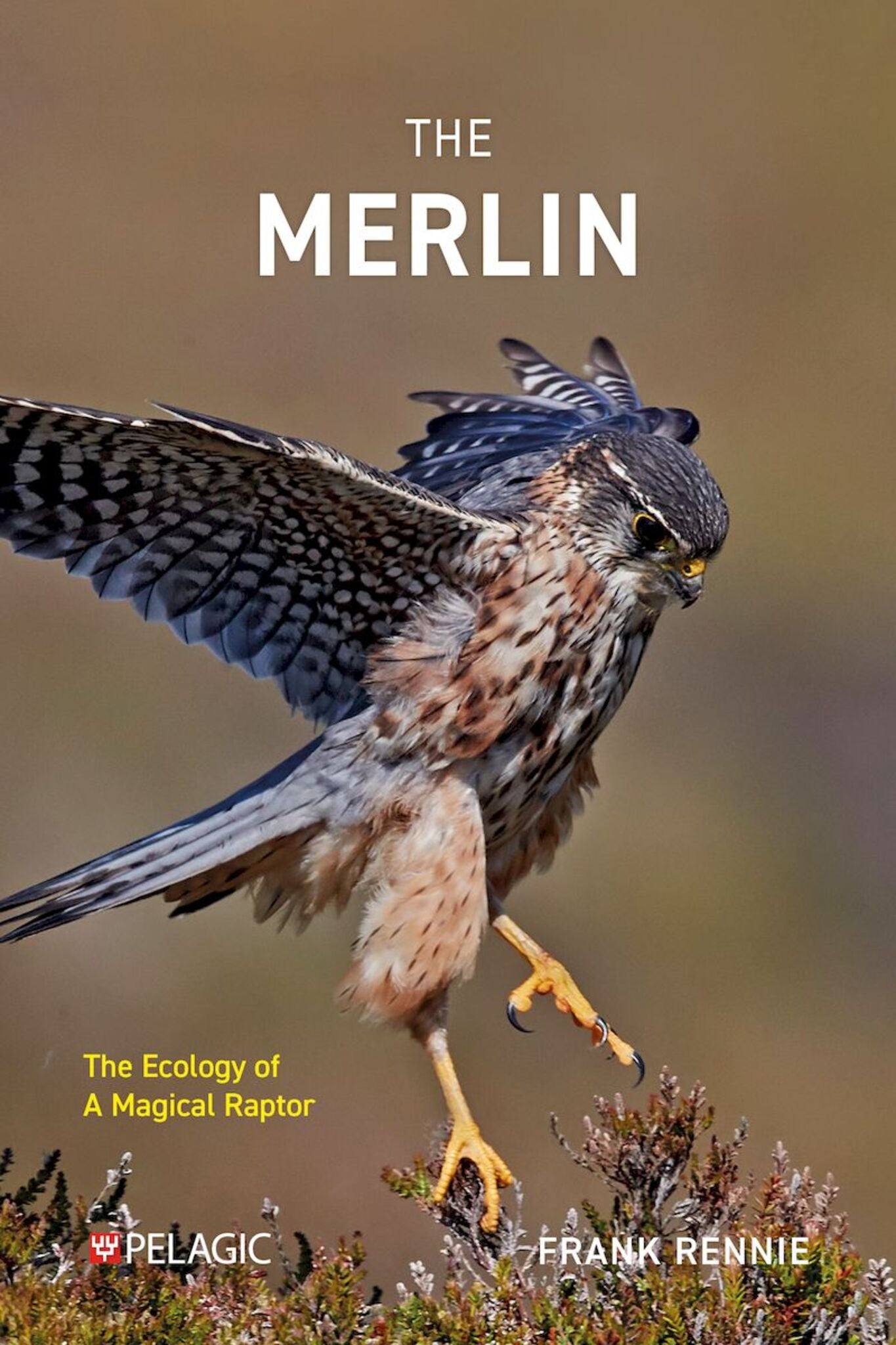
The Merlin Falco columbarius is Europe’s smallest falcon, and its breeding presence is often regarded as a key indicator of a healthy natural environment. A highly adaptable species, it displays a variety of intriguing and contrasting behaviours across its extensive Northern Hemisphere range.
Frank Rennie has spent many years observing and researching the characteristics of this important raptor. His landmark volume brings together for the first time many important sources of information from Europe, Asia and North America to better explain the complex and adaptive nature of the Merlin, which make it such a fascinating bird to observe.
The book provides in-depth coverage of the complex origins and behaviours of the Merlin, from its obscure fossil ancestors through to the contemporary challenges it faces from habitat destruction, environmental pollution and climate change. Close investigation of its hunting methods, habitat selection and breeding activities reveals some surprising regional differences that offer a new understanding of this critically important, elusive and quietly majestic indicator species.


This book tells me about the evolution of the species and its ecology in the UK but also across its wide world range... a very valuable source for those who are interested in Merlins.
— Mark Avery, environmentalist and wildlife campaigner
This book provides a lot of information in one place about a secretive bird and I enjoyed learning more about a bird that always brightens up a winter day.
— Keith Betton
Given my very limited perspective, it has been a pleasure to learn more of their habits and habitat, and much about their breeding which the book extensively covers... That’s one of the great things about being a birder, you are never too old to learn more about birds, and this monograph is an excellent source.
— Bo Beolens
*Book of the month* This is a book that I was so keen to read... If you like your birds of prey and you want to learn about our smallest raptor, this is for you.
— John Miles
This book is a must-have for those with a serious interest in the Merlin!
— Ian Paulsen
Anyone with a particular interest in the Merlin will find this well-written book an absorbing read... The book is attractively illustrated throughout and covers all expected areas of Merlin ecology.
— Alan Heavisides
A genuinely impressive deep dive into Europe’s smallest and arguably most exciting falcon... It’s the definitive guide on the species.
— John Hague
...a concise synthesis of current knowledge about the Merlin.
— Christian Marti
This informative book is mainly text, but there are also some high-quality images included. If you would like to find out more about one of the most mysterious UK bird species, I would recommend giving this a read.
— David White
Frank Rennie was Professor of Sustainable Rural Development at the University of the Highlands and Islands, Scotland, and is a Research Associate at the UHI Environmental Research Institute. His research interests include human ecology and new approaches to online networking for the clear communication of higher education and science.
Foreword by Ian Newton
Preface
Acknowledgements
1. An overview
2. Fossils, phylogeny and falcons
3. Descriptions, distribution and population dynamics
4. Merlin country
5. Food and feeding behaviour
6. Breeding biology
7. Movements and migration
8. Predators, parasites and pollutants
9. Merlins and human interactions
10. Habitat management and conservation
Appendices
A. Records of prey
B. Scientific names of species mentioned
Bibliography
Index