





Some error occured while loading the Quick View. Please close the Quick View and try reloading the page.
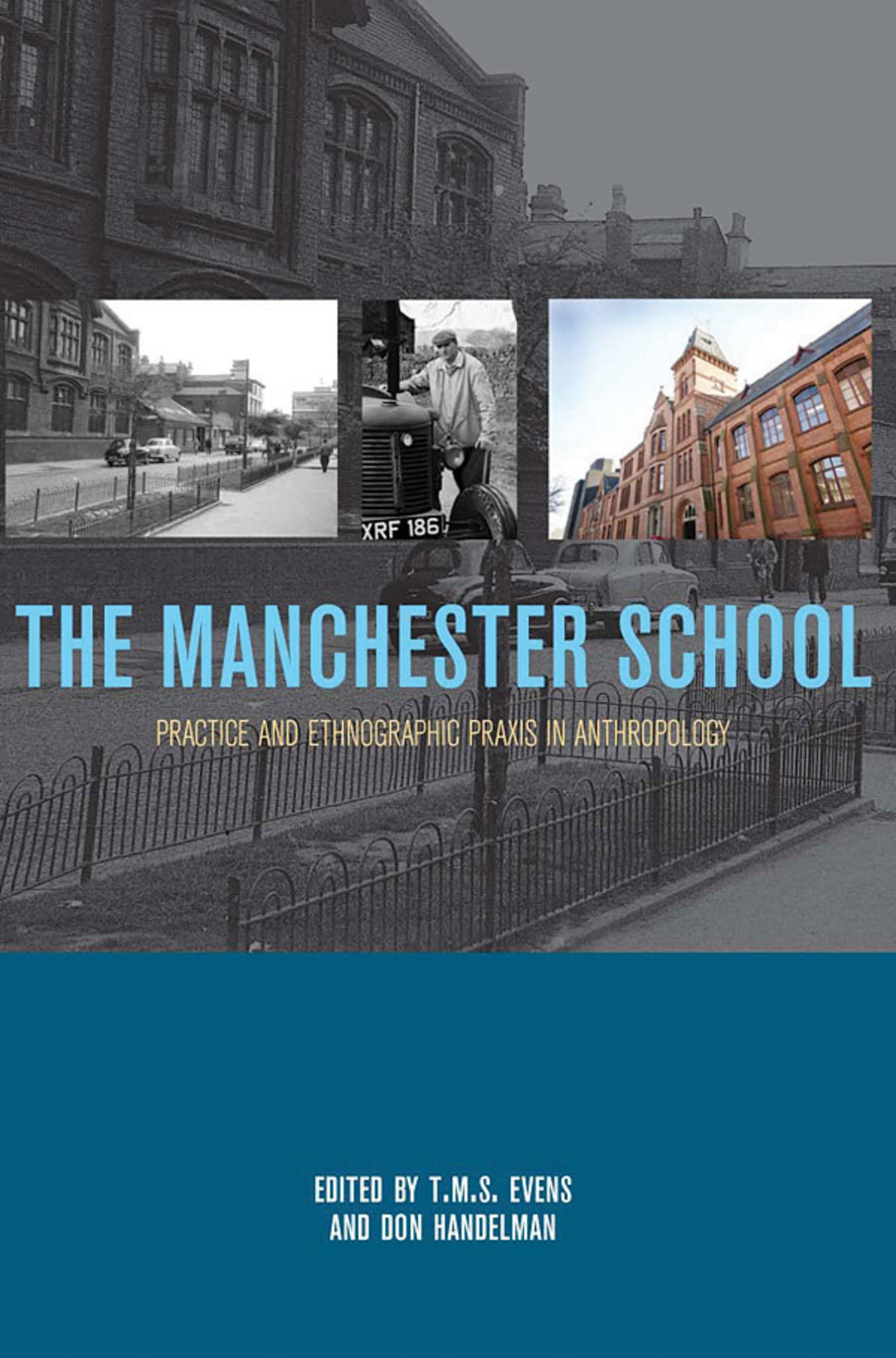
Pioneered by Max Gluckman to demonstrate the way in which social practice and structure together constitute and are themselves constituted by the situational flow of social life, the extended case method became diagnostic of the Manchester School of Social Anthropology. Anticipating practice theory, and implicitly politically charged, it was developed as a tool to bring into account what orthodox structural functionalism was ill-equipped to address, namely, problems such as change, conflict, deviance, and individual choice.
Edited by two students of Gluckman, the volume comprises reprinted pieces by Gluckman and his colleague Clyde Mitchell, a Coda by Mitchell’s student, Bruce Kapferer, contributions by Gluckman’s students and/or friends and colleagues, including Ronnie Frankenberg, Kapferer, Evens, Handelman, and Sally Falk Moore, as well as a number of contributions from other practitioners of the extended case. Apart from the reprinted pieces by Gluckman and Mitchell, all the contributions have been written for this volume. These essays, historical, theoretical, and ethnographical, serve to highlight and critically examine the fundamental features of the extended-case method, in order to advance its substantial, continuing merits.


“The book accomplishes admirably its stated aim, namely ‘to highlight and critically examine the fundamental features of the extended-case method, in order to advance its substantial, continuing merits’. Its editors and chapter contributors demonstrate that the extended-case method is more than a ‘method’, it is a sophisticated mode of research and analysis arising from the long-standing political, institutional and epistemological concerns of Gluckman and his students...This book is a timely addition to the ongoing rethinking of practice theory after Bourdieu… With its ethnographic grounding, attention to situated process, and stress on the latent potentialities of social interaction for the structuring of social life (cf. Giddens 1984), the renewal of this social anthropological tradition signaled by the present study has much to offer cultural anthropologists in the United States and elsewhere.” · Ethnos
... Everyone will welcome this renewal of the extended case / situational analysis approach. Recovering the original reasons for doing things that one otherwise takes for granted not only recovers an earlier richness and generosity of intellect but makes for a very spirited and reinvigorating contemporary exercise....this is an important enterprise in charting the development of anthropology, and indeed social science more broadly. · Marilyn Strathern, DBE, FBA, University of Cambridge<
Misunderstood and neglected for decades, the Manchester School's influence on contemporary social anthropology is considerable, even if often unacknowledged. This excellent book shows that Gluckman et al. were years ahead of their time in formulating methodological and theoretical questions of crucial importance to anthropology today. A timely book indeed! · Thomas Hylland Eriksen, University of Oslo/Free University of Amsterdam
Introduction: The Ethnographic Praxis of the Theory of Practice
T. M. S. Evens and Don Handelman
SECTION I: THEORIZING EXTENDED CASES
Preface: Theorizing the Extended-Case Study Method
T. M. S. Evens and Don Handelman
Chapter 1. Ethnographic Data in British Social Anthropology
Max Gluckman
Chapter 2. Case and Situation Analysis
J. Clyde Mitchell
Chapter 3. An Ontology for the Ethnographic Analysis of Social Processes: Extending the Extended-Case Method
Andreas Glaeser
Chapter 4. Some Ontological Implications of Situational Analysis
T. M. S. Evens
Chapter 5. The Extended Case: Interactional Foundations and Prospective Dimensions
Don Handelman
Chapter 6. Situations, Crisis, and the Anthropology of the Concrete: The Contribution of Max Gluckman
Bruce Kapferer
SECTION II: HISTORICIZING EXTENDED CASES
Preface: Historicizing the Extended-Case Method
T. M. S. Evens and Don Handelman
Chapter 7. Made in Manchester? Methods and Myths in Disciplinary History
David Mills
Chapter 8. History of the Manchester ‘School’ and the Extended-Case Method
Marian Kempny
Chapter 9. A Bridge over Troubled Waters, or What a Difference a Day Makes: From the Drama of Production to the Production of Drama
Ronald Frankenberg
SECTION III: CASE STUDIES
Preface: Extended-Case Studies—Place, Time, Reflection
T. M. S. Evens and Don Handelman
Chapter 10. The Workings of Uncertainty: Interrogating Cases on Refugees in Sweden
Karin Norman
Chapter 11. The Vindication of Chaka Zulu: Retreat into the Enchantment of the Past C.
Bawa Yamba
Chapter 12. The Politics of Ethnicity as an Extended Case: Thoughts on a Chiefly Succession Crisis
Björn Lindgren
Chapter 13. From Tribes and Traditions to Composites and Conjunctures
Sally Falk Moore
Epilogue
Bruce Kapferer
Index