





Some error occured while loading the Quick View. Please close the Quick View and try reloading the page.
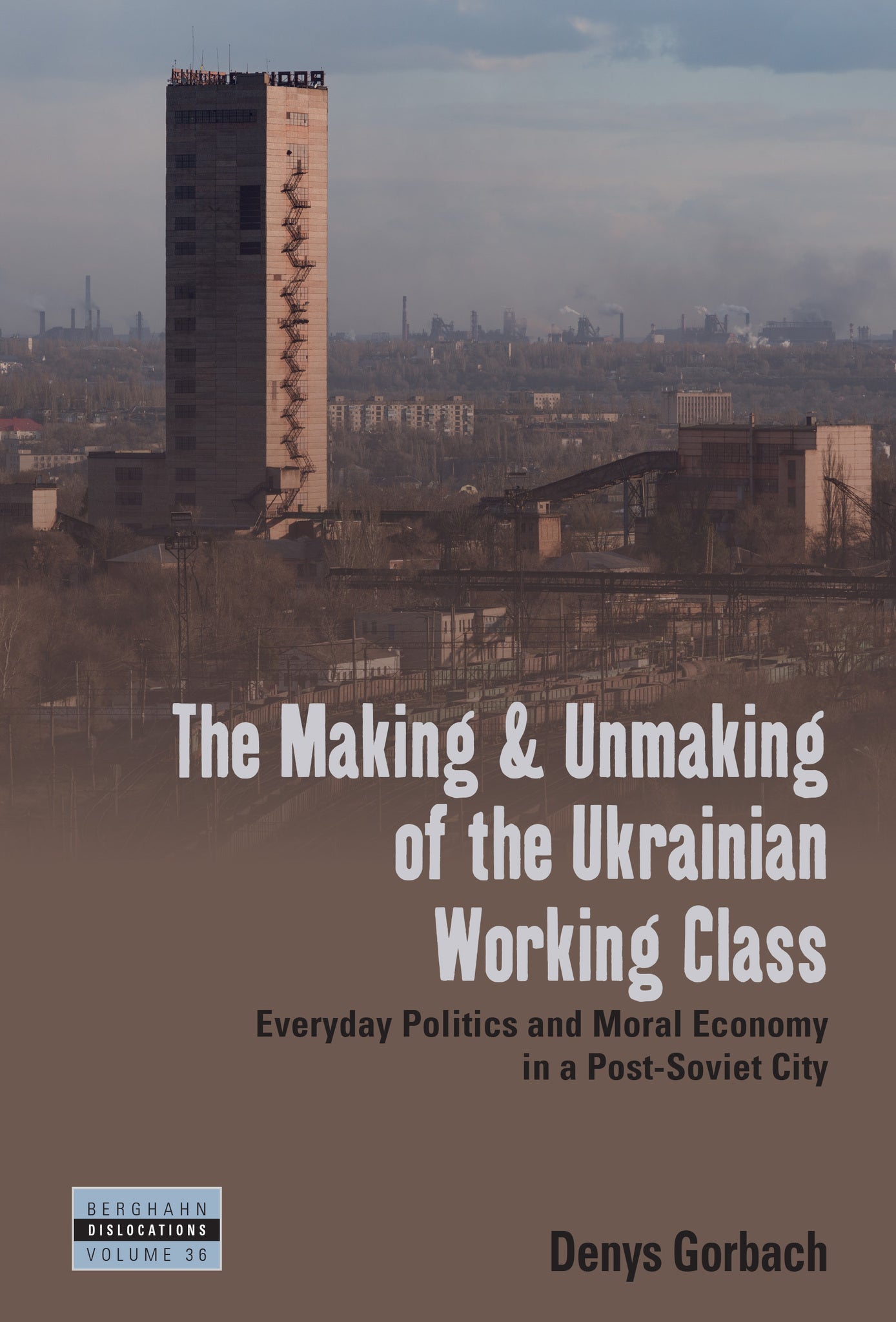
Industrial workers in Ukraine have a complex political lifeworld because their political action aimed at bringing radical social change coexists with a demobilizing stance that condemns all political participation as corrupt. This contradictory attitude to politics defines the character of populist mass mobilizations that shook Ukraine in 2004 and 2014, as well as the electoral overhaul of 2019 and the popular response to the Russian invasion in 2022. Based on three years of fieldwork in the city of Kryvyi Rih, the book focuses on the moral economy that constitutes the working-class and structures its relations with other social groups.


“There is elegant coverage and discussion of Ukraine’s recent history and politics. Conceptually and methodologically the book is coherent and well justified.” • Jeremy Morris, Aarhus University
“This is a very substantial body of work. The insights are both novel and nuanced. While the account is especially compelling in that it is centered in Ukraine, there really is no comparable work of this depth for any of the post-Soviet states.” • Stephen Crowley, Oberlin College
List of Illustrations
Introduction
Part I: Theoretical and Empirical Context
Chapter 1. Populism, Moral Economy, Informality: Imbricating the Political
Chapter 2. Ukrainian Political Economy: Embedded in the Moral Economy of Property Regimes and Identity Cleavages
Part II: The City
Chapter 3. From a Military Outpost to an Oligarchic Stronghold
Chapter 4. Archeology of Power: Regimes of Domination Reflected in the Urban Infrastructure
Part III: The Factory
Chapter 5. Informality and Hierarchies at the Soviet and Post-Soviet Workplace
Chapter 6. Paternalism in Decay: Post-Post-Soviet Inertia
Chapter 7. Politicized Embeddedness, Depoliticized Disembeddedness: New Factory Regimes
Part IV: Everyday Politics
Chapter 8. Distinction and Class: Strategies of Self-Valorization
Chapter 9. Mapping Lay Virtues on the National Political Landscape
Chapter 10. Political Attitudes and Attitude to Politics: Apathy and Authoritarian Anti-Corruption
Conclusion
References
Index