





Some error occured while loading the Quick View. Please close the Quick View and try reloading the page.
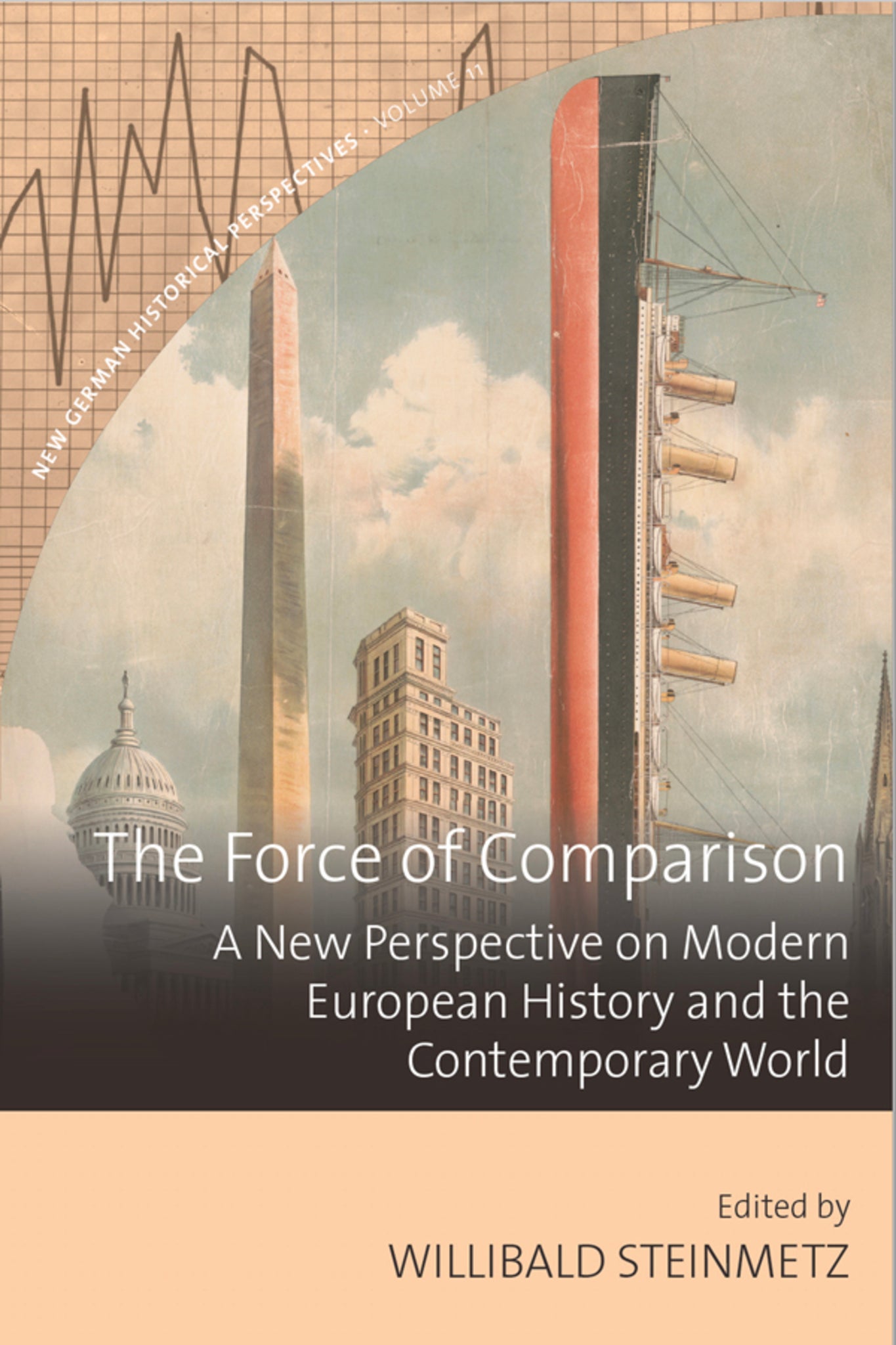
In an era defined by daily polls, institutional rankings, and other forms of social quantification, it can be easy to forget that comparison has a long historical lineage. Presenting a range of multidisciplinary perspectives, this volume investigates the concepts and practices of comparison from the early modern period to the present. Each chapter demonstrates how comparison has helped to drive the seemingly irresistible dynamism of the modern world, exploring how comparatively minded assessors determine their units of analysis, the criteria they select or ignore, and just who it is that makes use of these comparisons—and to what ends.


“The volume is well edited, wonderfully informative, and supplies a fairly helpful index… Scholars in many fields will discover valuable insights in every chapter.” • Journal of Modern History
“The chapters in this volume are all outstanding examples of the power of comparative history and thus underline the claim made in the introduction that comparative history will enrich our understanding of the past in years to come…Overall the volume is a treasure trove for anyone interested in comparative history and a compelling call to pursue comparative investigations in historical writing.” • German History
“By studying practices of comparison both in historical reality and in the study of history, this book offers fresh and surprising insights into a much-discussed subject. The contributions are empirically rich, well-documented, and of great interest for many areas in history and other fields.” • Jürgen Kocka, WZB Berlin Social Science Center
“This is an excellent collection of essays. Its scholarship is of a high standard, it demonstrates a degree of conceptual unity that is unusual for edited volumes, and it does a splendid job of vindicating the argument for the ubiquitous importance of comparison in modern life and thought.” • Luke O’Sullivan, National University of Singapore
List of Figures and Tables
Introduction: Concepts and Practices of Comparison in Modern History
Willibald Steinmetz
Chapter 1. Outlines of a Historical Epistemology of Comparison: From Descartes to the Early Nineteenth Century
Michael Eggers
Chapter 2. Comparative Practices and their Implications: The Case of Comparative Viewing
Johannes Grave
Chapter 3. Above/Below, Better/Worse, or Simply Different? Metamorphoses of Social Comparison, 1600–1900
Willibald Steinmetz
Chapter 4. Empowering Comparisons? The Making of Republics in the Early Modern Period
Lars Behrisch
Chapter 5. Comparing Europe and the Americas: The Dispute of the New World between the Sixteenth and Nineteenth Centuries
Angelika Epple
Chapter 6. European Colonial Empires and Victorian Imperial Exceptionalism
Alex Middleton
Chapter 7. Comparison and the Welfare State in Modern Europe, c. 1880–1945
Julia Moses
Chapter 8. Comparison, Rivalry and Competition under Neo-Liberalism and State Socialism
David Priestland
Chapter 9. Comparing Economic Activities on a Global Level in the 1920s and 1930s: Motives and Consequences
Martin Bemmann
Chapter 10. In Search of A Global Centre of Calculation: The Washington Statistical Conferences of 1947
Daniel Speich Chassé
Chapter 11. Formalized Comparisons: Rankings and Status in Higher Education
Wendy Espeland
Chapter 12. Good – Better – Best: The Power of Ranking Orders
Bettina Heintz
Index