





Some error occured while loading the Quick View. Please close the Quick View and try reloading the page.
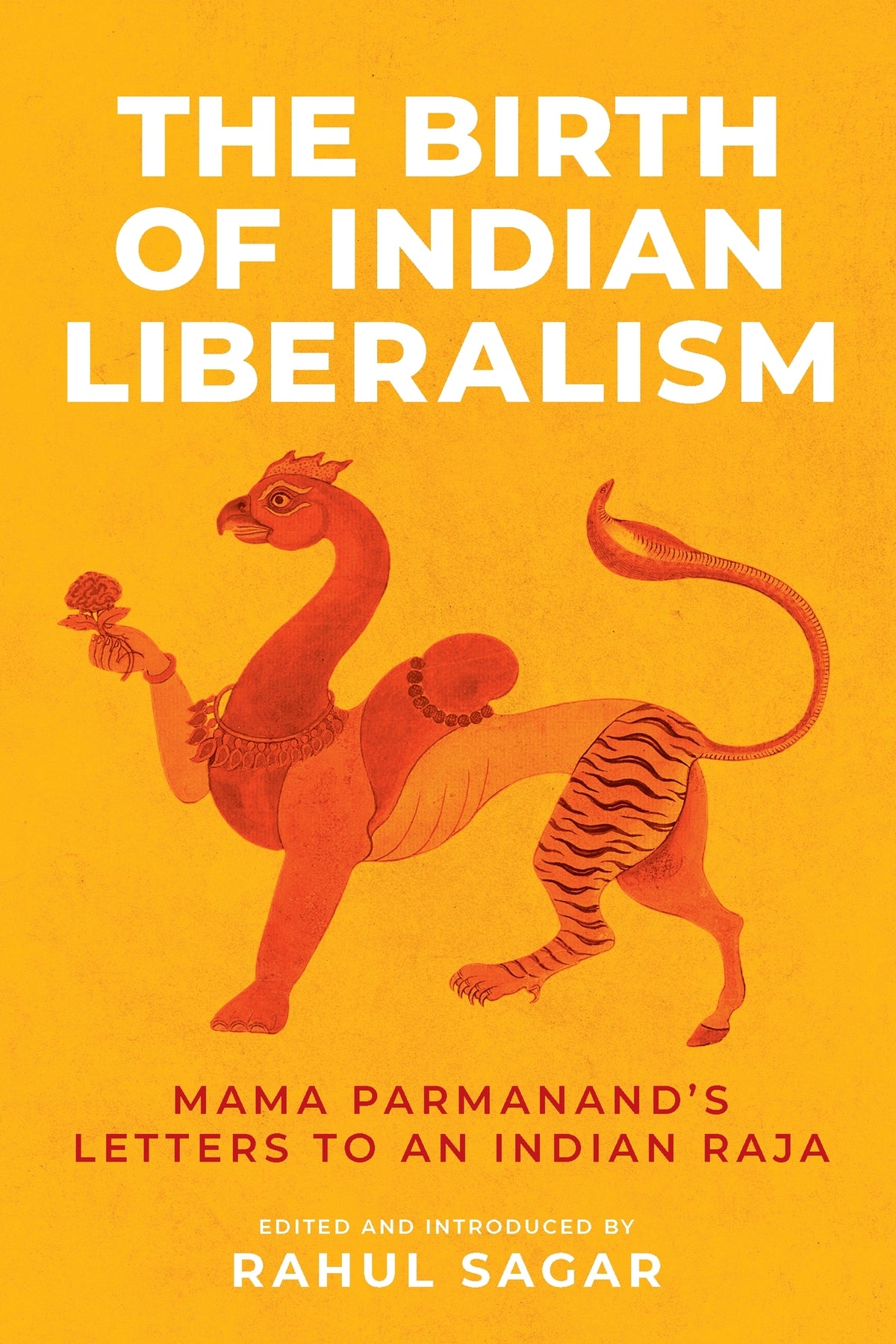


‘Parmanand’s Letters, introduced with characteristic erudition by Rahul Sagar, open a fascinating new vista onto the vigour and creativity of modern Indian liberalism.’
– Cécile Laborde, University of Oxford
‘Rahul Sagar's The Birth of Indian Liberalism is a remarkable achievement. It recovers from near total oblivion a strikingly impressive life and a lengthy episode in the penetration of the idea of personal freedom into the often recalcitrant texture of the large proportion of the Indian subcontinent and its population which the British state chose not to govern directly. In doing so it restores agency and cognitive autonomy to a group of thinkers and political actors who have been scorned or forgotten but who identified the depth of the multicultural challenge to liberal aspirations and conceptions a century before they began to register in Canada or Britain and found their own way of confronting it. That challenge is as sharp and disconcerting in the Republics of India or Pakistan today as it was in the days of Sagar's hero.’
– John Dunn, University of Cambridge
‘In his edition of the first work of political theory published in India in the English language, Rahul Sagar revolutionises the history of South Asia’s political thinking. Just like liberals everywhere, liberals in India sought individual liberty; but Sagar shows that in India they did so against the community, allying with progressive monarchs with Indian states to do so. In restoring this forgotten argument, Sagar’s work transforms the categories of Indian political history and will inaugurate a rich historiography that pays attention to the multiple sites available to nineteenth-century Indians for reimagining domination and freedom.’
– Jon Wilson, Nanyang Technological University
Introduction: The birth of Indian liberalism
A note on the text
Letters to an Indian Raja
Appendices
I. English and Native Rule in India (1868)
II. Introduction to the first edition (1891)
III. Preface to the second edition (1919)
IV. Obituary in the Indian Spectator (1893)
Index