





Some error occured while loading the Quick View. Please close the Quick View and try reloading the page.
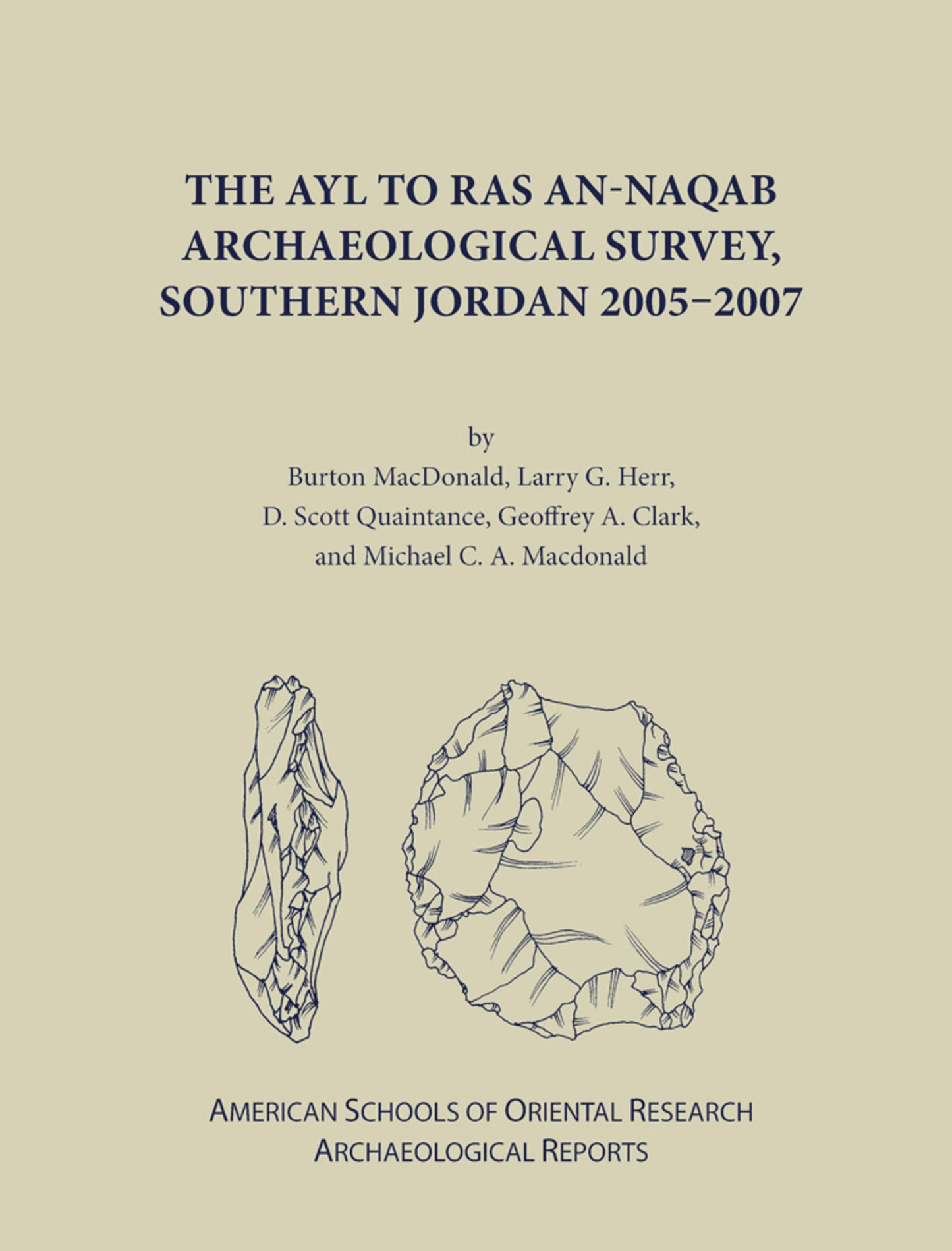
Two volumes, with DVD. Includes 74 figures, 24 tables and 100+ lithic drawings.
Although segments of the ARNAS territory have been investigated for the past one hundred years, a comprehensive and systematic survey of the area had never been undertaken prior to the work of the ARNAS team members.
The main goal of the project was to discover, record, and interpret archaeological sites within the survey territory. Some other objectives included: the discovery, on the basis of the artifactual material identified, the area's settlement patterns from the Lower Paleolithic (ca. 1.4mya) to the end of the Late Islamic period (AD 1918); a study of surface trends to determine, on the basis of the number of sites and the amount of lithics and/or sherds collected, where in the territory "settlements" were concentrated in antiquity; an investigation of the Khatt Shabib or "Shabib's Wall," a low stone wall running in a generally north-south direction to the east, ca. 5-10 km, of the Via Nova Traiana (Trajan's road built between AD 111-114); and to document the rock art, tribal markings, and inscriptional material of the region.
ARNAS team members accomplished the objectives of the project by transecting and recording the archaeological remains found in 140 randomly-chosen squares (500 x 500 m), covering around five percent of each of the three topographical zones of the survey territory. This resulted in a statistically valid sample of the archaeological materials of the area. In addition, team members recorded 389 archaeological sites encountered within, adjacent to, or on their way to-from the squares.
Lithic archaeological periods/cultural-temporal units represented in the survey territory are: Lower Paleolithic; Lower Paleolithic/Middle Paleolithic; Middle Paleolithic; Middle Paleolithic/Upper Paleolithic; Upper Paleolithic; Upper Paleolithic/Epipaleolithic; Epipaleolithic; Pre-Pottery Neolithic; and Chalolithic/Early Bronze I. As is often the case in the deflated landscapes of Jordan, Middle Paleolithic and Middle/Upper Paleolithic combined samples are the most prevalent lithic analytical units identified in the survey.
Ceramic archaeological periods/cultural-temporal units represented in the survey territory are: Chalcolithic-Early Bronze; Iron II; Nabataean; Roman; Byzantine; and Late Islamic. In addition, sherds, in small numbers and at only a few sites, from the Late Bronze, Iron I, Hellenistic, Early Islamic, and Middle Islamic are also represented.
The types of sites recorded included: agriculture villages or hamlets; aqueducts; camps -probably seasonal and pastoralists; caves; cemeteries and individual tombs/graves; check dams and terraces; cisterns; farms; forts; inscriptions; knapping areas; lithic and sherd scatters; milestones; reservoirs; roads; rock art and/or tribal markings; walls; watchtowers; water catchment facilities; and winnowing areas.
The accompanying DVD contains Random Square Descriptions and Images, Site Descriptions and Images, a table compiling all debitage, cores, and retouched pieces, and Settlement Pattern Maps for all of the Cultural-Temporal Unites represented at ARNAS sites.


'These two volumes are the latest in a series of publications of surveys in southern Jordan led by Burton MacDonald, who deserves credit for documenting a great many archaeological sites in under-investigated regions and for bringing them to publication in a timely manner. He provides much data for future analysis, as well as guidance for heritage management.' (E.B. Banning, Antiquity, December 2013)
Burton MacDonald is a professor in the Department of Religious Studies at St. Francis Xavier University in Nova Scotia. MacDonald has written a variety of books and scholarly articles about the archaeology, history, and biblical importance of Jordan.
List of Illustrations
List of Tables
List of Lithic Drawings
Acknowledgements
Abbreviations and Symbols
Archaeological Periods and Dates
Volume 1
1. Introduction, Burton MacDonald
2. Site Descriptions, Burton MacDonald, Larry G. Herr, D. Scott Quaintance, and Geoffrey A. Clark
Volume 2
3. Random Square Descriptions; Topographical Zones 1, 2, and 3, Burton MacDonald, Larry G. Herr, D. Scott Quaintance, and Geoffrey A. Clark,
4. The ARNAS Palaeolithic Collections in Regional Context, Geoffrey A. Clark
5. Settlement Patterns Developed on the Basis of the Ceramics Collected at the ARNAS Random Squares and Sites Burton MacDonald
6. Inscriptions, Rock Drawings and Wus?m from the A yl to Ras an-naqab Archaeological Survey, Michael C. A. Macdonald
7. Summary and Conclusions, Burton MacDonald
Appendix 1. Sites 001–209 with WGS 1984 Coordinates
Appendix 2. Random Square Coordinates
Appendix 3. Publications to Date
Appendix 4. Lithic Registration
Appendix 5. Pottery Registration
Appendix 6. Material Culture
Appendix 7. Cultural-Temporal Units Represented at ARNAS Sites 1
References
Contributors
Indices 533
CONTENTS OF THE DVD (in the jacket at the back of vol. 2)
1. Random Square Descriptions and Images (Burton MacDonald, Larry G. Herr, D. Scott Quaintance, and Geoffrey A. Clark)
2. Site Descriptions and Images (Burton MacDonald, Larry G. Herr, D. Scott Quaintance, and Geoffrey A. Clark)
3. Table 4.3: “A compilation of all debitage, cores, and retouched pieces from the ARNAS 2006 and 2007 field seasons recorded by their sample number.” (Geoffrey A. Clark)
4. Settlement Pattern Maps for all Cultural-Temporal Units Represented at ARNAS Sites (Cartographic Design: Gary L. Christopherson, Center for Applied Spatial Analysis, University of Arizona, Tucson)