





Some error occured while loading the Quick View. Please close the Quick View and try reloading the page.
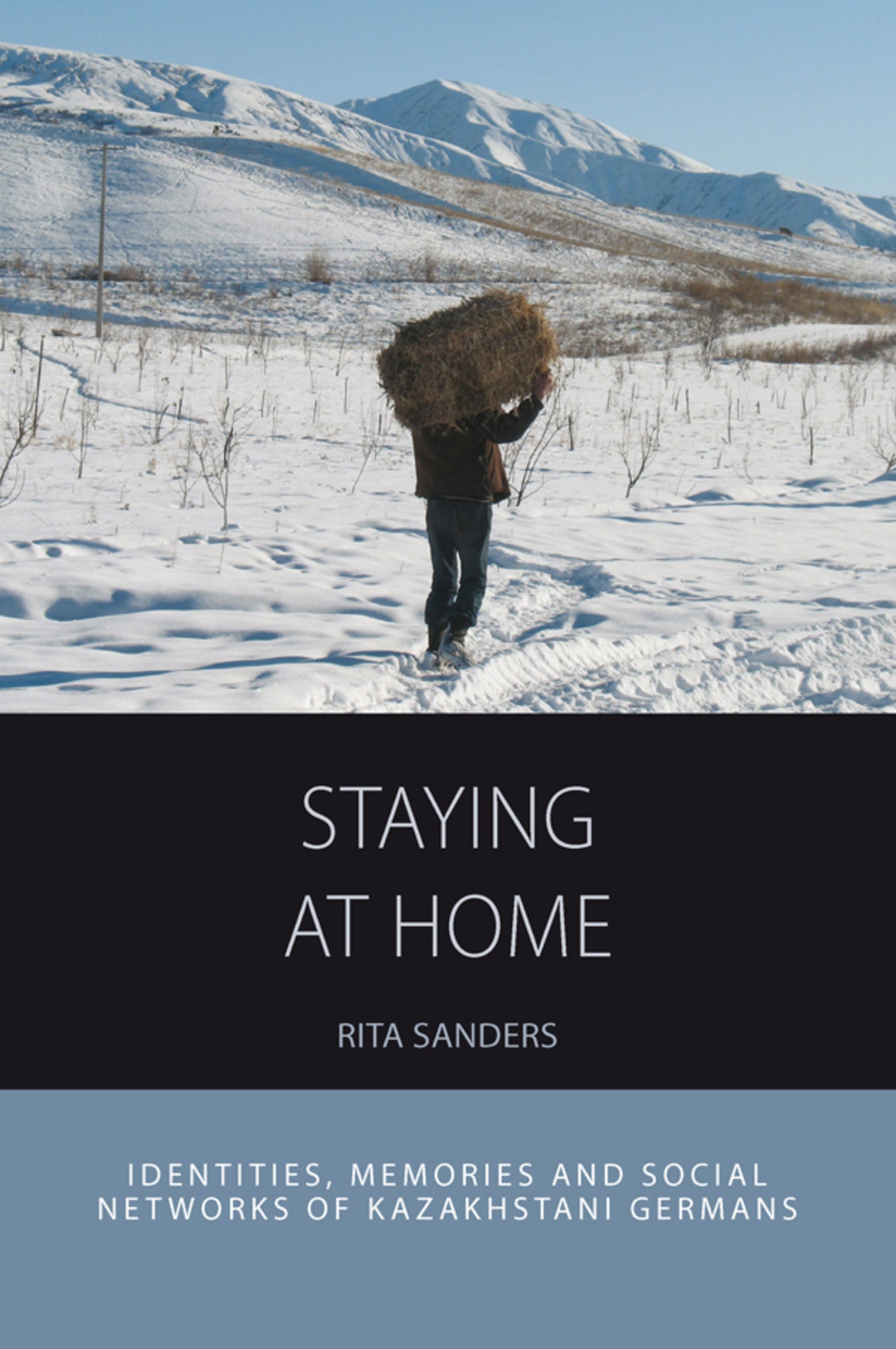
Despite economic growth in Kazakhstan, more than 80 per cent of Kazakhstan’s ethnic Germans have emigrated to Germany to date. Disappointing experiences of the migrants, along with other aspects of life in Germany, have been transmitted through transnational networks to ethnic Germans still living in Kazakhstan. Consequently, Germans in Kazakhstan today feel more alienated than ever from their ‘historic homeland’. This book explores the interplay of those memories, social networks and state policies, which play a role in the ‘construction’ of a Kazakhstani German identity.


“The strengths of this book lie in the author’s analytical approach, creative methodologies, and the breadth of her empirical work. Sanders offers an important perspective on migration by looking at how it impacts those who do not leave. By triangulating what people say with how they think and behave, she points to the contradictions inherent in everyday understandings of ethnicity and belonging.” • Journal of the Royal Anthropological Institute (JRAI)
“Sanders’ [seminal study] is a significant contribution to the literature on diaspora, migration and minority studies.” • Euro-Asia Studies
“This comprehensive study of the German-Kazakhstanis provides a thoughtful analysis of post-Soviet identity/ethnicity/nationality entanglements. Anyone interested in these issues would benefit by reading this book.” • Slavic Review
“Ethnographically rich, the study is based on a fertile mix of quantitative and qualitative methods such as pile sorting, free listing, network analysis, genealogy, participant observation and interviewing of all sorts. The author convincingly demonstrates that not leaving is nonetheless a dynamic lifestyle which demands efforts of fine-tuning and readjustment to a changing social environment.” • Florian Mühlfried, University Jena, Germany
List of Maps, Figures, Illustrations and Tables
Acknowledgements
Note on Transliteration
- Kazakhstani Germans and the Study of Nationalities in Central Asia
- Concepts of Ethnicity
- Based on Cultural Grounds – Ethnicity as a Resource – Categorization and Power – A Product of Individual Life Experience – Ethnic Boundaries as Cultural Schemas
- Fieldwork in Taldykorgan
PART I: MEMORIES, HISTORIES AND LIFE STORIES
Chapter 1. Memories and Histories
- Shifting Memories of the Past
- The Deportation of 1941 – Discrimination against Germans – Transition and Continuity – The Hard-Working German
- The Russian Empire: Colonization of the Kazakh Steppe
- The Russian Empire: the Settlers from the German States
- The Soviet Union: Concepts of Nation and Nationality
- The Soviet Union: Its Formation and Nationality Policies
- National Delineation – Collectivization – Facing the Menace of the German Reich: The Passport System and Deportations – The Kazakh SSR after 1945
- Kazakhstan: The Formation of a Nation-State and the Role of Nationality
- ‘Kazakhization’ – Language Policies – Kazakhstani Identity – Kazakhstani Germans
Chapter 2. The Enmeshment of Identities and Life Stories
- The Truth of Life Stories
- Four Life Stories, Four Identity Types
- Soviet Identity – Kazakhstani Identity – Russian German Identity – Kazakhstani German Identity
- Summary
PART II: NATIONALITY, POWER AND CHANGE
Chapter 3. Assessing Nationality
- Nationality as a Unifier of Territorial Belonging, Language, Religion
- and ‘Mentality’
- Common Ancestry – Language – Religion – ‘Mentality’
- National Dichotomies
- Kazakh Primordialism vs. Russian Constructionism
- Kazakhs’ Esteem – Russians’ Inclusiveness
- Normative Entanglements
- Summary
Chapter 4. Everyday Nationality in the Kazakh Nation-State
- ‘The Friendship of Peoples—Is Our Wealth!’
- Losing Language Hegemony
- Identification: Strategies and Emotions
- Kazakhstan as a Homeland
- Summary
PART III: NON-MIGRANTS' SOCIAL TIES
Migration and Social Networks
Chapter 5. Relations in the Locality: Ethnic Mixing and Missing Kazakhs
- The Relevance of Nationality in Personal Networks
- The Relevance of Nationality in Marriages
- Is there a ‘German Community’ in Taldykorgan?
- Summary
Chapter 6. Disruption in the Transnational Social Field
- Relatives and Friends Abroad
- Exodus to a ‘Historic Homeland’
- Views on Germany
- Networks and Identity
- Summary
PART IV: THE EFFECT OF TWO STATES' POLICIES OF 'GERMANNESS' ON KAZAKHSTANI GERMANS
Chapter 7. Changing Transnational Institutions
- The ‘German House’
- Support from Germany
- Socializing with other Germans
- A Parish in Transition from ‘German’ to ‘Lutheran’
- The German House in Transition
- Summary
Chapter 8. The Divergent Ethnic Policies of Kazakhstan and Germany
- The Kazakh State’s Official Promotion of Interethnic Harmony
- The German State’s Contradictory Policies
- Summary
Conclusion: Germans at Home in Kazakhstan
- Identity and Memories
- Identities and Identifications
- Friendship of the Peoples?
- Exclusion through Inclusion: The Role of Personal and Institutional Links to Germany
References
Appendix