





Some error occured while loading the Quick View. Please close the Quick View and try reloading the page.
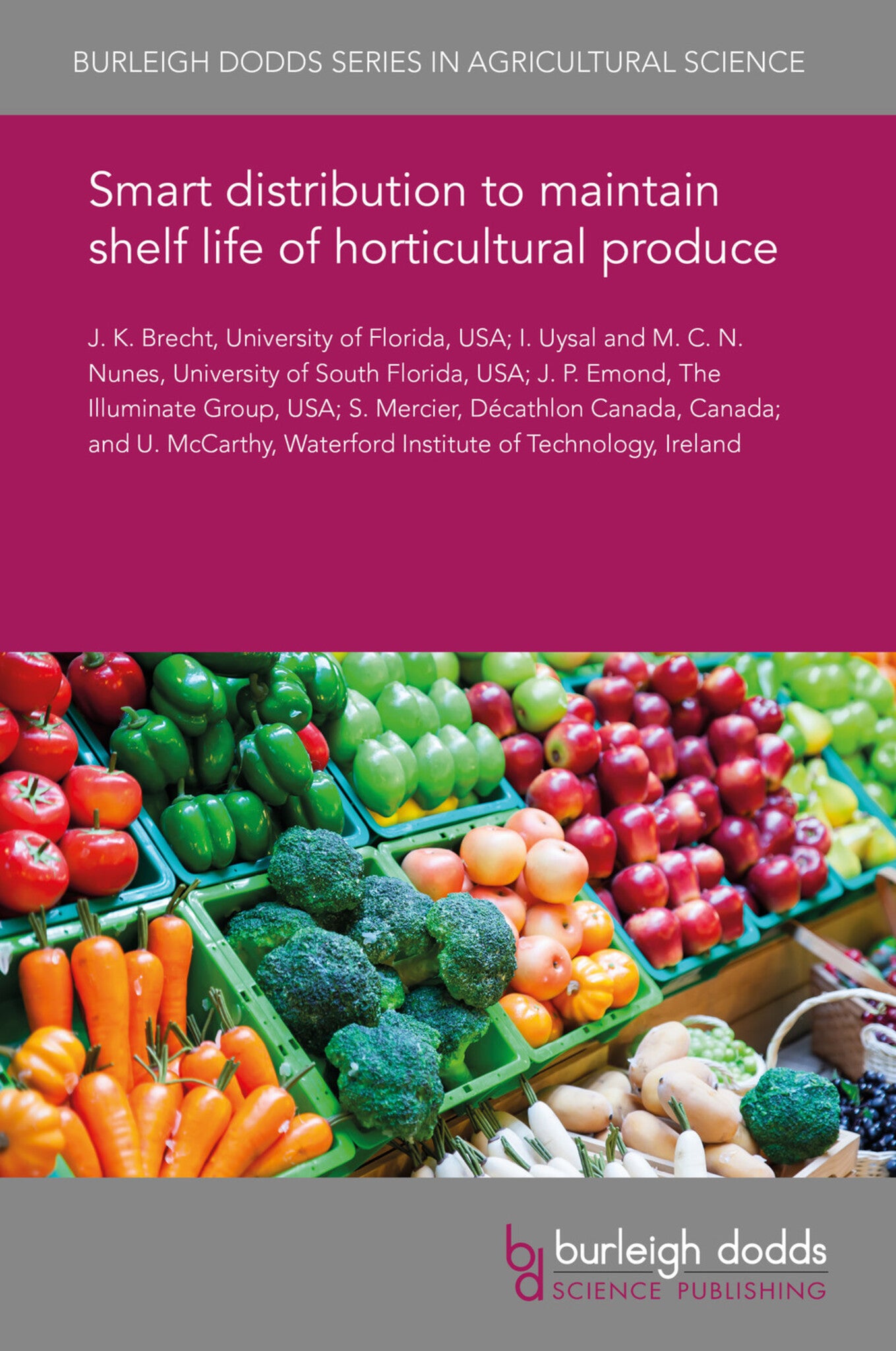
Most fresh horticultural crops in developed countries that are harvested but not consumed (40 to 50%) are wasted because the quality is inadequate for marketing or does not meet consumer quality requirements. Reducing quality deterioration can both extend shelf life and reduce waste of fresh horticultural crops in the food distribution system. Monitoring quality and environmental conditions during food distribution and using the collected data to predict the remaining shelf life of produce at any point in the cold chain enables use of smart distribution management. Monitoring environmental conditions in order to calculate shelf life can also help identify where the cold chain can be improved. Managing the inventory of fresh horticultural crops at distribution centers for store deliveries based on quality and remaining shelf life (first-expired-first-out; FEFO) instead of arrival sequence (first-in-first-out; FIFO) can result in a consistently better quality experience for consumers when they purchase fresh horticultural crops.

Price: £25.00
Publisher: Burleigh Dodds Science Publishing
Imprint: Burleigh Dodds Science Publishing
Series: Burleigh Dodds Series in Agricultural Science
Publication Date:
20 January 2020
ISBN: 9781838799991
Format: eBook
BISACs:

1 Introduction 2 Smart distribution 3 Logistics and supply chain management 4 Shelf-life modeling of fresh produce 5 Remote sensing of food quality and the environmental factors that influence food quality 6 Conclusion 7 References