





Some error occured while loading the Quick View. Please close the Quick View and try reloading the page.
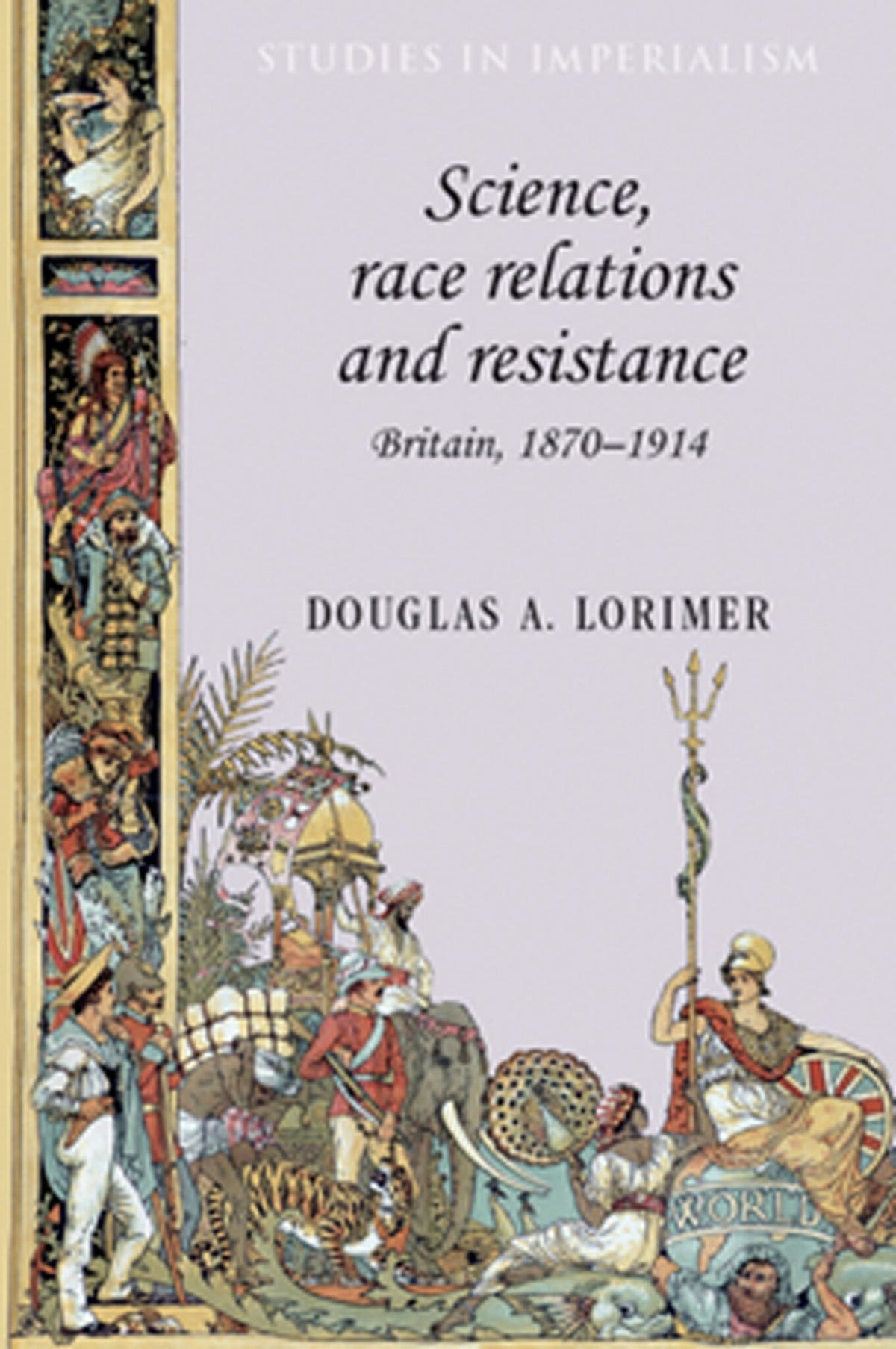
By exploring the dimensions of race, race relations and resistance, this book offers a new account of the British Empire’s greatest failure and its most disturbing legacy. Using a wide range of published and archival sources, this study of racial discourse from 1870 to 1914 argues that race, then as now, was a contested territory within the metropolitan culture.
Based on a wide range of published and archival sources, this book uncovers the conflicting opinions that characterised late Victorian and Edwardian discourse on the ‘colour question’. It offers a revisionist account of race in science, and provides original studies of the invention of the language of race relations and of resistance to race-thinking led by radical abolitionists and persons of Asian and African descent living in the United Kingdom.
The book will be of interest to students and scholars of race, colonialism and culture, and to a readership interested in the history of science and race, anti-slavery and humanitarian movements, and the roots of anti-racist resistance.


Appropriate for specialists on Victorian racism as well as those new to the subject, Science, Race Relations and Resistance gives an illuminating and critical examination of the development of scientific racism in the late nineteenth and early twentieth centuries.
‘Science, Race Relations and Resistance impresses with its exploration of racial rhetoric, and convincingly unravels the tangled relationship between scientific racism and the real problems posed by the ‘colour question’. It thus manages to align imperial history and anthropological history in a new and credible way, and will undoubtedly be valued by scholars in both fields.’
Elise Juzda Smith, The Journal of the Historical Association, Volume 101, Issue 347
‘Ultimately, Lorimer’s Science, Race Relations and Resistance, 1870–1914 is a wide ranging and important survey of late-nineteenth- and early-twentieth-century 362 Book Reviews debates on race and race relations that will be of interest to historians of Britain, imperialism and racism.’
Sadiah Qureshi, The University of Birmingham, The Journal of Imperial and Commonwealth History
25 Mar 2015.
‘A great strength of Science, Race Relations and Resistance is its refusal to generalize or simplify British ideas about race in the nineteenth and early twentieth centuries. Through systematic analyses of a wide variety of sources, from popular science works, to humanitarian journals, to writings by scholars and administrators interested in the ’colour question’, Lorimer shows that there was always a multiplicity of views about how best to manage race relations.’
Elise Juzda Smith, University of Warwick, Journal of the Historical Association
General Editor’s introduction
1. Introduction
2. Imperial contradictions: assimilation and separate development
Part I: Race
3. Race and science: from institutional foundations to applied anthropology, 1871–1914
4. Race, popular science, and empire
Part II: The language of race relations
5. From colour prejudice to race relations
6. The colour question – 'The greatest difficulty in the British Empire', 1900–14
Part III: Resistance
7. Resistance: initiatives and obstacles
8. Conclusion
Index