





Some error occured while loading the Quick View. Please close the Quick View and try reloading the page.
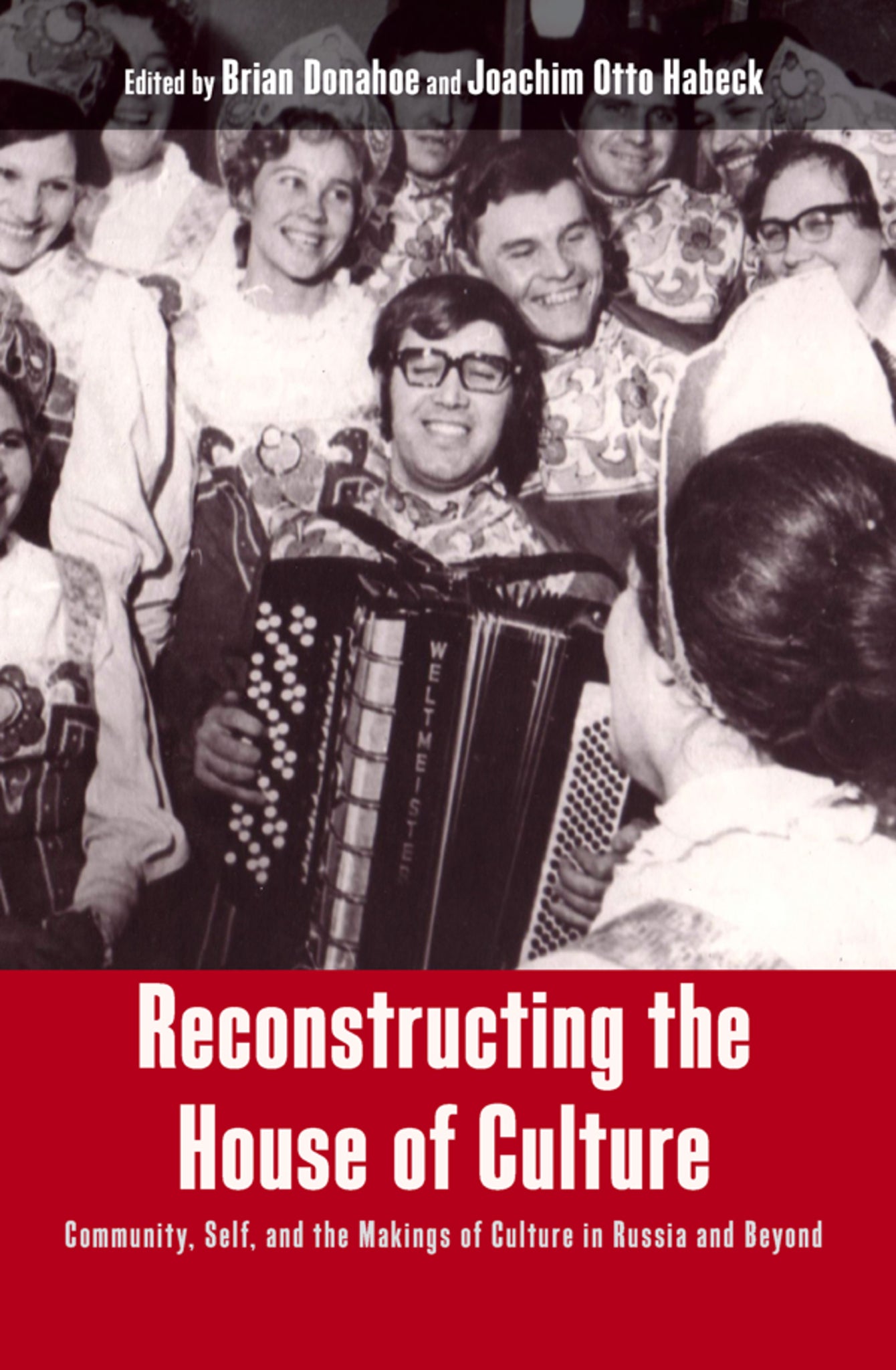
Notions of culture, rituals and their meanings, the workings of ideology in everyday life, public representations of tradition and ethnicity, and the social consequences of economic transition— these are critical issues in the social anthropology of Russia and other postsocialist countries. Engaged in the negotiation of all these is the House of Culture, which was the key institution for cultural activities and implementation of state cultural policies in all socialist states. The House of Culture was officially responsible for cultural enlightenment, moral edification, and personal cultivation—in short, for implementing the socialist state’s program of “bringing culture to the masses.” Surprisingly, little is known about its past and present condition. This collection of ethnographically rich accounts examines the social significance and everyday performance of Houses of Culture and how they have changed in recent decades. In the years immediately following the end of the Soviet Union, they underwent a deep economic and symbolic crisis, and many closed. Recently, however, there have been signs of a revitalization of the Houses of Culture and a re-orientation of their missions and programs. The contributions to this volume investigate the changing functions and meanings of these vital institutions for the communities that they serve.


“The result is an edited volume of unusual internal cohesion, which at the same time avoids repetition and uniformity…In addition to presenting a multifaceted discussion of an understudied institution, the research team members also lay out their methodology in a set of appendices. The description of the research design and lists of interview and survey questions make the book a valuable resource for courses on social research methods.” · Social Analysis
“This text fills a gap in the market regarding eh social and emotional significance of public leisure institutions in Siberia and elsewhere. Its chapters clarify issues of change and continuity in the Siberia, House of Culture paradigm, as well as explaining the international reach and resilience of these institutions.” · Journal of the Royal Anthropological Institute
“This book has a clear immediate aim that has not been covered in the anthropology of Russia—to describe and analyse the ‘House of Culture,’ a prominent institution in every Soviet town and village…[It] is a very interesting, ambitious, worthwhile and readable book.” · Caroline Humphrey, University of Cambridge
“This is a fascinating and very original book which explores cultures and cultural production in the postsocialist world. Basing their fieldwork in houses of culture (arts centres) allowed the contributors unique opportunities for understanding the recent evolution of local communities across Siberia and beyond.” · Anne White, University of Bath
List of Illustrations
Editors’ Preface
A Note on Transliteration
Introduction: Cultivation, Collective, and the Self
Joachim Otto Habeck
Part I: The Siberian House of Culture in Comparative Perspective
Chapter 1. From Collective Enthusiasm to Individual Self-Realization: History of and Experience in the House of Culture, Anadyr’ (Chukotka)
Virginie Vaté and Galina Diatchkova
Chapter 2. “Thank You for Being”: Neighborhood, Ethno-Culture, and Social Recognition in the House of Culture
Joachim Otto Habeck
Chapter 3. Pokazukha in the House of Culture: The Pattern of Behavior in Kurumkan, Eastern Buriatiia
István Sántha and Tatiana Safonova
Chapter 4. Three Houses of Culture in Kosh-Agach: Accounting for Culture Work in a Changing Political Setting
Agnieszka Halemba
Chapter 5. In the Face of Adversity: Shagonar’s Culture Workers Bear the Torch of Culture
Brian Donahoe
Chapter 6. Constellations of Culture Work in Present-Day Siberia
Joachim Otto Habeck, Brian Donahoe, and Siegfried Gruber
Part II: Expanding the Stage: The House of Culture in Broader Historical and Geographical Context
Chapter 7. The Emergence of the Soviet Houses of Culture in Kyrgyzstan
Ali İğmen
Chapter 8. Palana’s House of Koryak Culture
Alexander D. King
Chapter 9. Transformations of the House of Culture in Civil Society: A Case Study of Rural Women’s Culture Projects in Latvia
Aivita Putnina
Chapter 10. Heritage House-Guarding as Sustainable Development: Community Arts and Architectures within a World Cultural Net(work)
Nadezhda Savova
Epilogue: Recognizing Soviet Culture
Bruce Grant
Appendix I: Research Design and Methodology of the Comparative Research Project “The Social Significance of the House of Culture”
B. Donahoe, J.O. Habeck, A. Halemba, K. Istomin, I. Sántha, and V. Vaté
Appendix II: Survey Form and Instructions
Appendix III: Questionnaire 1 (Q1) and Instructions
Appendix IV: Questionnaire 2 (Q2) and Instructions
Appendix V: Fieldwork Checklist
Notes on Contributors
Index