





Some error occured while loading the Quick View. Please close the Quick View and try reloading the page.
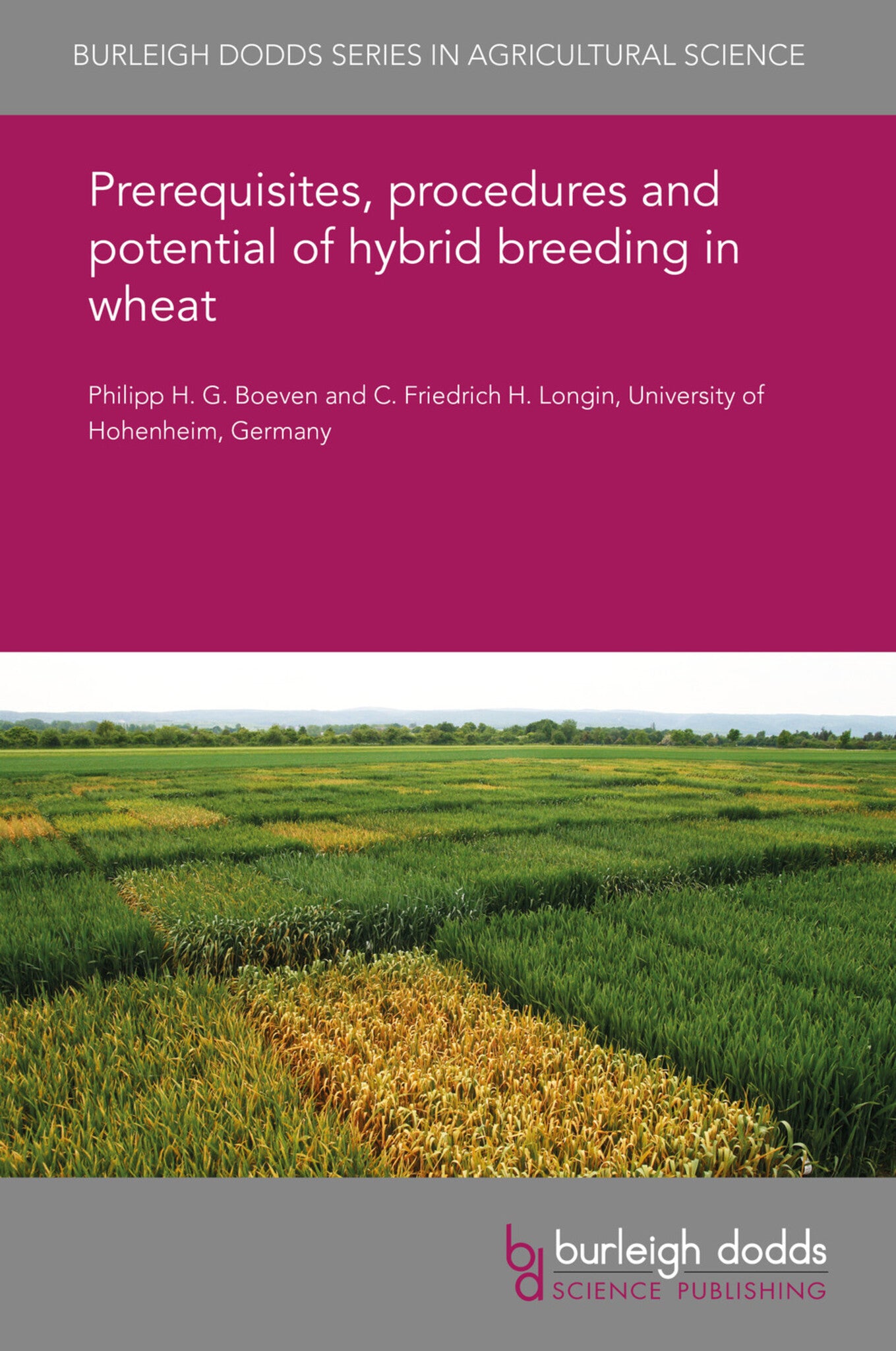
Hybrid wheat breeding offers great potential to deal with increasing demands for food and feed of future generations. Wheat hybrids possess substantial heterosis for grain yield and can combine disease resistance and quality traits with higher grain yield compared to line cultivars. Moreover, hybrid wheat breeding offers the smart stacking of major dominant genes. Major challenges are the establishment of heterotic groups and the need to increase the cross-pollination capability of wheat for a more efficient hybrid seed production. The chapter describes heterosis in wheat and heterotic groups, before moving on to consider hybrid seed production. Finally, the chapter discusses the relative advantages of hybrid versus line breeding.

Price: £25.00
Publisher: Burleigh Dodds Science Publishing
Imprint: Burleigh Dodds Science Publishing
Series: Burleigh Dodds Series in Agricultural Science
Publication Date:
27 June 2019
ISBN: 9781838798260
Format: eBook
BISACs:

1 Introduction 2 Heterosis in wheat 3 Heterotic groups 4 Hybrid seed production 5 Hybrid versus line breeding 6 Conclusion 7 Acknowledgments 8 Where to look for further information 9 References