





Some error occured while loading the Quick View. Please close the Quick View and try reloading the page.
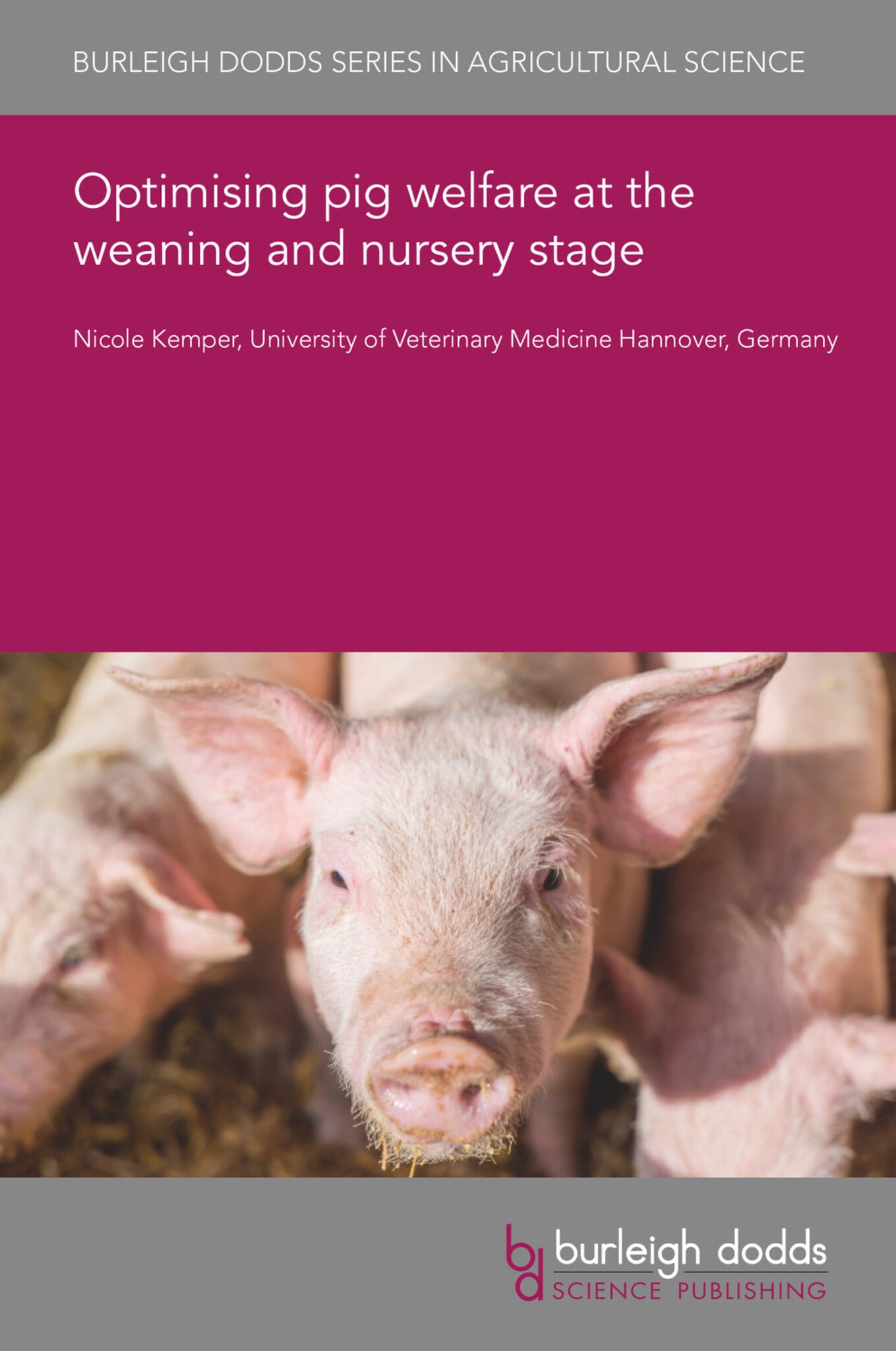
The welfare of pigs at the nursery stage is an area of special concern because of the manifold influencing factors that have the potential to decrease seriously the piglets’ wellbeing. Especially the separation from their mother sow in combination with a very young weaning age in modern pig farming, the new environment they are brought in, hitherto unknown sources of feed and water, and regrouping with non-litter mates represent big challenges. To help the piglets as best as possible to overcome these challenges is key for animal welfare, health and performance. In this chapter, the most important fields of environmental, nutritional and social stress are explained, and strategies to increase weaners’ welfare are summarised. The importance of trained and skilled stockmen is emphasised, because without a careful eye on the piglets and consideration of all possible negative and positive influencing factors, pig welfare at the nursery stage cannot be realised.

Price: £25.00
Publisher: Burleigh Dodds Science Publishing
Imprint: Burleigh Dodds Science Publishing
Series: Burleigh Dodds Series in Agricultural Science
Publication Date:
02 February 2021
ISBN: 9781801460262
Format: eBook
BISACs:

1 Introduction 2 Minimising the impact of weaning 3 Optimised management: the human key factor 4 Conclusion 5 Future trends in research 6 Where to look for further information 7 References