





Some error occured while loading the Quick View. Please close the Quick View and try reloading the page.
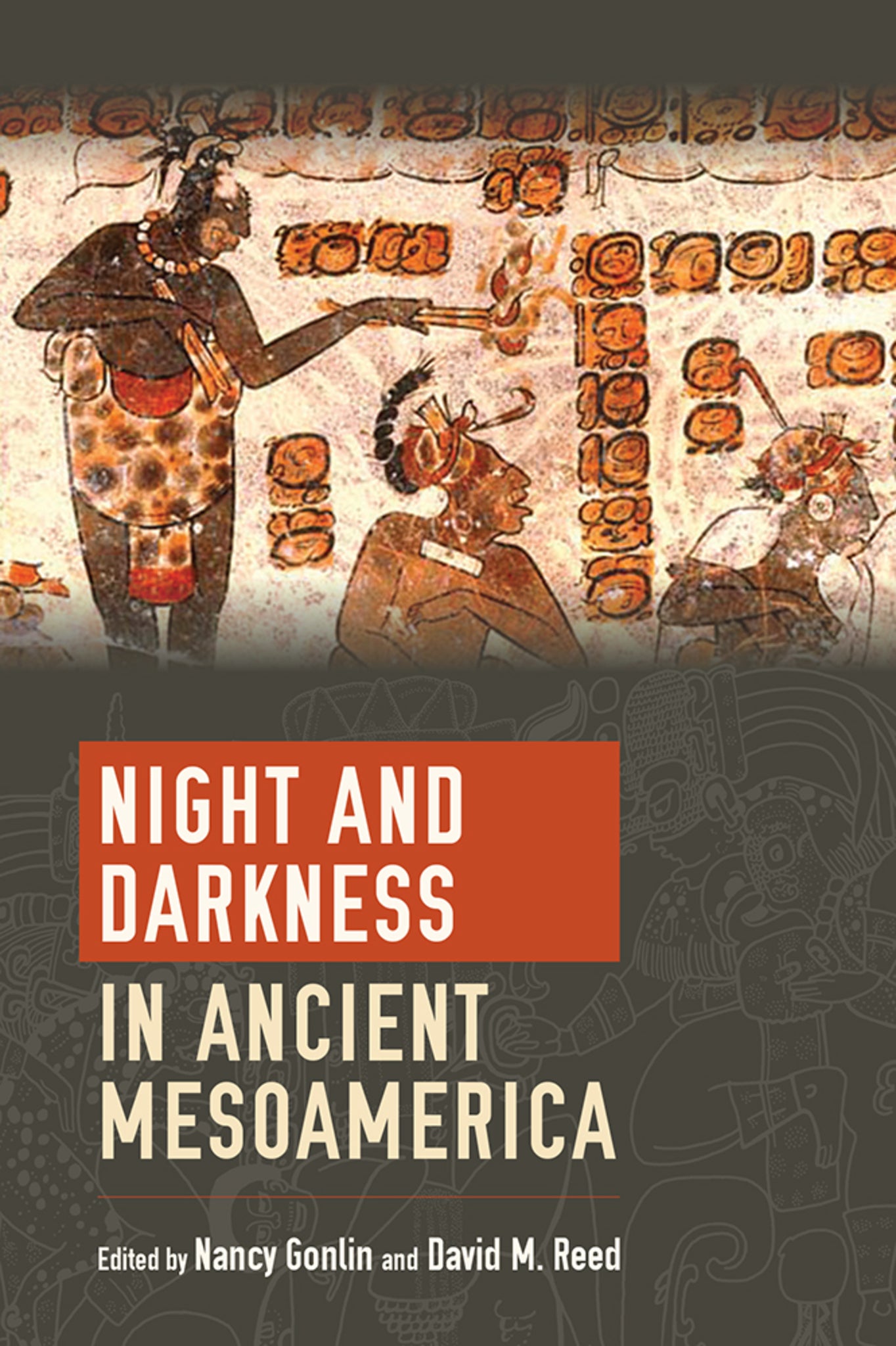
The anthropological study of night and darkness enriches and strengthens the understanding of human behavior, power, economy, and the supernatural. In eleven case studies featuring the residents of Teotihuacan, the Classic period Maya, inhabitants of Rio Ulúa, and the Aztecs, the authors challenge archaeologists to consider the influence of the ignored dimension of the night and the role and expression of darkness on ancient behavior. Chapters examine the significance of eclipses, burials, tombs, and natural phenomena considered to be portals to the underworld; animals hunted at twilight; the use and ritual meaning of blindfolds; night-blooming plants; nocturnal foodways; fuel sources and lighting technology; and other connected practices.
Night and Darkness in Ancient Mesoamerica expands the scope of published research and media on the archaeology of the night. The book will be of interest to those who study the humanistic, anthropological, and archaeological aspects of the Aztec, Maya, Teotihuacanos, and southeastern Mesoamericans, as well as sensory archaeology, art history, material culture studies, anthropological archaeology, paleonutrition, socioeconomics, sociopolitics, epigraphy, mortuary studies, volcanology, and paleoethnobotany.
Contributors: Jeremy Coltman, Christine Dixon, Rachel Egan, Kirby Farah, Carolyn Freiwald, Nancy Gonlin, Julia Hendon, Cecelia Klein, Jeanne Lopiparo, Brian McKee, Jan Marie Olson, David M. Reed, Payson Sheets, Venicia Slotten, Michael Thomason, Randolph Widmer, W. Scott Zeleznik


“Night and Darkness in Ancient Mesoamerica is an exciting volume that convinces the reader archaeology is fully capable of answering deep inquiries into the emotions, sensations, and mysteries of the night. The volume inspires fresh questions about ancient sensation while simultaneously providing rich new data on the potency of darkness to the people of ancient Mesoamerica. The nightscape is now an essential component in our studies of the past.”
—Traci Ardren, University of Miami
“A great group of scholars talk about a fascinating and overlooked topic.”
—Travis Stanton, University of California, Riverside
“Opens important areas of inquiry that relate illumination and darkness to questions of power and inequality, personal and communal experience, biological rhythms and healing practices.”
—Antiquity
David M. Reed is an anthropological archaeologist with extensive experience in stable isotope biogeochemistry, mortuary analyses, sociopolitics of the ancient Maya, human genetics, and quantitative analysis, who has done pioneering research on ancient mitochondrial DNA of the Copán Maya. He was a Genome Science Training Program Research Fellow at the Center for Statistical Genetics at the University of Michigan; a visiting scholar at the Center for Archaeological Investigations at Southern Illinois University, Carbondale; and a Summer Fellow in Pre-Columbian Studies at the Dumbarton Oaks Research Library and Collection, Washington, DC. A former research specialist at the Kellogg Eye Center of the University of Michigan and current senior research statistician at The Ohio State University Wexner Medical Center, he researches the biology and genetics of eye diseases.