





Some error occured while loading the Quick View. Please close the Quick View and try reloading the page.
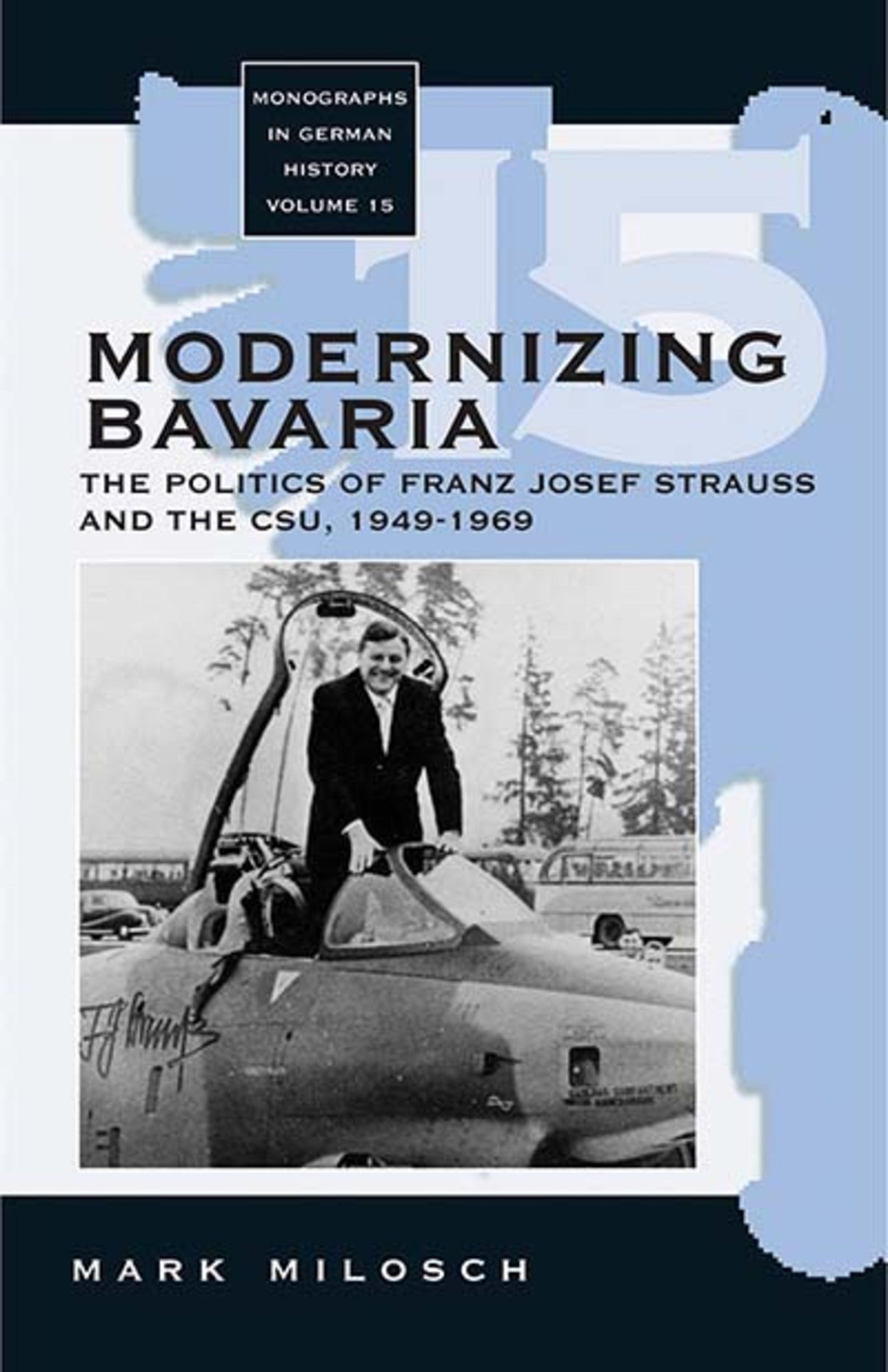
In 1949 Bavaria was not only the largest and best known but also the poorest, most agricultural, and most industrially backward region of Germany. It was further its most politically conservative region. The largest political party in Bavaria was the Christian Social Union (CSU), an extremely conservative, even reactionary, regional party. In the ensuing twenty years, the leaders of the CSU's small liberal wing (in particular Franz Josef Strauss, long-time party chair and the most colorful and polarizing politician in postwar Germany) broke with the anti-industrial traditions of Bavarian Catholic politics and made themselves useful to industry. With tactical brilliance the politicians pursued their individual political ambitions, rather than a coherent modernization strategy, which, by 1969, had turned Bavaria into a prosperous Land, the center of Germany's new aerospace, defense, and energy industries, with a disproportionate share of its research institutes.


“Milosch has written a well-researched monograph that places a crucial period of recent history into its proper political and economic context. This work should be required reading for anyone interested in late twentieth-century German and European history.” · German Studies Review
“…provides a very helpful interpretation of the Christian Social Union’s role in general, and Franz Josef Strauß’s role in particular, in Bavaria’s political and economic modernization up to 1969…Underlying Milosch’s narrative account of Bavaria’s technical, scientific, and economic modernization…lay an important contribution to our theoretical understanding of the modernization process itself.” · Central European History
Preface
Acknowledgments
List of Abbreviations
Introduction: Bavaria, 1949
- The Question
- Bavaria and Germany
- Postwar Climate of Opinion
- CSU and CDU
- Industrial Modernization in CSU-Dominated Bavaria
Chapter 1. Industrial Modernization Just Below the Horizon, 1949–1954
- In a Tight Corner
- Sealing the Deal with Industry
- Strauß Pushes Forward
- Turning the Economic Ministry to Account
- Seeing Industry in Science
- Between Interest-Group Politics and Industrial Modernization
Chapter 2. Inventing a Politics of Modernization, 1954–1957
- Liberalizing the CSU
- Challenge: the Social Democrats Make Science and Technology a Political Issue
- Response: Strauß Gains the Upper Hand
- Connecting Defense-Industrial Ideas and Interests
- Turning the Defense Ministry to Account
- Turning Point
Chapter 3. The Great Leap Forward, 1957–1962
- A Window of Opportunity
- Black Politics and Red Oil
- Big Science
- NATO Nuclear Strategy and Bavarian Interest Solidarity
- Starfighter, Space Flight, and Military R & D
- Strauß’s Fall
Chapter 4. New Tactics in a Time of Transition, 1963–1969
- Changing Times
- Liberalism and Interventionism in Bavaria
- The National Scene
- The Western Alliance
- The American Challenge and Airbus
- Bavaria and the Big World
Conclusion: Bavaria, 1969
- Circumstances and Their Masters
- Results
- A New CSU and a New Bavaria
Bibliography
Index