





Some error occured while loading the Quick View. Please close the Quick View and try reloading the page.
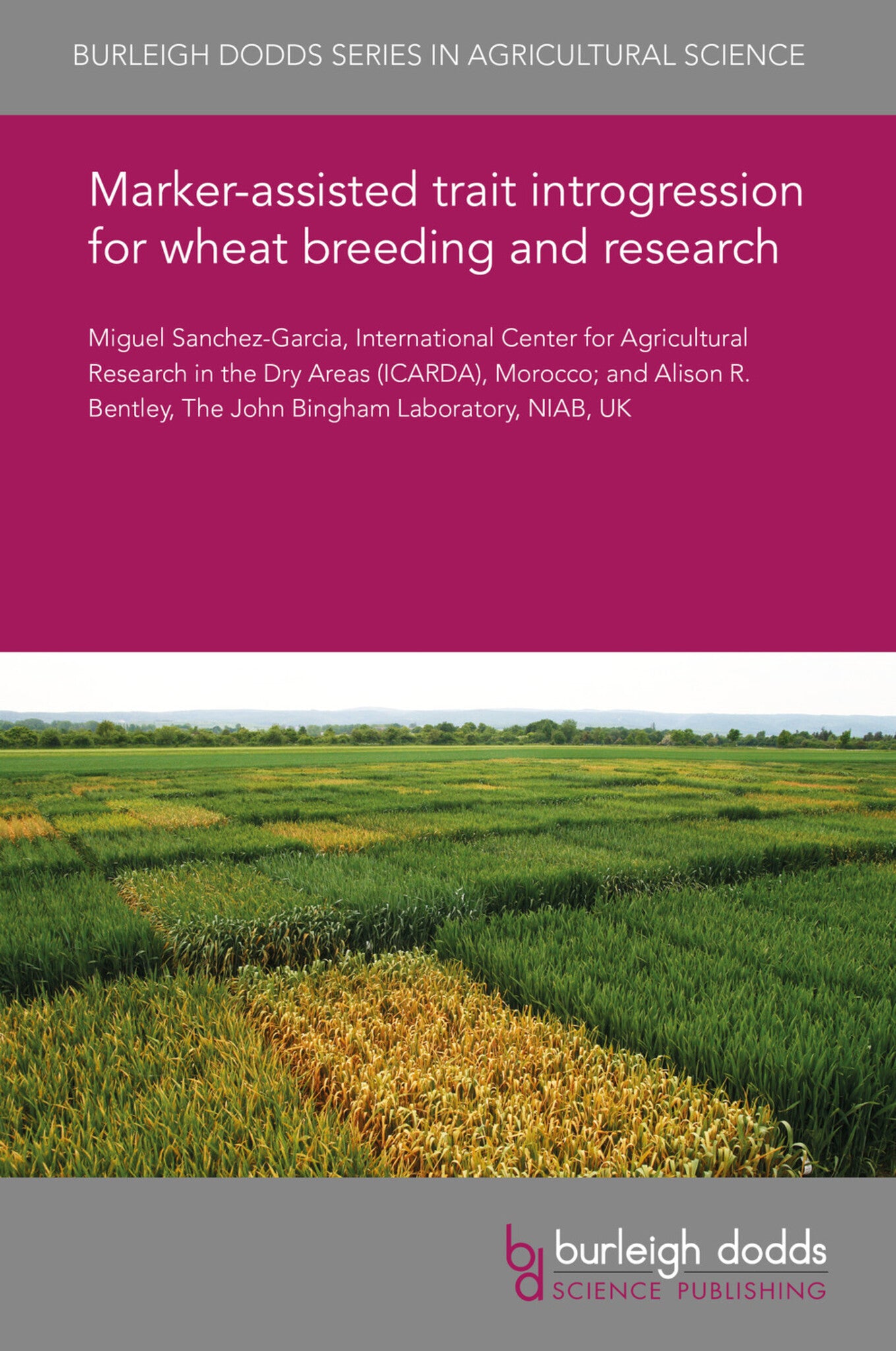
Trait introgression, the incorporation of a specific character, is a cornerstone of both wheat breeding and research allowing a specific line or variety to be improved for the character. Varieties can be improved by introgressing the trait of interest into their genetic background through backcrossing techniques especially when the underlying genetic control is relatively simple. Moreover, the agronomic value of the variety can be easily and rapidly recovered or improved by combining backcross and double haploid (DH) approaches. This chapter describes the principles of backcross breeding and explains the use of marker assisted doubled haploids for trait introgression. The chapter describes the results of combining backcross and DH introgression and outlines the principles of marker assisted speed breeding.

Price: £25.00
Publisher: Burleigh Dodds Science Publishing
Imprint: Burleigh Dodds Science Publishing
Series: Burleigh Dodds Series in Agricultural Science
Publication Date:
27 June 2019
ISBN: 9781838798253
Format: eBook
BISACs:

1 Introduction 2 Backcross breeding 3 Marker-assisted doubled haploids for trait introgression 4 Combining backcross and DH introgression 5 Marker-assisted speed breeding 6 Conclusion 7 Where to look for further information 8 References