





Some error occured while loading the Quick View. Please close the Quick View and try reloading the page.
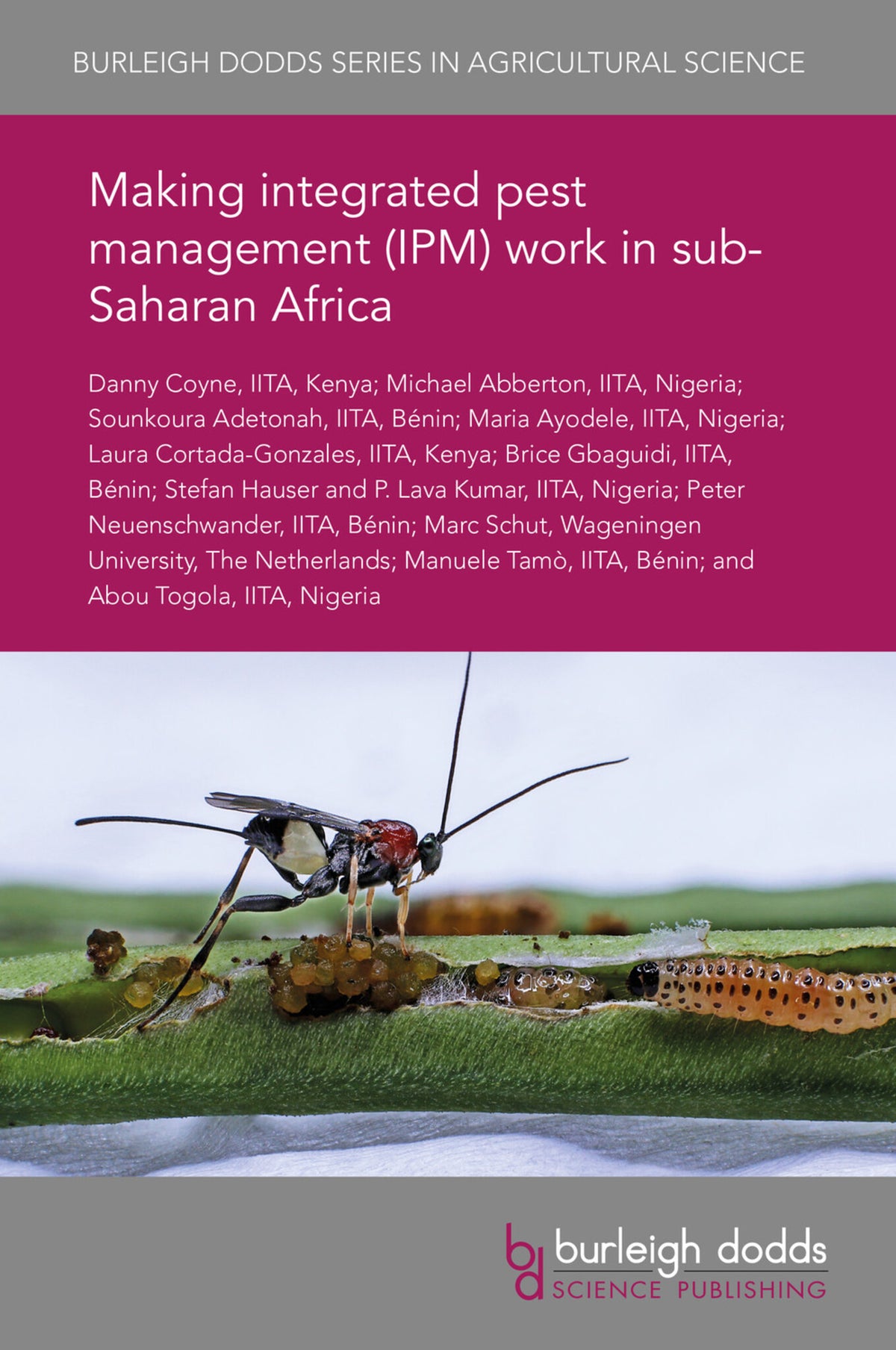
Losses to biotic threats remain among the most important factors affecting crop productivity in the predominantly complex smallholder systems of sub-Saharan Africa. The unavoidable intensification of crop production will further exacerbate pest problems, and pest management needs to respond accordingly. This chapter reviews key challenges and needs for implementing safe and effective integrated pest management (IPM) in Africa, concentrating on cross-cutting issues, such as provision of healthy planting material, pesticide use, gender sensibility, improved collaboration with authorities and partners, and exchange with farmers through Farmer Field Schools and Farmer Field Fora.

Price: £25.00
Publisher: Burleigh Dodds Science Publishing
Imprint: Burleigh Dodds Science Publishing
Series: Burleigh Dodds Series in Agricultural Science
Publication Date:
07 February 2019
ISBN: 9781838797638
Format: eBook
BISACs:

1 Introduction 2 Healthy planting material 3 The role of pesticides 4 Gender access to IPM 5 Improved exchange with farmers 6 Improved collaboration 7 Future trends and conclusion 8 Where to look for further information 9 References