





Some error occured while loading the Quick View. Please close the Quick View and try reloading the page.
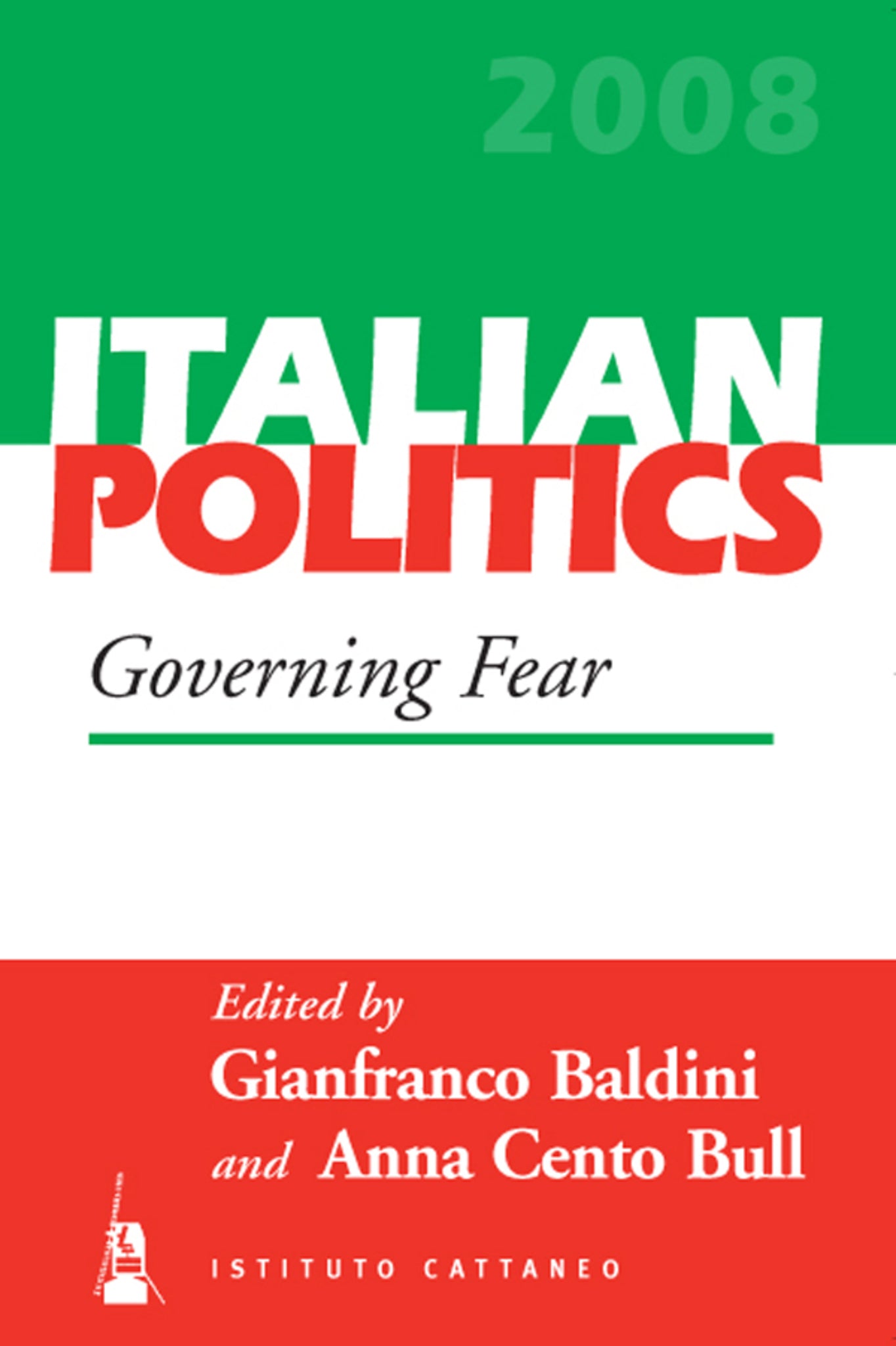
In 2008, Silvio Berlusconi returned to power — thanks to a decisive electoral victory — to head a slimmer coalition whose cabinet consisted of members very close to him. The year began with the garbage crisis in Naples and ended in a climate dominated by economic uncertainty. In between some unexpected events happened: during the administrative elections, held with the general elections in April, the right in Rome claimed many victories; for the first time ever, a woman, Emma Marcegaglia, was elected President of Confindustria; and the Alitalia airline had to be rescued from the brink of economic collapse. For consecutive months, opinion polls gave Berlusconi an unprecedented level of popular support; those polled attributed their approval to either his ‘decisionism’ or to what they viewed as a successful strategy of continual announcements. Others pointed to the executive’s success in ‘governing the fears’ of Italians, which was helped by a change of register in the way the media dealt with issues of security. This volume shows that the politics of vetoes, which characterised the previous center-left government, could not conceal the structural, economic and social problems that still need to be resolved, a situation not helped by the fact that the opposition parties were still unable to develop an effective political strategy by yearend. With the contribution of Italian and international experts, the volume also addresses the issues of the difficult integration of immigrants, the mismanagement of public health and the reform of the education.


“Governing Fear: Italian Politics 2008 is the twenty-forth volume of the essential guide for students of contemporary Italian affairs. As such, it more than lives up to the series’ tradition for concise and timely analysis. In its coverage of the year, it takes us through Berlusconi's electoral victory over a divided center left to show how the Lega Nord has been able to set the political agenda and how a former neo-Fascist leader became mayor of Rome. The book is more than just an analysis of headline events, however; it digs into the evolving fabric of Italian social life as well to show how the changing role of women, successive waves of educational and health reform, and simmering conflicts around Naples and Alitalia reflect profound underlying dynamics. Scholars will find this book an essential resource and interested readers, a rich buffet.” · Professor Erik Jones, Johns Hopkins Bologna Center
List of Abbreviations
Chronology of Italian Political Events, 2008
Compiled by Rinaldo Vignati
Introduction: Governing Fear
Gianfranco Baldini and Anna Cento Bull
Chapter 1. Chronicle of a Victory Foretold: The 13–14 April General Elections
Piergiorgio Corbetta
Chapter 2. Center Left, Radical Left, Anti-Politics, and Center: Four Oppositions in Search of a Comeback
James L. Newell
Chapter 3. Alemanno’s Surprising Victory in Rome
Giovanni Di Franco
Chapter 4. The Only Man in Charge? The First Eight Months of Berlusconi’s Fourth Government
Francesco Marangoni
Chapter 5. Russia’s Trojan Horse in Europe? Italy and the War in Georgia
Maurizio Carbone
Chapter 6. Still Dying at Work: The New Consolidation Act on Health and Safety in the Workplace
Elisabetta Gualmini
Chapter 7. Women in Institutions: Progress in the Economic Sector, Stagnation in Politics?
Alessia Donà
Chapter 8. Mariastella Gelmini’s Education Policy: Cuts without a Cultural Project
Giancarlo Gasperoni
Chapter 9. The Italian Health System: Cost Containment, Mismanagement, and Politicization
Franca Maino
Chapter 10. A Story Foretold of a Toxic Mix in Campania
Eleonora Pasotti
Chapter 11. The Northern League’s Victory: Immigration and Citizenship in the Veneto Region
Jacqueline Andall
Chapter 12. The Privatization of Alitalia
Grant Amyot
Documentary Appendix
Compiled by Debora Mantovani
About the Editors and Authors