





Some error occured while loading the Quick View. Please close the Quick View and try reloading the page.
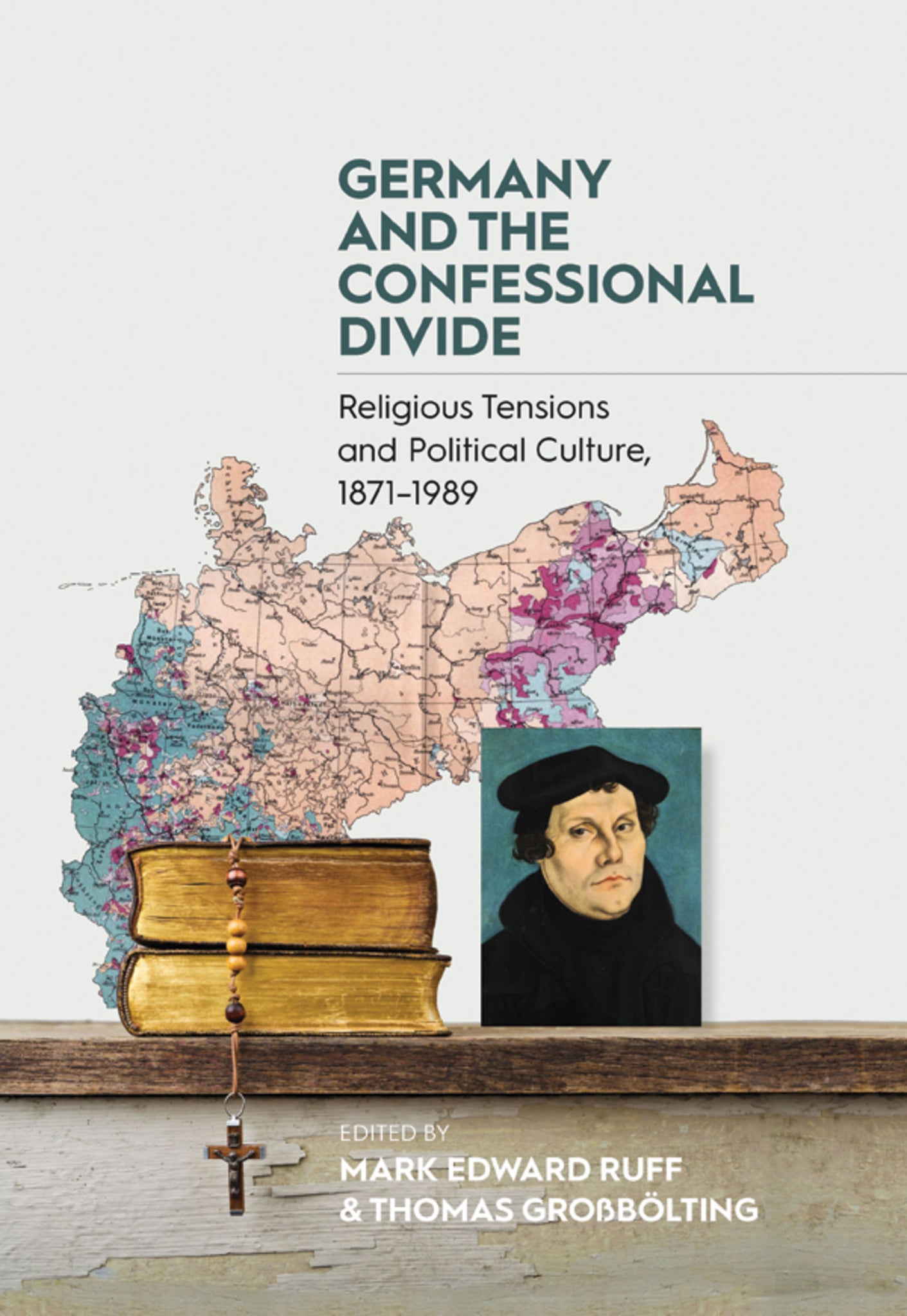
From German unification in 1871 through the early 1960s, confessional tensions between Catholics and Protestants were a source of deep division in German society. Engaging this period of historic strife, Germany and the Confessional Divide focuses on three traumatic episodes: the Kulturkampf waged against the Catholic Church in the 1870s, the collapse of the Hohenzollern monarchy and state-supported Protestantism after World War I, and the Nazi persecution of the churches. It argues that memories of these traumatic experiences regularly reignited confessional tensions. Only as German society became increasingly secular did these memories fade and tensions ease.


“This volume is a rich contribution to the literature on the German churches in the nineteenth and twentieth century. Importantly, it bridges the confessional divide that has long dominated historical scholarship on the German churches.” • Kyle Jantzen, Ambrose University
“The editors bring together an impressive group of scholars to address the question of relations between Catholics and Protestants in Germany, succeeding where other volumes have not.” • Kevin P. Spicer, Stonehill College
Acknowledgments
Introduction
Mark Edward Ruff and Thomas Großbölting
Chapter 1. The Kulturkampf and Catholic Identity
Jeffrey T. Zalar
Chapter 2. “Time to Close Ranks:” The Catholic “Kulturfront” during the Weimar Republic
Klaus Große Kracht
Chapter 3. The Revolution of 1918/1919: A Traumatic Experience for German Protestantism
Benedikt Brunner
Chapter 4. The Confessional Divide in Voting Behavior
Jürgen Falter
Chapter 5. The Fascist Origins of German Ecumenism
James Chappel
Chapter 6. Conversion as a Confessional Irritant: Examples from the Third Reich
Benjamin Ziemann
Chapter 7. Imperfect Interconfessionalism: Women, Gender, and Sexuality in Early Christian Democracy
Maria Mitchell
Chapter 8. Importing Controversy: The Martin Luther Film of 1953 and Confessional Tensions
Mark Edward Ruff
Chapter 9. In the Presence of Absence: Transformations of the Confessional Divide in West Germany after the Holocaust
Brandon Bloch
Chapter 10. A Tense Triangle: The Protestant Church, the Catholic Church, and the SED State
Claudia Lepp
Chapter 11. A Minority between Confession and Politics: Catholicism in the Soviet Zone of Occupation and the GDR (1945–1990)
Christoph Kösters
Chapter 12. The Churches and Changes in Missionary Work. Biconfessionalism and Developmental Aid to the “Third World” since the 1960s
Florian Bock
Chapter 13. Deconfessionalization after 1945: Protestants and Catholics, Jews and Muslims as Actors within the Religious Sphere of the Federal Republic of Germany
Thomas Großbölting
Conclusion: Closing Reflections
Mark Edward Ruff and Thomas Großbölting