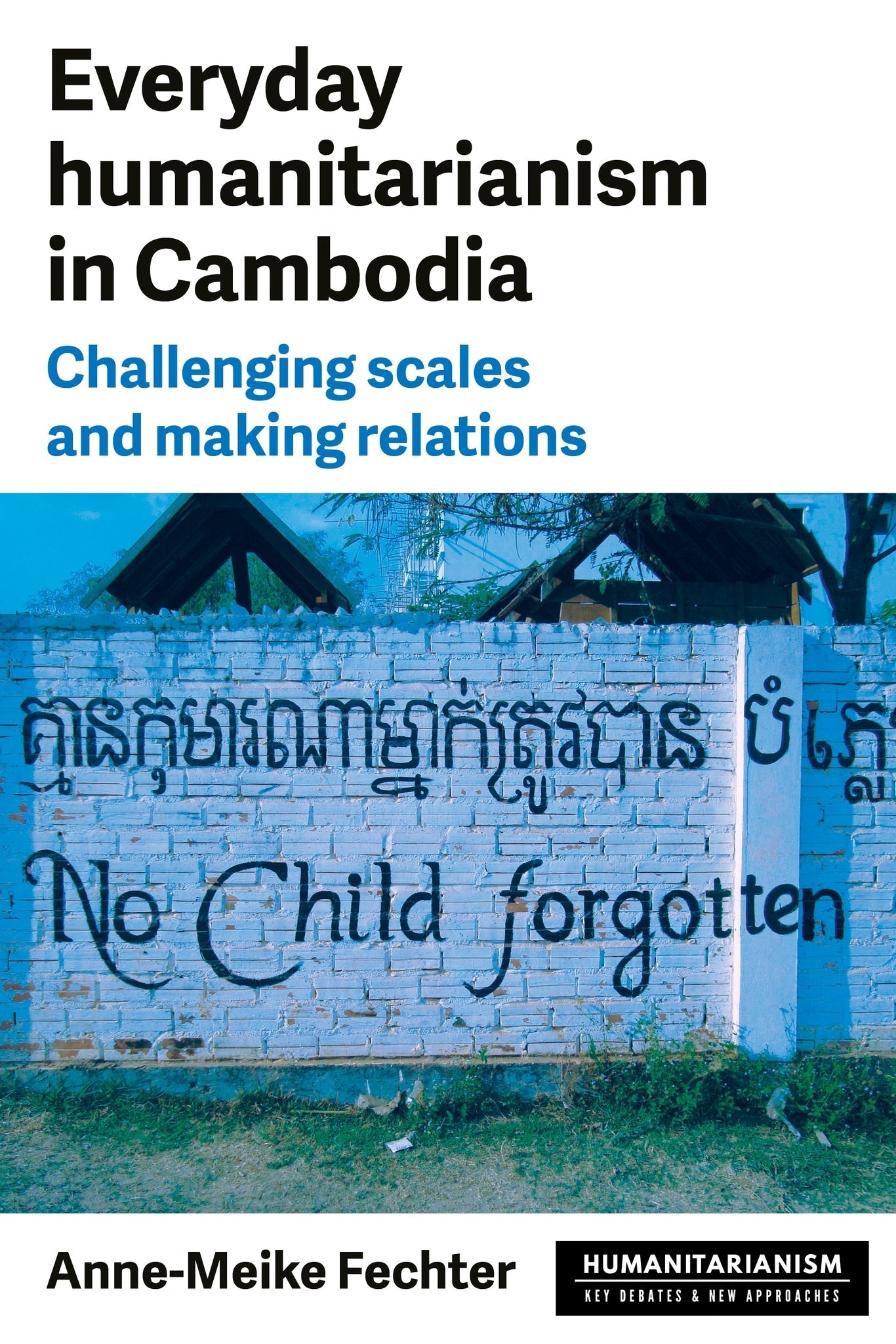
Faced with the scale of global challenges such as poverty and inequality, one question is where to start. Humanitarian efforts can only ever have limited reach. Among all of human suffering, whom should we support? And what shapes our choices? Such questions are at the core of this book. Through an ethnographic account of moralities, it traces how everyday humanitarian practitioners challenge entrenched values of what matters, upending the notion that the large-scale is inherently important, and even questioning what ‘large’ means in the first place. Instead, these practitioners typically aim to create a difference in the life of a particular person, situating their limited actions within pervasive poverty.
Price: £25.00
Pages: 200
Publisher: Manchester University Press
Imprint: Manchester University Press
Series: Humanitarianism: Key Debates and New Approaches
Publication Date:
03 June 2025
ISBN: 9781526191328
Format: Paperback
BISACs:
POLITICAL SCIENCE / International Relations / General, Public international law: humanitarian law, HISTORY / Asia / Southeast Asia, LAW / International, International relations
'Everyday humanitarianism is characterized by small-scale, privately financed, grassroots approaches to locally identified needs. Fetcher explores the motivations of those engaged in offering humanitarian assistance, the interest and willingness of potential and actual participants, the features that have led to the success or failure of projects, the relationships between aid and government institutions, and how programs are assessed in terms of their impact on individual lives and human welfare. The examples, analyses, and conclusions are universally relevant.'
CHOICE: Highly recommended
Anne-Meike Fechter is Professor of Anthropology and International Development at the University of Sussex
Introduction
1 Making scales and relations
2 The part and the whole
3 Every person counts
4 Distance and proximity
5 Desire to connect
6 Humanitarian kinship
7 Affinities and shared biographies
Conclusion
Index