


Skip to product information
1 of 1

Drawing as a Way of Knowing in Art and Science

Regular price £0.00
Sale price £0.00 Regular price £0.00
Sale Sold out
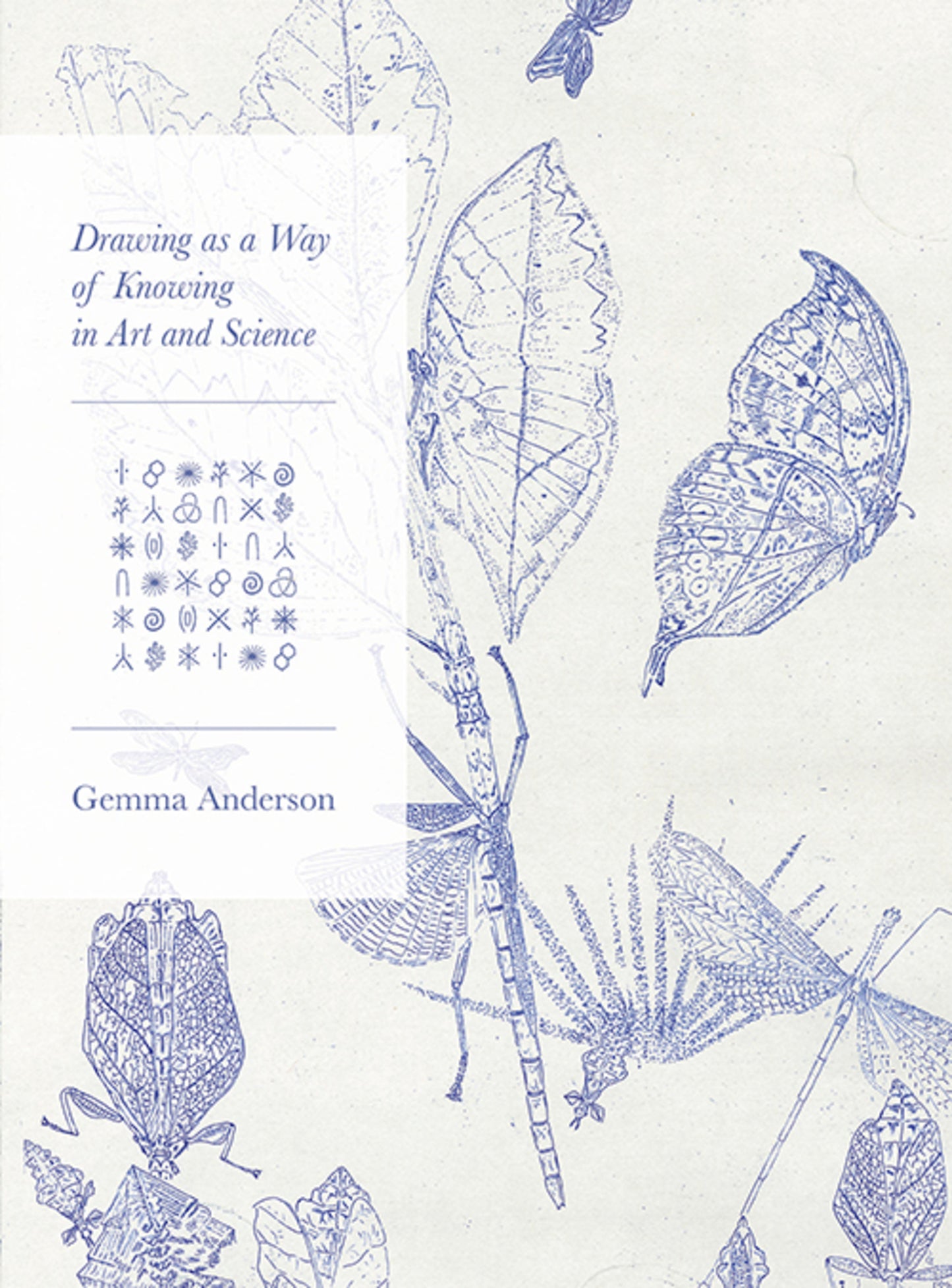
Gemma Anderson’s Drawing as a Way of Knowing in Art and Science introduces tested ways in which drawing as a research practice can enhance morphological insight, specifically within the natural sci...
Read More
  • Format:
  • 01 October 2017
View Product Details
In recent history, the arts and sciences have often been considered opposing fields of study, but a growing trend in drawing research is beginning to bridge this divide. Gemma Anderson’s Drawing as a Way of Knowing in Art and Science introduces tested ways in which drawing as a research practice can enhance morphological insight, specifically within the natural sciences, mathematics and art.
 
Inspired and informed by collaboration with contemporary scientists and Goethe’s studies of morphology, as well as the work of artist Paul Klee, this book presents drawing as a means of developing and disseminating knowledge, and of understanding and engaging with the diversity of natural and theoretical forms, such as animal, vegetable, mineral and four dimensional shapes. Anderson shows that drawing can offer a means of scientific discovery and can be integral to the creation of new knowledge in science as well as in the arts.

 
files/i.png Icon
Price: £0.00
Publisher: Intellect Books
Imprint: Intellect Books
Publication Date: 01 October 2017
ISBN: 9781783208111
Format: eBook
BISACs:

ART / General, SCIENCE / General, ART / Techniques / Drawing, The arts: general topics, Science: general issues

REVIEWS Icon

'The book allows a very close look into the artist's practice and the practice of collaborating scientists. Drawing procedures, such as the decision-making in the process of drawing, can be extremely interesting and fruitful for artists and scientists, but also for people from other disciplines. Key moments that are rarely ever in focus when talking about drawing are emphasized as vital ones, such as the gaining of knowledge through mimetic processes, the period of time in which a drawing is created or how drawing changes the way of seeing the world. Thus, the author’s project can be described in the very best sense as practice-based, but also as artistic research; eventually, it opens up a fantastic intellectual and artistic universe beyond that.'

List of Illustrations

Introduction
 
Chapter 1: On drawing as a way of knowing
 
Chapter 2: On drawing practice in science
 
Chapter 3: Drawing resemblances and Isomorphology
 
Chapter 4: Drawing with Goethe’s morphology
 
Chapter 5: Dynamic form: Klee as artist and morphologist
 
Chapter 6: Mathematics and art: Notes from an artistic collaboration
 
Chapter 7: Isomorphogenesis: Drawing a dynamic morphology
 
Chapter 8: The Cornwall Morphology and Drawing Centre
 
Conclusion
 
Glossary
 
Bibliography
 
Index