





Some error occured while loading the Quick View. Please close the Quick View and try reloading the page.
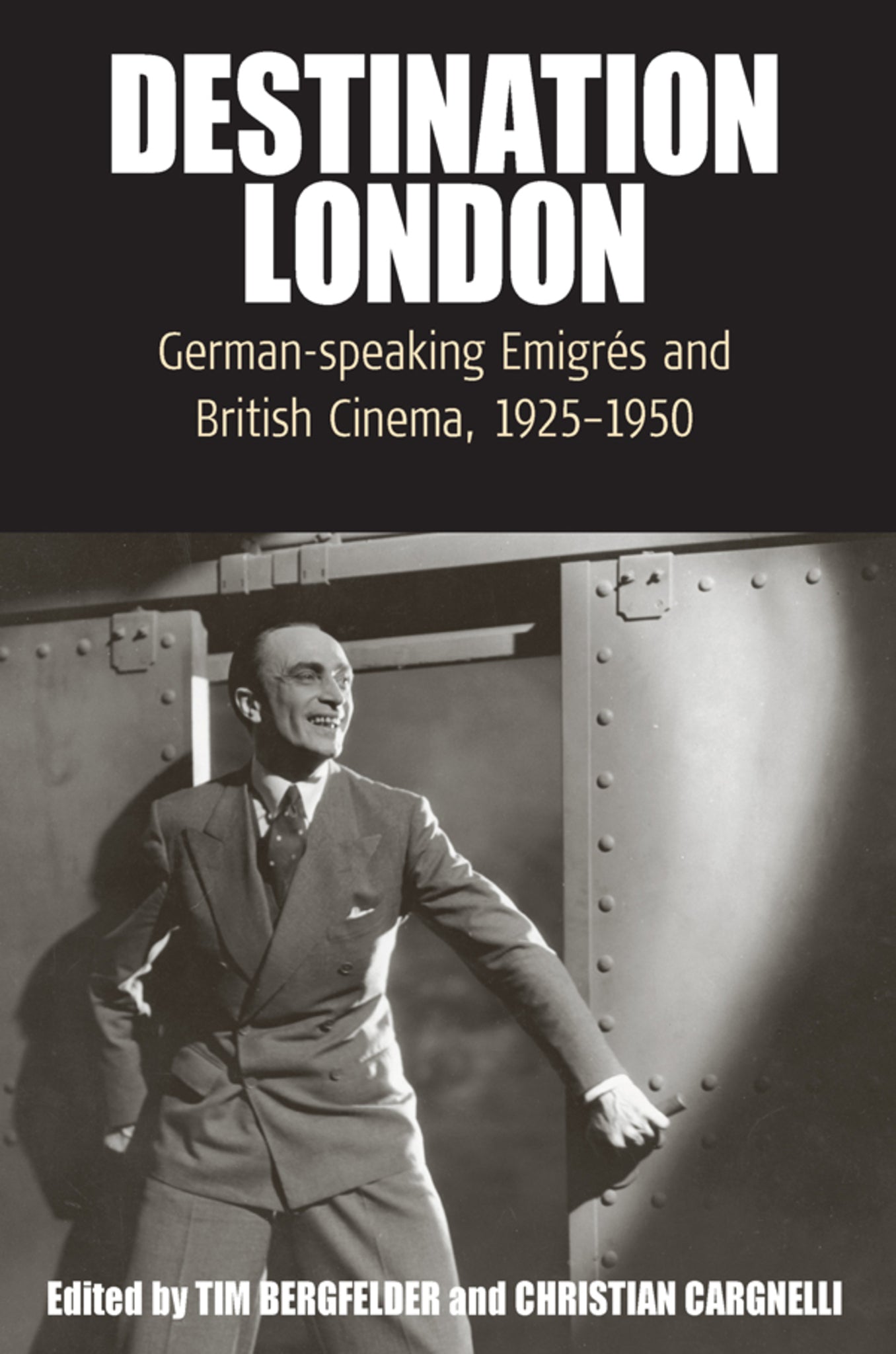
The legacy of emigrés in the British film industry, from the silent film era until after the Second World War, has been largely neglected in the scholarly literature. Destination London is the first book to redress this imbalance. Focusing on areas such as exile, genre, technological transfer, professional training and education, cross-cultural exchange and representation, it begins by mapping the reasons for this neglect before examining the contributions made to British cinema by emigré directors, actors, screenwriters, cinematographers, set designers, and composers. It goes on to assess the cultural and economic contexts of transnational industry collaborations in the 1920s, artistic cosmopolitanism in the 1930s, and anti-Nazi propaganda in the 1940s.


“…addresses one of the historically most neglected topics in exile studies…[The] chapters…are of a very high quality, written in an accessible and engaging style… Hopefully, Destination London will inspire more examinations of German speaking émigré film makers in Britain.” · Historical Journal of Film, Radio and Television
“…the volume not only makes a significant contribution to film history, it also further intervenes in broader contemporary debates on transnationalism in and beyond Germany. The scope of this intervention is drawn out admirably in Bergfelder’s introduction.” · Monatshefte
“This anthology addresses a subject which has long needed careful documentation and is one which Bergfelder and Cargnelli… are probably uniquely equipped to deal with. This is a book which genuinely fills a gap (is there any other legitimate reason for a book’s existence?) and in doing so is eminently readable as well as scholarly…there is more work to be done in this field of enquiry but this anthology ensures that the project is well under way.” · Journal of British Cinema and Television
"Rarely have essays in a collection been written so fluently and interesting as is the case here; successful translations from the German add to the overall positive impression. Bergfelder and Cargnelli succeeded in producing a most attractive volume." · rezens.tfm
“All the essays of this volume are interesting to read and thoroughly researched. Altogether, they prompt new reflections on aspects of British cinema in the early years of frequent co-production and later during the flow of film personnel escaping the Nazi regime. Moreover, this study clearly outlines how importantly set designers, cameramen, scriptwriters and composers contribute to film production, but they are often ignored because of primary interest in directors and actors.” · Edge
“Destination London is a welcome and successful contribution to German and British film studies as well as, more generally, to European cultural history… [It] demonstrates convincingly that the work growing out of this often compelled cosmopolitanism is to be taken seriously and at length, for it yielded frequently overlooked contributions to the British film industry and culture more generally.” · European History Quarterly
Acknowledgements
Chapter 1. Introduction: German-speaking Emigrés and British Cinema, 1925–50: Cultural Exchange, Exile and the Boundaries of National Cinema
Tim Bergfelder
Chapter 2. Life Is a Variety Theatre: E.A. Dupont’s Career in German and British Cinema
Tim Bergfelder
Chapter 3. Geza von Bolvary, Arnold Ridley and ‘Film Europe’
Lawrence Napper
Chapter 4. Inside the Robots’ Castle: Ufa’s English-language Versions in the Early 1930s
Chris Wahl
Chapter 5. Flamboyant Realism: Werner Brandes and British International Pictures in the Late 1920s
Kelly Robinson
Chapter 6. Famously Unknown: Günther Krampf’s Work as Cinematographer in British Films
Michael Omasta
Chapter 7. ‘German, or still more horrible thought, Russian – at any rate, it is un-English!’ A Wide Shot of Exile, Emigré and Itinerant Activity in the British Film Industry in the 1930s
Amy Sargeant
Chapter 8. Extending Frames and Exploring Spaces: Alfred Junge, Set Design and Genre in British Cinema
Sarah Street
Chapter 9. Lost in Siberia: Ernö Metzner in Britain Laurie
N. Ede
Chapter 10. ‘Be kvite kviet, everybody, please!’: Paul L. Stein and British Cinema
Christian Cargnelli
Chapter 11. Allegories of Displacement: Conrad Veidt’s British Films
Gerd Gemünden
Chapter 12. Anton Walbrook: The Continental Consort
Michael Williams
Chapter 13. From ‘Alien Person’ to ‘Darling Lilli’: Lilli Palmer’s Roles in British Cinema
Barbara Ziereis
Chapter 14. ‘You call us “Germans”, you call us “brothers” – but we are not your brothers!’: British Anti-Nazi Films and German speaking Emigrés
Tobias Hochscherf
Chapter 15. Carl Mayer: Years of Exile in London
Brigitte Mayr
Chapter 16. Music for the People: Escapism and Social Comment in the Work of Hans May and Ernst Meyer
Geoff Brown
Chapter 17. I Know Where I’m Going! Hearing Germanic Music in the Scottish Isles
K.J. Donnelly
Chapter 18. ‘An Animated Quest for Freedom’: Mátyás Seiber’s Score for The Magic Canvas
Florian Scheding
Notes on Contributors
Bibliography
Index