





Some error occured while loading the Quick View. Please close the Quick View and try reloading the page.
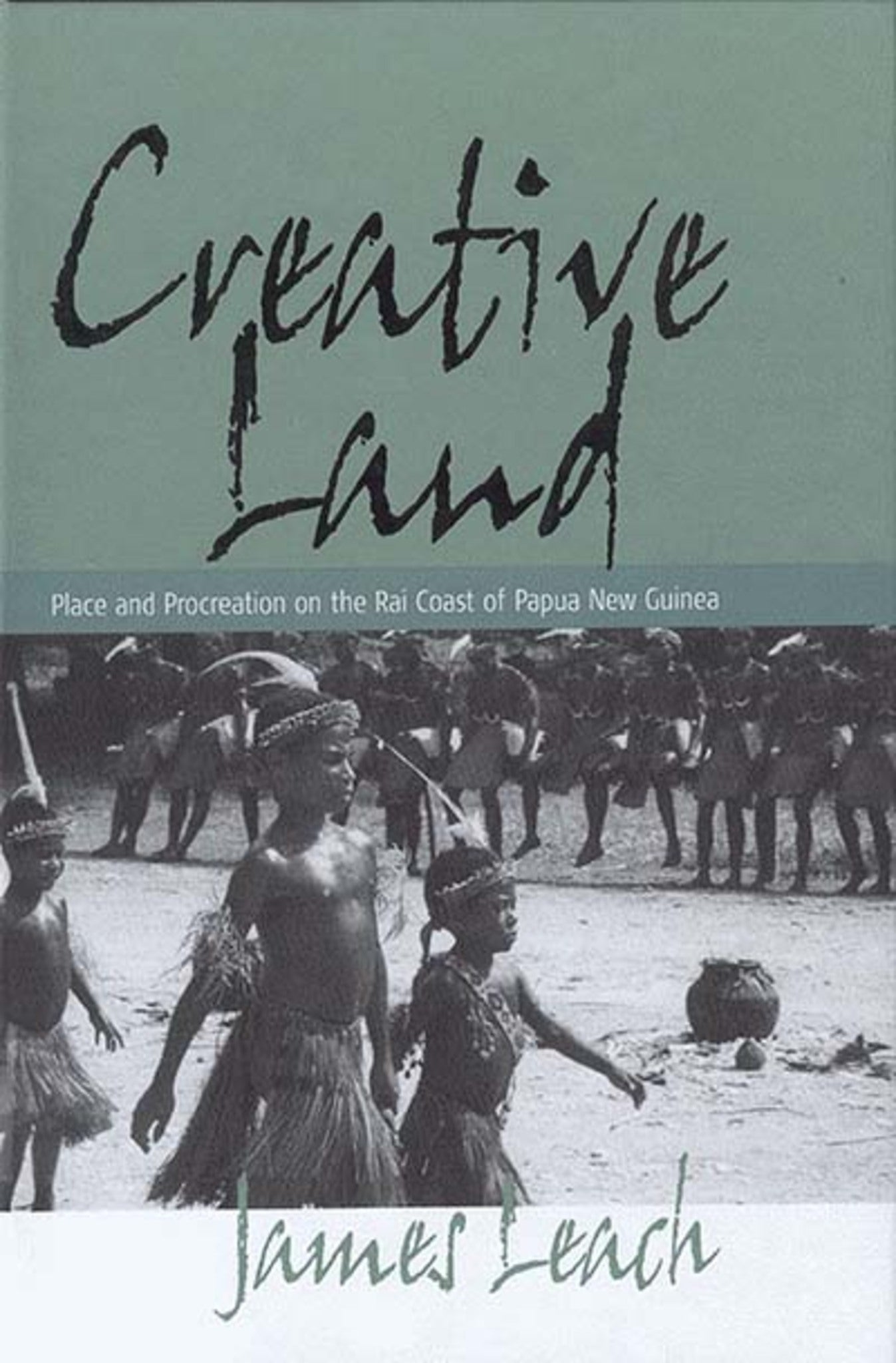
What is creative in kinship? How are people connected to places? James Leach answers these questions through formulating “creativity” as an integral part of kinship on the north coast of Papua New Guinea. The book contains a new critique of the genealogical model of kinship, suggesting that this model prevents us from grasping the way generative relations, including those to land and place, constitute persons on the Rai Coast. Analytic attention is focused upon the life cycle, marriage, exchange and artistic production as the activities in which substantial connection is generated. The argument, made in relation to detailed ethnography, yields a fresh perspective on the connections people trace to each other.


"What is new in Leach’s account is the emphasis Nekgini speakers put on land. His attention to this emphasis makes his ethnography in many ways a powerful development... the book as a whole is consistently stimulating and theoretically sophisticated throughout." · Joel Robbins, Contemporary Pacific
"The ethnography itself is full of interesting observations and novel information, and repays a close reading with a vivid sense of the distinctiveness of Reite social life…Creative Land is itself ‘creative’ and will attain its own ‘place’ in the historical ‘landscape’ of studies of kinship in New Guinea and elsewhere. · Andrew Strathern, The Journal of the Royal Anthropological Institute
List of Maps, Figures, Tables, and Photographs
Notes on the Text
Preface
Acknowledgements
Chapter 1. Process and Kinship
- Kinship, Process, and Creativity
- Cognation and Flexibility
- An Alternative to the Genealogical Model
- The Palem
Chapter 2. Residence History and Palem
- Hamlets Past and Present
- Hamlets as Social Groups
- The Labours of Lawrence Complexity
Chapter 3. Marrying Sisters
- Defining Relationships
- Myths and Explanations
Chapter 4. Gardens, Land, and Growth
- Origin Points
- Gendered Productivity: The Tambaran Households and Gardens
- Gardening, not ‘Production’
- Gardens, Land, and Substance
- Male Continuity, Female Movement
Chapter 5. Birth, Emergence, and Exchange
- The Transactions Between Affinal Kin Focused on Children
- Mother’s Brothers in the Anthropological Literature
- Affinal Payments and Lineality in Reite
- Visibility and Recognition
Chapter 6. Spirit, Flesh, and Bone
- The Palem as a Body
- Performing Places
- People and Spirits as Land Made Mobile
Chapter 7. Places and Bodies, Landscape and Perception
- The Concept of Landscape in Anthropology
- Hearing and Vision as Sensory Modalities
- Landscape in the Nekgini Lifeworld
Chapter 8. Creative Land
- Land, Place, and Person
- Simple Principles, Complex Process
- Creativity
Glossary
References
Index