





Some error occured while loading the Quick View. Please close the Quick View and try reloading the page.
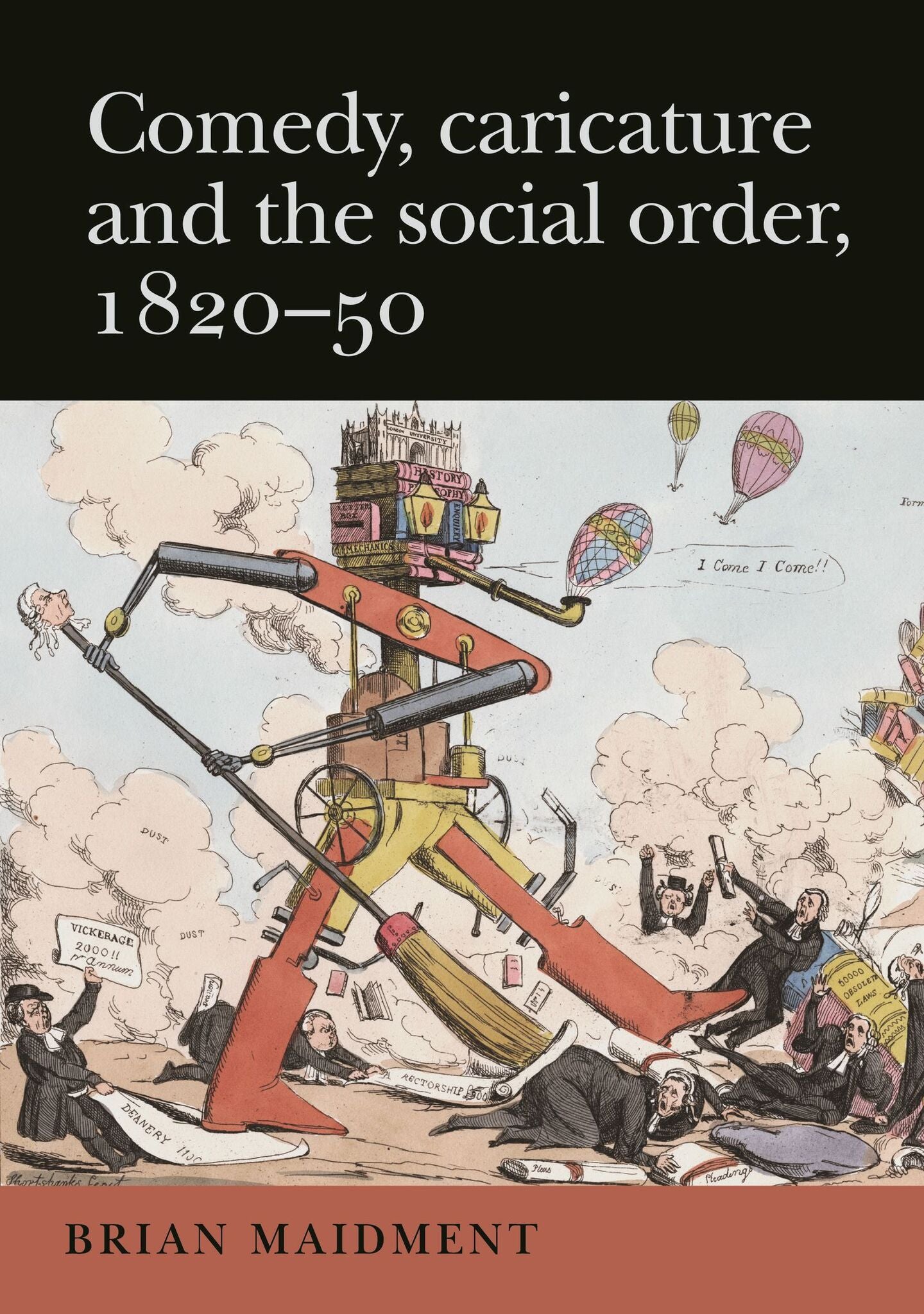


The book challenges text centric accounts of British culture between 1820 and 1850, it adds nuance and complexity to the 'mass' audience that emerged at the time, it shows how illustration and graphic satire played a role in making the novel reading habits of working people less threatening to the middle and upper classes, and it argues convincingly that Georgian graphic satire retained a strong inflence into the 1850s.
Above all, Comedy Caricature and the Social Order is a book of huge warmth, a book littered with a sense of passion for the subject matter.. Few books manage to explore the comic and not only retain the comedy of the sources being explained but also build on them.
Maidment achieves this impressive level of analysis through his attention to detail in studying the range of comic images produced during the first half of the nineteenth century. Comedy, Caricature and the Social Order, 1820-50 tells us a great deal about the content of the images and the market conditions in which they were produced.
As Maidment himself acknowledges, there still remains work to be done on the miscellanies, scraps and songbooks of this period, so I too strongly urge scholars and institutions to invest in purchasing this text as the rewards will be multiple and it is certainly a text that has the potential to inspire new and creative areas for study.
"No brief account can do justice to the erudition and insight that is here brought to bear upon a subject that has waited a very long time for a champion. Maidment's book triumphantly makes a case for this vibrant, fluid era of graphic art as a subject worthy of serious and sustained investigation. His own study lights the way forward."
(Patrick Leary, Victorian Periodicals review 47:I Spring 2014)
Part 1: Regency and early Victorian graphic humour: Modes and markets
1 ‘Graphic bric-a-brac’? Approaching early nineteenth-century graphic humour
2 Regency visual culture in the market place
3 Continuity, change and innovation in Regency and early Victorian comic print culture
Part 2: The social vision of Regency and early Victorian comic visual culture
4 Reflections in a print shop window: the politics of the public image
5 Robert Seymour: a jobbing artist in the marketplace
6 The ‘march of intellect’ as a comic event: mockery, heroism and social change
7 Revisiting the Regency: Punch’s dustmen
Index