Skip to product information
1 of 1

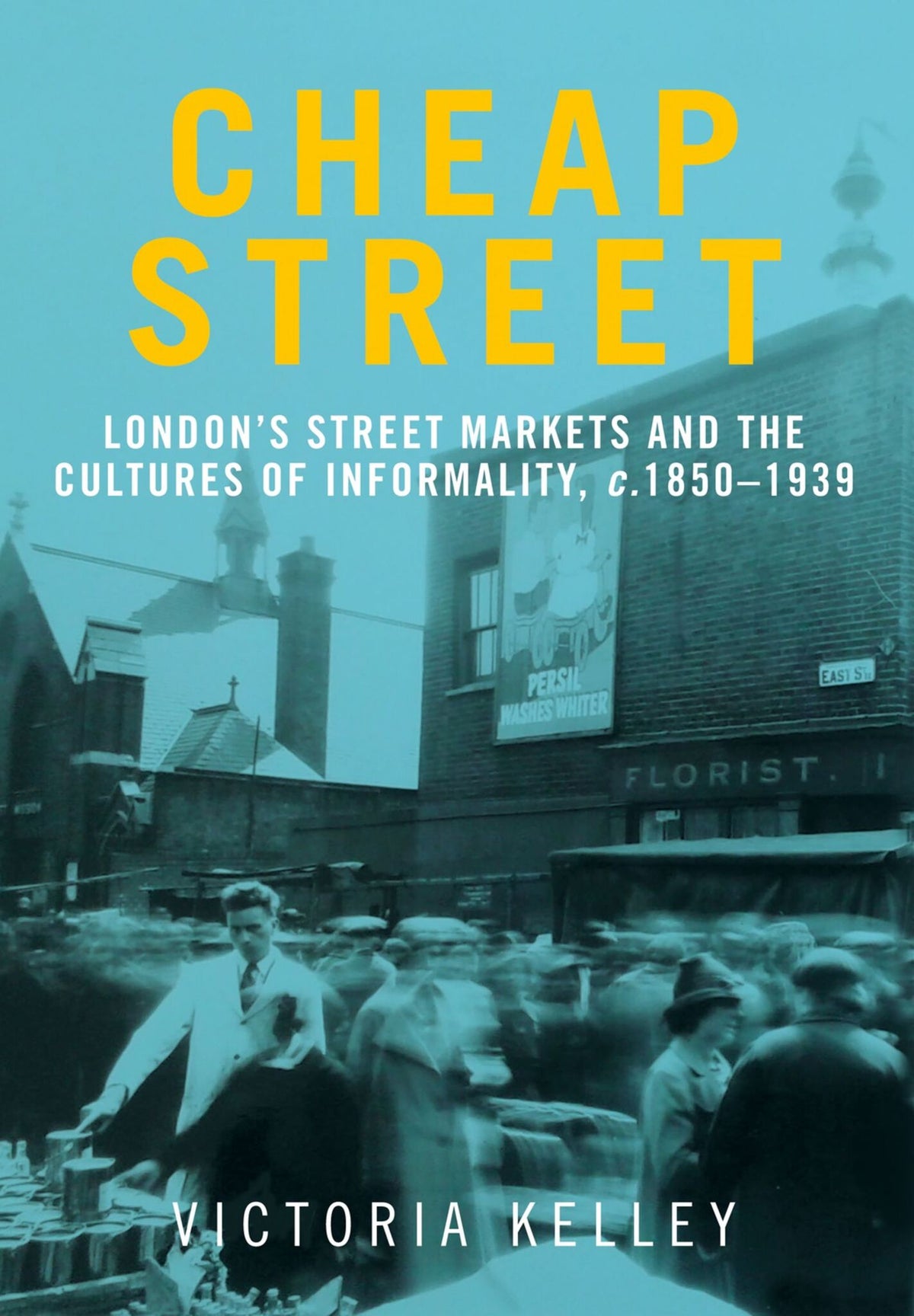
Cheap Street

Regular price £85.00
Sale price £85.00 Regular price £0.00
Sale Sold out
From around 1850, London’s street markets grew in number and scale, giving working-class Londoners a site for shopping, entertainment and sociability. Cheap Street is the first major study of this ...
Read More
  • Format:
  • 05 August 2019
View Product Details
Cheap street is a lively and scholarly account of London’s street markets, which were an overlooked site of urban modernity and the most vigorous outgrowth of the informal economy that flourished below and beyond the recognised institutions of the consumer city. Kelley brings together design and material culture history, urban studies and social and cultural history to analyse the street markets’ distinct characteristics. These included the flaring naked flames of their naphtha lights, their impermanent yet persistent unofficial occupation of space, and the noisy performative selling that took place there. The result is a new interpretation of London’s urban geographies, moving beyond the accepted view of the West End as the consumer city and the East as the city of poverty, and demonstrating that the informality of the street markets was a powerful force in shaping representations of London and its people.
files/i.png Icon
Price: £85.00
Pages: 224
Publisher: Manchester University Press
Imprint: Manchester University Press
Publication Date: 05 August 2019
ISBN: 9780719099229
Format: Hardcover
BISACs:

BUSINESS & ECONOMICS / Economic History, History, HISTORY / Europe / Great Britain / 20th Century, HISTORY / Europe / Great Britain / Victorian Era (1837-1901), Economic history, European history: medieval period, middle ages

REVIEWS Icon

'Throughout, Kelley evokes the vibrancy and spectacle of the street markets. The chapter on ‘Streets’ is a highlight, due no doubt to her expertise in the history of design and material culture. ... These stories do not just stick in the mind. London’s irregular markets were full of delight and stimulation, but at the same time complicated categories and norms of metropolitan society. Kelley lets London’s street markets dazzle us, before making us think again.'
Charlie Taverner, Cultural and Social History

'A well-written and richly illustrated book on London street markets, Victoria Kelley challenges conventional narratives of Victorian street markets as imaginative and material relics of the past.'
Judith Walkowitz, Victorian Studies

'Kelley’s hugely entertaining treatment of the market culture of the East End provides an important contribution to the literature surrounding the area and the cultures of poverty and subsistence that underpinned the “informal” economy of the poor ... There is a breadth of scope and an adventurousness of interpretive method here that gives Kelley’s study a refreshingly different take on some traditional themes.'
Antony Taylor, Left History

Victoria Kelley is Director of Research and Professor of the History of Design and Material Culture at the University for the Creative Arts

Introduction
1. What is a street market?
2. Things
3. Streets
4. People
5. Street markets, informality and the performance of London
Conclusion
Select bibliography
Index