





Some error occured while loading the Quick View. Please close the Quick View and try reloading the page.
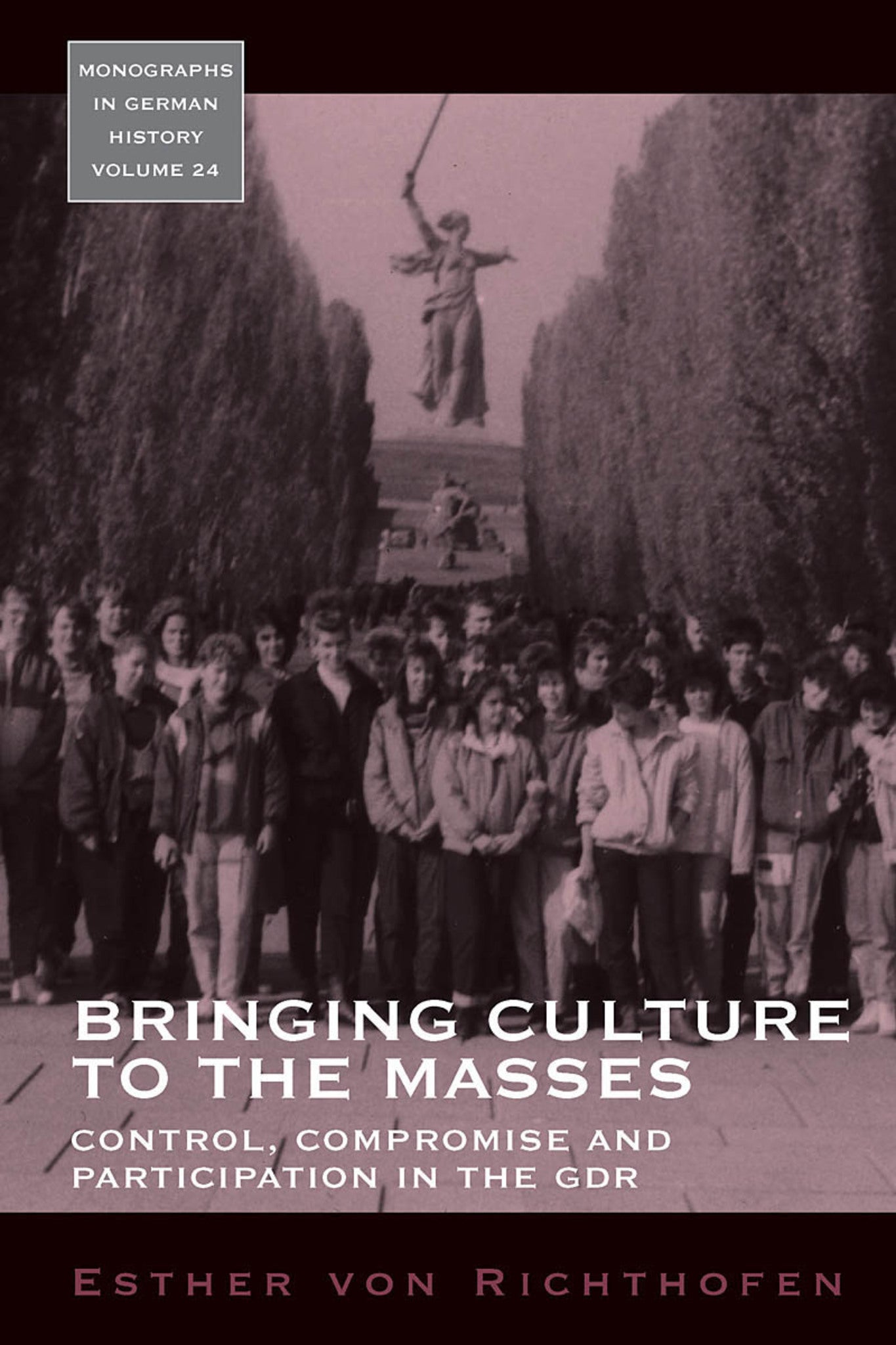
Cultural life in the former German Democratic Republic (GDR) was strictly controlled by the ruling party, the SED, who attempted to dictate how people spent their free time by prohibiting privately organized leisure time pursuits and offering instead cultural activities in state institutions and organizations. By exploring the nature of dictatorial rule in the GDR and analysing the population’s engagement with state-organized cultural activity, this book challenges the current assumptions about the GDR’s social and institutional history that ignore the interaction and inter-dependence between ‘rulers’ and ‘ruled’. The author argues that the people’s cultural life in the GDR developed a dynamic of its own; it was determined by their own interests and by the input of cultural functionaries, who often aimed to satisfy popular demands, even if they were at odds with the SED’s cultural policy. Gradually, these developments affected SED cultural policy, which in the 1960s became less focused on educationalist goals and increasingly oriented towards popular interests.


". this book's investigation of how culture worked at the local level adds to our understanding of the diversity within the East German system. In particular, its more nuanced view of cultural functionaries-the many types that existed and their personal motivations-offers a valuable contribution to current scholarship." · German History
“Richthofen’s work conveys with empathy the complex choices that characterised life in the GDR. [This] astutely argued, thought-provoking study is a worthy addition to the increasingly impressive body of research on the social and cultural life of ordinary East Germans.” · English Historical Review
“In providing a multi-actor model for analyzing one area of policy and practice in the GDR, this book is a valuable contribution not only to the literature on that state but also to the methodological considerations of institutional and social history and organizational studies…Its accessibility in terms of excellent writing and clear argumentation also make[s] it an excellent text for both undergraduate and graduate classes in history and political science classes about models of communication and policy making.” · Central European History
List of tables
Abbreviations
Acknowledgements
Chapter 1. Introduction
Chapter 2. Nonconformity, Coercion and Alienation: the 1950s
PART I: BENDING THE RULES WHILE UPHOLDING THE STRUCTURES: CULTURAL FUNCTIONARIES
Chapter 3. Neither Puppets nor Opponents
Chapter 4. Organising Culture: Compromise and Communication
PART II: ATTEMPTED SELF-DETERMINATION - PURSUING AN INTEREST: THE PARTICIPANTS
Chapter 5. Patterns of Participation
Chapter 6. Communication with Cultural Functionaries
PART III: FROM UTOPIANISM TO PRAGMATISM: CULTURAL POLICY
Chapter 7. Responding to Developments at the Grassroots
Chapter 8. From Art to Culture
Chapter 9. Breakdown of Communication: the late 1970s and 1980s
Chapter 10. Conclusion
Bibliography
Index