





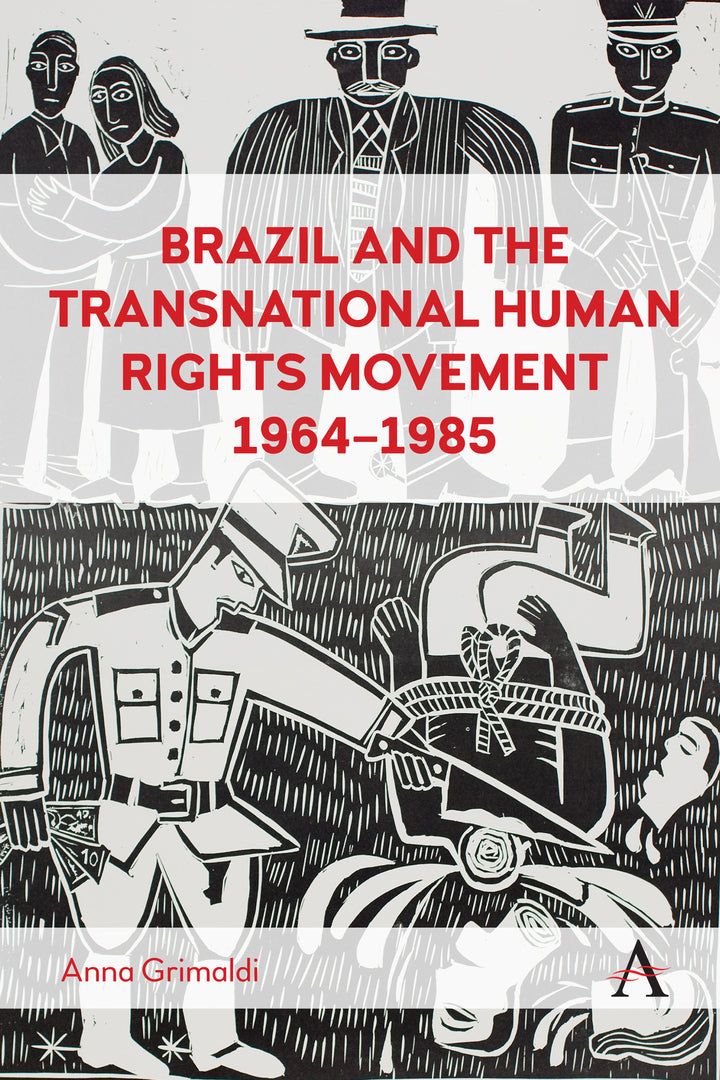
Brazil and Transnational Human Rights Movement, 1964–1985 explores how solidarity for Brazil contributed to the global human rights movement of the 1970s. Through protests, petitions, posters, and numerous other cultural, artistic, and media-based campaigns, solidarity for Brazil popularised the language of human rights and prompted the international community to join the fight against the country’s military regime. But solidarity for Brazil also reframed the debate on human rights itself, stretching the concept beyond mainstream interpretations that emphasised the violation of ‘basic’ individual rights, such as the use of torture and political imprisonment, to also incorporate social and economic rights, inequality, indigenous minorities, and the human rights responsibilities of multinational companies and development projects. Crucial to this process were multiple networks of exiles, catholic activists, journalists, and academics between Brazil and Western Europe, who drew from the Latin American experience to challenge mainstream narratives of human rights from below.


“Brazil and the Transnational Human Rights Movement is an inspiring study of global politics, resistance and solidarity. Challenging us to reconceptualise teleological top-down histories of human rights and consider pluralistic notions circulating among exiles and activists from the 1960s to the 1980s, it is an exciting call to rethink histories of the late twentieth century” — Tanya Harmer, Associate Professor, London School of Economics and Political Science, London, UK.
“Brazil and the Transnational Human Rights Movement, 1964-1985 is an important contribution to a still nascent field of research about the multiple ways Brazilians and international actors worked together to denounce the Brazilian military dictatorship and support the efforts for progressive social change in that country by focusing on the ways in which Brazilians and their European allies mobilized support with the strategy of isolating the regime and pressuring for a return to democratic rule” — James N. Green, Professor of Brazilian History and Culture, Brown University, Rhode Island, USA.
“Brazil and the Transnational Human Rights Movement, 1964-1985 makes an important contribution to our understanding of the evolution of human rights in the late twentieth century. It argues that Brazilian activists and exiles made vital contributions to the building of transnational human rights networks in the 1960s, 1970s and 1980s, moving the focus of these networks from a narrow engagement with civil and political rights to a broader understanding of the importance of so-called ‘third generation’ or social and economic rights, including collective rights. The book is based on interviews and painstaking research in Portuguese, Spanish, French, Italian, German and English-language archives. The book is an impressive contribution to scholarship on transnational human rights, Latin American politics and history, and relations between the Global South and Global North. It marks the debut of a promising young scholar, Anna Grimaldi, with an ability to interpret texts in subtle and surprising ways, showing how ideas change as they are transmitted across time and space. I highly recommend this book” – Anthony W. Pereira, Director of the Kimberly Green Latin American and Caribbean Center, Florida International University, Miami, USA.
Anna Grimaldi is a lecturer in International Relations at the University of Leeds.
Acronyms; Introduction; Chapter 1: Foundations of Solidarity 1964–1969; Chapter 2: Exile, Torture, and Disappearances 1969–1972; Chapter 3: Poverty, Inequality, and Transnational Responsibility 1973–1975; Chapter 4: Brazil and Latin America; Brazil and the Third World 1975–1985; Conclusion; Epilogue.