





Some error occured while loading the Quick View. Please close the Quick View and try reloading the page.
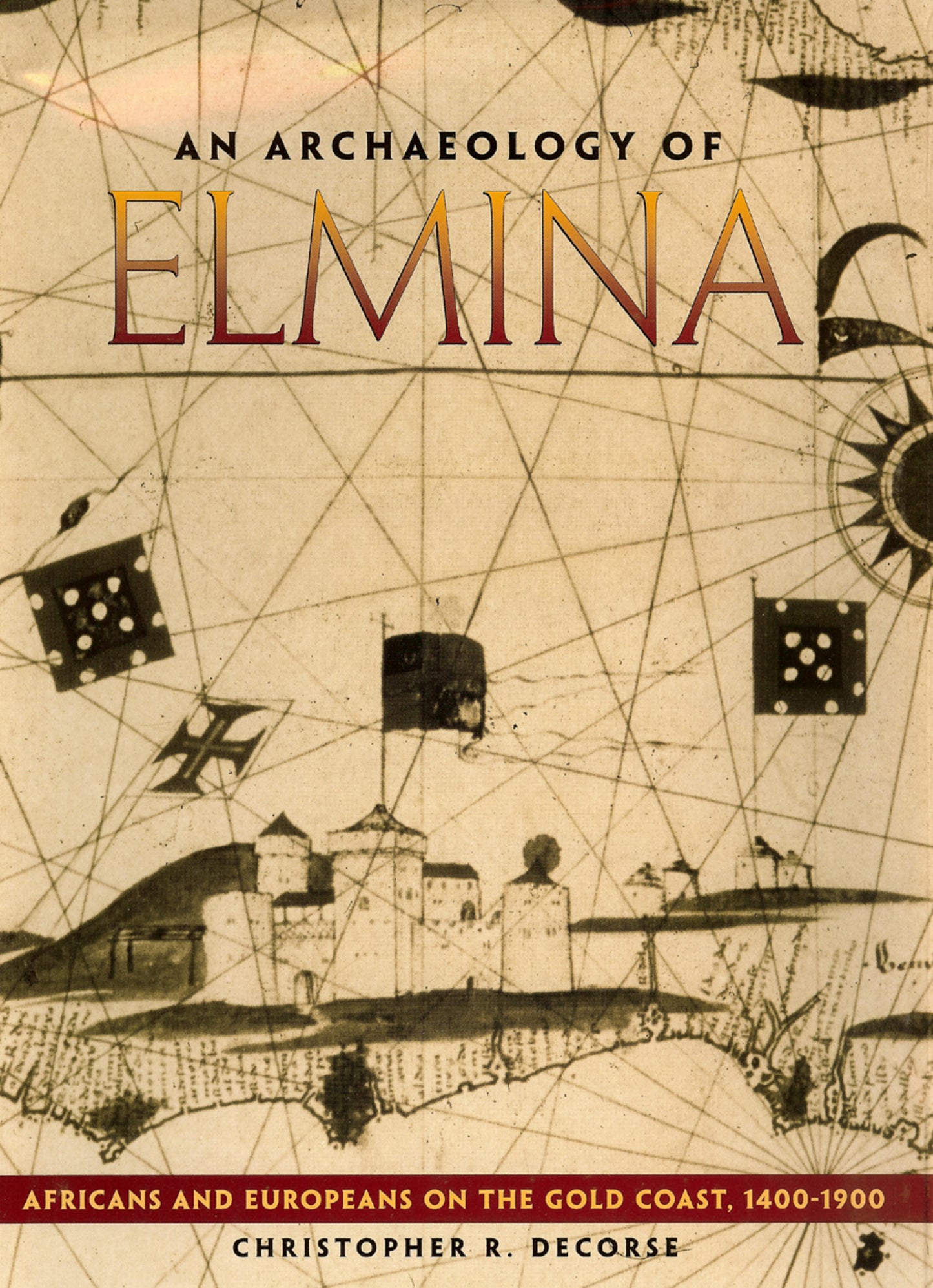
An Archaeology of Elmina examines a complex African settlement on the coast of present-day Ghana from the fifteenth through the nineteenth centuries using the archaeological record, European narratives and indigenous oral histories. Placing the site in broader context as the first European trading post in sub-Saharan Africa, Christopher DeCorse explores the developments there in light of Portuguese, Dutch, and British expansion and illustrates remarkable cultural continuity in the midst of technological change.


"[A]n account of the significance of Elmina in West African history, showing how archaeological evidence can be integrated with documentary sources and oral evidence to cast new light on this phase of Africas history." (Martin Hall, University of Cape Town)
"[E]legantly reveals a town where West Africans dealt on equal terms with Europeans. . . . DeCorse brings alive a town which was more African than European in its diet, burial practice, religious rites, and spatial relations, a town with trading connections with four continents." (Merrick Posnansky, University of California, Los Angeles)
'DeCorse uses well-dated European artifacts to help establish what is certainly the most comprehensive archaeological sequence of historic period West Africa. . . . Descriptions and analyses of potting, metalwork, bead making, ivory carving, and salt making provide much new information and in some cases demand reevaluation of previously held ideas.' (Leland Ferguson, University of South Carolina)
Christopher R. DeCorse, Syracuse University, Syracuse, New York.
Acknowledgements
Introduction
1. Historical Background
2. The Elmina Settlement
3. The Archaeology of an African Town
4. Subsistence, Craft Specialization, and Trade
5. The European Trade
6. Culture, Contact, Continuity, and Change
Notes
References
Index