





Some error occured while loading the Quick View. Please close the Quick View and try reloading the page.
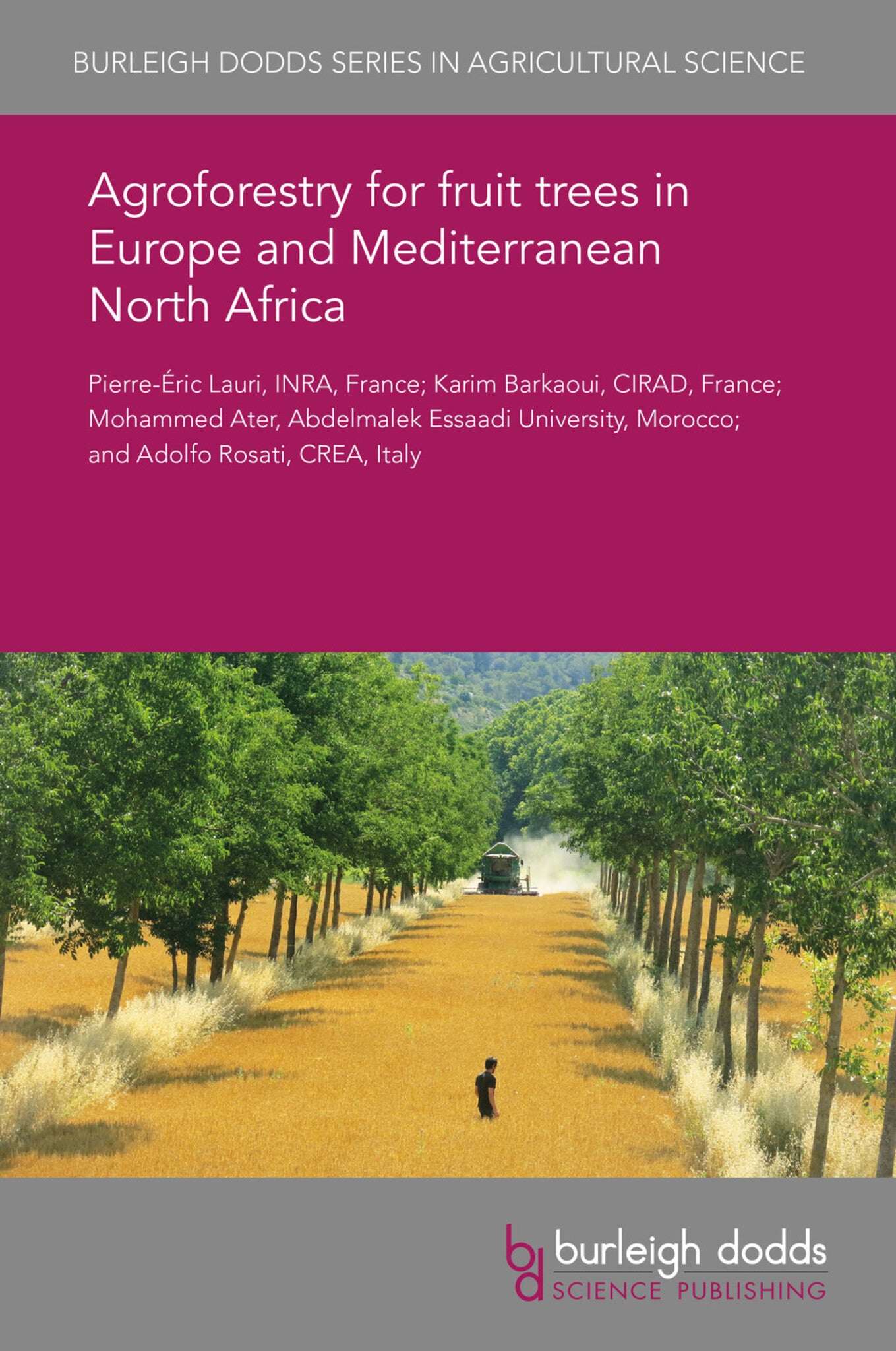
Although fruit trees are considered as high value for agroforestry and are the primary driver of agroforestry adoption worldwide, they are still underrepresented in agroforestry systems in temperate regions compared to the tropics. This chapter illustrates the large diversity of fruit tree-based agroforestry in Europe and in the Mediterranean North Africa, including the oases regions. The chapter then describes the most represented species-based (apple, olive) and emblematic place-based (arganery, oasis) agroforestry systems in these regions. Finally, the chapter details some biological and agronomical specificities of fruit trees that have to be considered when implementing performant fruit tree-based agroforestry systems, and presents updated work on how current trends in both fruit tree cultivation and agroforestry may converge into the design of agronomically and ecologically sound fruit tree-based agroforestry systems.

Price: £25.00
Publisher: Burleigh Dodds Science Publishing
Imprint: Burleigh Dodds Science Publishing
Series: Burleigh Dodds Series in Agricultural Science
Publication Date:
11 March 2019
ISBN: 9781838797690
Format: eBook
BISACs:

1 Introduction 2 Extent and classification of fruit tree-based agroforestry systems (FT-AFS) in Europe and in Mediterranean North Africa 3 Emblematic FT-AFS in Europe and in Mediterranean North Africa 4 Reinventing FT-AFS 5 The possible interest of multistrata FT-AFS 6 Remaining challenges 7 Future trends and conclusion 8 Where to look for further information 9 References