





Some error occured while loading the Quick View. Please close the Quick View and try reloading the page.
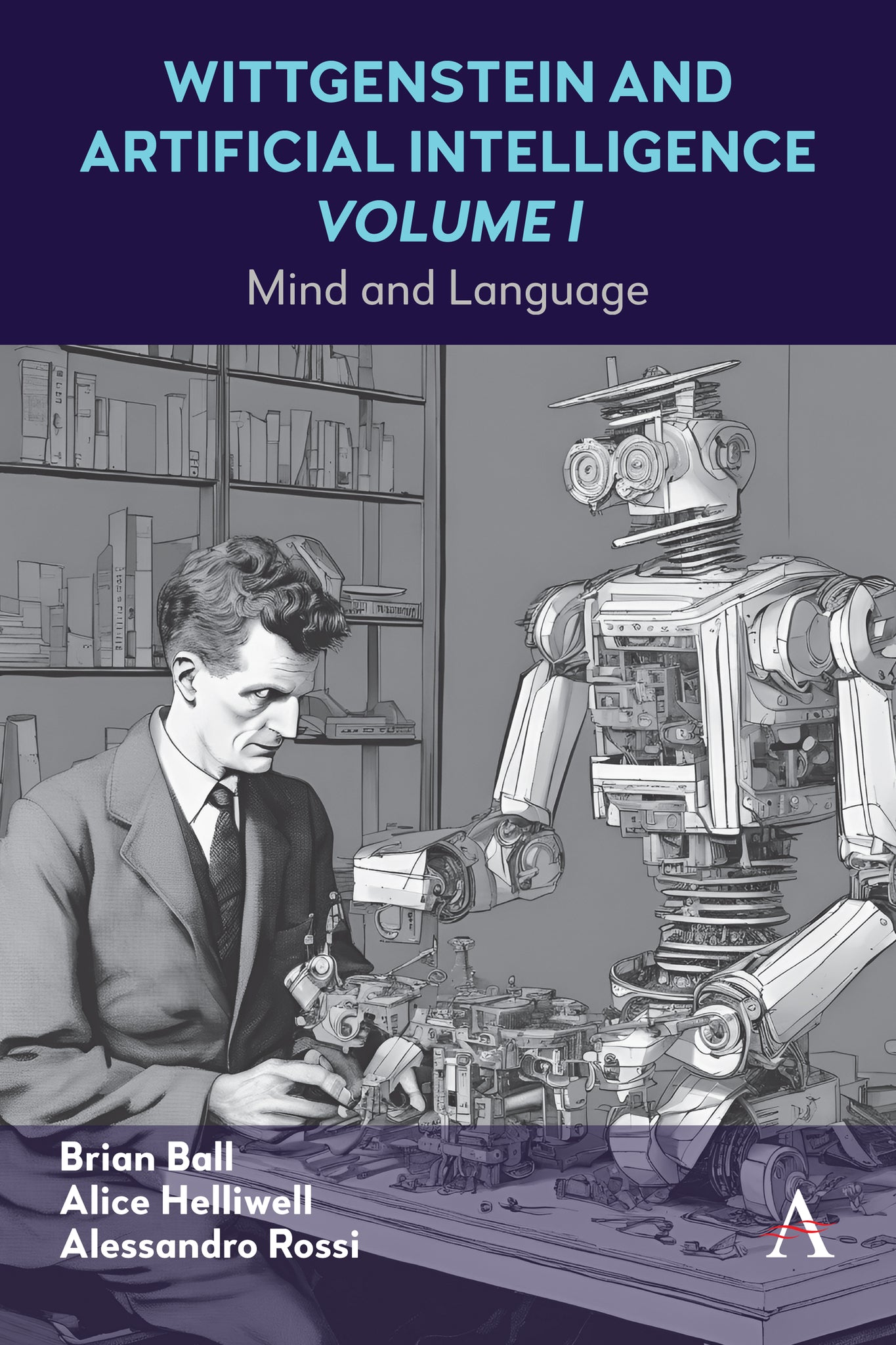
This collection brings together work on the relevance of Wittgenstein’s philosophy to the field of Artificial Intelligence (AI). Over two volumes, our contributors cover a wide range of topics from different disciplinary approaches. In this Volume (I), contributions are centred on two major themes in the philosophy of AI: questions of mind and language. Contributions include chapters on AI thought, intentionality, logic and language, as well as the relationship between Wittgenstein’s thought and Turing’s.


‘The exotic mind-like entities now emerging from artificial intelligence bend the conventional categories of analytical philosophy into new shapes, and sometimes threaten to fracture them altogether. Wittgenstein’s critical work is essential for navigating this unfamiliar conceptual territory.’ — Murray Shanahan, Professor of Cognitive Robotics, Department of Computing, Imperial College London, and Principal Research Scientist at Google DeepMind
Introduction; Brian Ball, Alice C. Helliwell and Alessandro Rossi; Chapter 1. Wittgenstein and Turing on AI: Myth Versus Reality, Diane Proudfoot; Chapter 2. Between Wittgenstein and Turing: Enactive Embodied Thinking Machines, Tomi Kokkonen and Ilmari Hirvonen; Chapter 3. Wittgenstein, Psychological Language and AI, Arturo Vázquez Hernández; Chapter 4. The Metonymical Trap, Éloïse Boisseau; Chapter 5. The Forms of Artificially Intelligent Life: Brandom, Chomsky and Wittgenstein on the Possibility of Strong-AI, Laith Abdel-Rahman; Chapter 6. Black Boxes, Beetles and Beasts, Ian Ground; Chapter 7. Language Models and the Private Language Argument: A Wittgensteinian Guide to Machine Learning, Giovanni Galli; Chapter 8. Simplification without Falsification: The Problem of Relevance in Logic and AI, Oskari Kuusela; Chapter 9. Modelling Analogical Reasoning: One-Size-Fits-All?, Ioannis Votsis; Notes on Contributors; Index