





Some error occured while loading the Quick View. Please close the Quick View and try reloading the page.
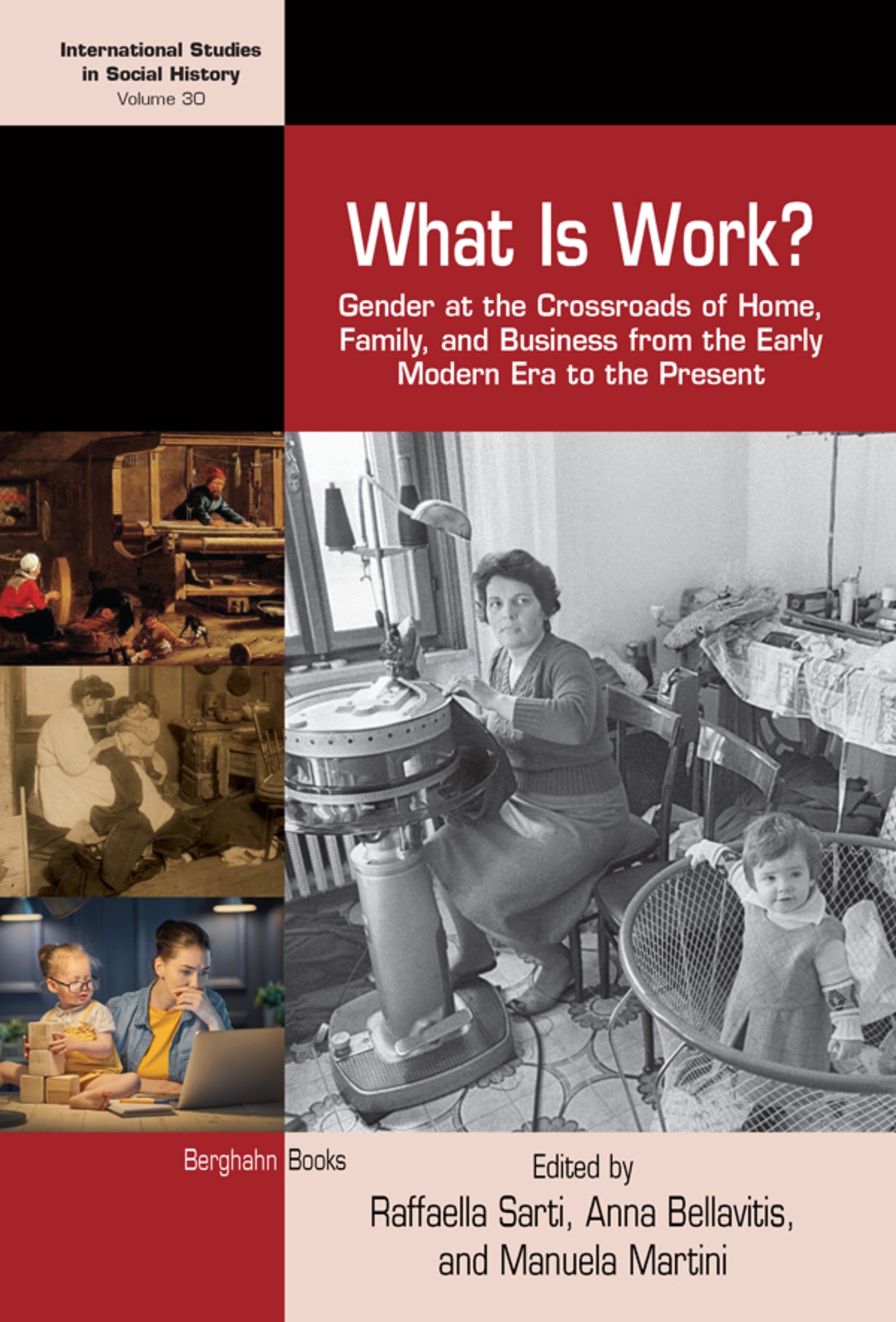
Every society throughout history has defined what counts as work and what doesn’t. And more often than not, those lines of demarcation are inextricable from considerations of gender. What Is Work? offers a multi-disciplinary approach to understanding labor within the highly gendered realm of household economies. Drawing from scholarship on gender history, economic sociology, family history, civil law, and feminist economics, these essays explore the changing and often contested boundaries between what was and is considered work in different Euro-American contexts over several centuries, with an eye to the ambiguities and biases that have shaped mainstream conceptions of work across all social sectors.


“In the perspective of the preparation of the competitions, this book makes it possible to open the field of what constitutes the history of work and to build a critical point of view on its sources. It will also be of greater interest to those who want to write a reflective history of work, attentive to the categories that constitute it. Finally, at a time when the rapid development of teleworking promises to shift a large part of salaried activities to the domestic space, it offers a strong historical perspective to sharply address the pitfalls of the present.” • Le Carnet du Mouvement Social
“One of the strong points of this volume is the excellent theoretical framework offered by its editors. They begin with a solid introduction that not only serves to present the contributions but also allows to pose questions and to raise the problems approached in this volume…This work of very high quality helps to understand the multiple forms of first female and then feminist mobilization regarding the definition and redistribution of the work accomplished by women in the domestic sphere.” • Clio
List of Figures and Tables
Introduction: What is Work? Gender at the Crossroads of Home, Family, and Business from the Early Modern Era to the Present
Raffaella Sarti, Anna Bellavitis, and Manuela Martini
PART I: SETTING THE SCENE: THE FEMINIST CHALLENGES TO THE "DELABORIZATION" OF HOUSEHOLD WORK
Chapter 1. Family Work: A Policy-Relevant Intellectual History
Nancy Folbre
Chapter 2. Productive and Reproductive Work: Uses and Abuses of an Old Dichotomy
Alessandra Pescarolo
Chapter 3. The Home as a Factory: Rethinking the Debate on Housewives’ Wages in Italy, 1929-1980
Alessandra Gissi
PART II: THE CUNNING HISTORIAN: UNVEILING AND OVERCOMING THE GENDER BIAS OF SOURCES
Chapter 4. The Statistical Construction of Women’s Work and the Male Breadwinner Economy in Spain (1856-1930)
Cristina Borderías
Chapter 5. Toiling Women, Non-Working Housewives and Rightful Citizens: Statistical and Legal Constructions of Female Work and Citizenship in Italy
Raffaella Sarti
Chapter 6. The Complexities of Work: Analyzing Men’s and Women’s Work in the Early Modern World with the Verb-Oriented Method
Maria Ågren
Chapter 7. The Visibility of Women’s Work: Logics and Contexts of Documents’ Production
Margareth Lanzinger
PART III: THE VALUE OF CARE AND UNPAID HOME-BASED WORK: THE ROLE OF THE LAW
Chapter 8. Regulating Home Labours: The ILO and the Feminization of Work
Eileen Boris
Chapter 9. Family-Relations Law between "Stratification" and "Resistance". Housework and Family Law Exceptionalism
Maria Rosaria Marella
Chapter 10. Could Family (Care) Work Be Paid? From French Agricultural Inheritance Law (1939) to Legal Recognition of Excessive Filial Duty (1994)
Florence Weber
PART IV: CONCLUSION
Conclusion: Can We Construct a Holistic Approach to Women’s Labor History over the Longue Durée?
Laura Lee Downs
Index