





Some error occured while loading the Quick View. Please close the Quick View and try reloading the page.
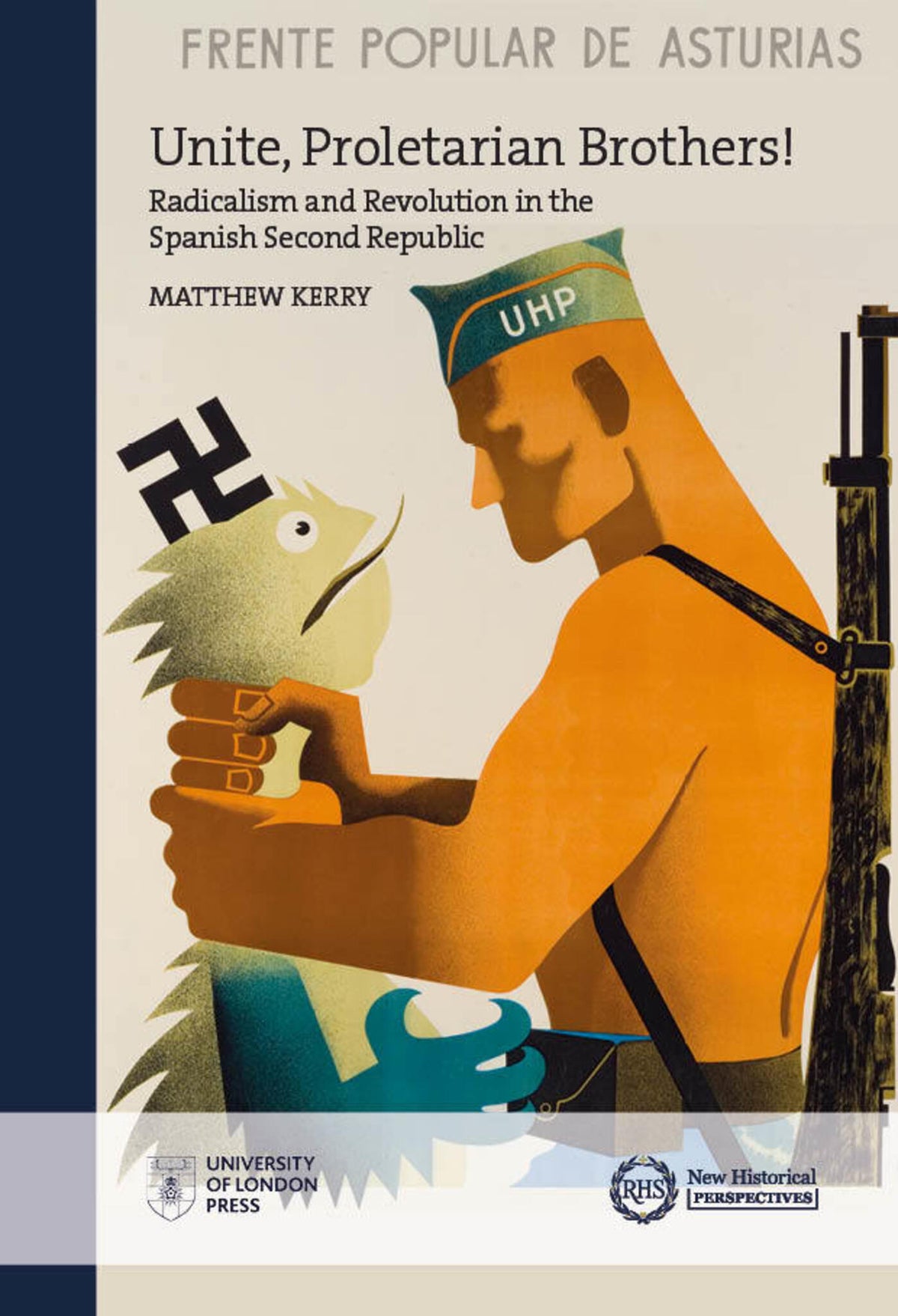
In October 1934 the northern Spanish region of Asturias was the scene of the most important outburst of revolution in Europe between the early 1920s and the Spanish Civil War. Thousands of left-wing militants took up arms and fought the Spanish army in the streets of Oviedo while in the rear-guard committees proclaimed a revolutionary dawn. After two weeks, however, the insurrection was crushed and the widespread repression was central to the polarization and fragmentation of Spanish politics prior to the Civil War (1936-9).
Weaving together a range of everyday disputes and arenas of conflict, from tenant activism to strikes, boycotts to political violence, Unite, Proletarian Brothers! reveals how local cleavages and conflicts operating within the context of the Spanish Second Republic (1931-6) and interwar Europe explain the origins, development and consequences of the Asturian October. The book sheds new light on the long-debated process of ‘radicalization’ during the Second Republic, as well as the wider questions of protest, revolutionary politics and social and political conflict in inter-war Europe.


"Kerry has crafted a nuanced, empathetic, and layered account of the radicalization of the Asturian coalfields that also serves as a model for re-visioning the history of 'red cities.'"
-Bulletin for Spanish and Portuguese Historical Studies
"Refreshing and bold...The book’s engagement with the politics of community and, above all, its micro-historical approach to discerning how politics was lived and felt on a local level is to be highly praised."
-International Journal of Iberian Studies
Introduction
1. Rethinking the Red Valleys
2. Building and Contesting the Republic (1931-2)
3. Anticlericalism, Dissidence and Radicalization (1932-3)
4. Fascism and the Politics of Policing (1933-4)
5. Revolution
6. Repression and the Redefinition of Politics during the Long 1935
7. A Fragile Radicalism: The Popular Front Spring of 1936
Conclusion