





Some error occured while loading the Quick View. Please close the Quick View and try reloading the page.
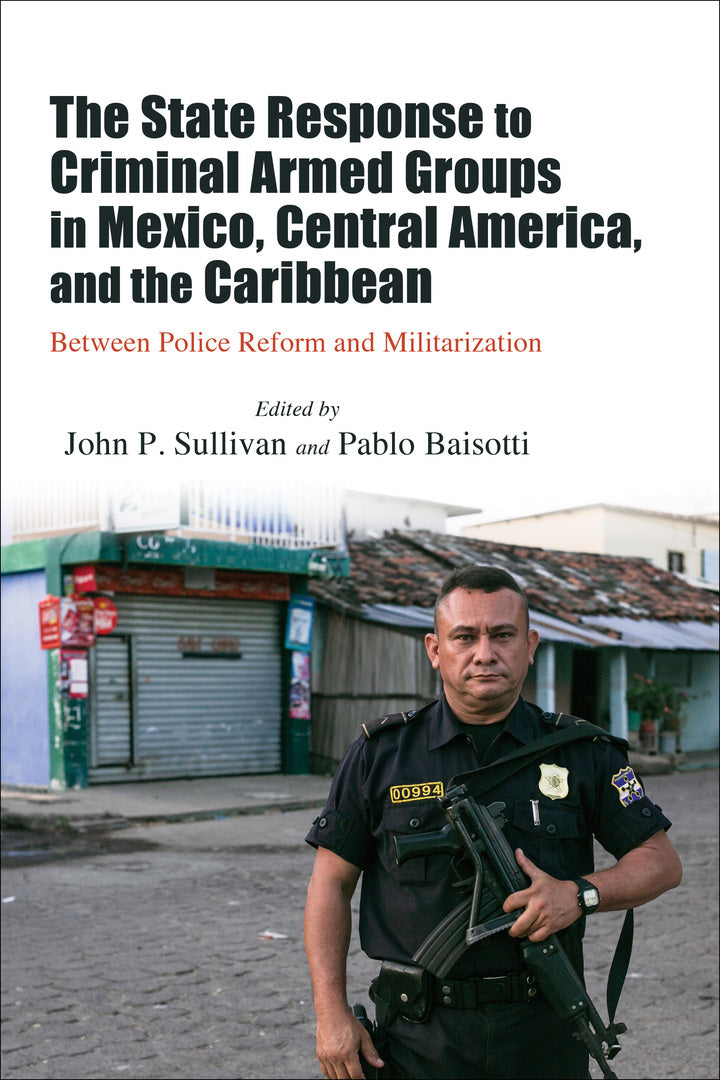
Unravels criminal dynamics and the relations (and confrontations) with the nation-state in Mexico, Central America, and the Caribbean.
Organized crime is everywhere: Where governments draw the line, criminal actors find profitable ways to cross it; where governments fail to meet human needs, criminal actors profit from their desire or desperation. In Latin America, the armed forces are doing less national defense work and more public security work. In the contemporary environment, fragile states and criminal challenges to them are changing long-standing views of authority and legitimacy. State authority and tradition are diminished, if not lost, in areas under the territorial control of criminal armed groups. In areas experiencing crime, wars, and criminal insurgency, the result is a turbulent vacuum characterized by insecurity, where violence often reigns. This volume brings together specialists and researchers on issues related to security, criminality, drug trafficking, and criminal gangs, providing new perspectives on the legal frameworks and the militarization of law enforcement toward armed criminal groups in Mexico, Central America, and the Caribbean. Police, justice, and security-sector reform are also discussed while also analyzing the power and counterpower competition that this criminality is contesting with the nation-state.


"The State Response to Criminal Armed Groups in Mexico, Central America, and the Caribbean is a critical and timely work that addresses the criminal insurgencies now widely waged across much of the Western Hemisphere by gangs, cartels, and other criminal armed groups. It is imperative that sovereign states respond to these threats with a civilian policing approach rather than militarized police (and armed forces) that undermines liberal-democratic freedoms and promotes authoritarianism. The editors, and their world-class group of contributing scholars, have done a masterful job analyzing these threats and advocating the necessary state response that adheres to the primacy of international legal conventions." — Robert J. Bunker, TCLAS School of Politics and Global Studies
John P. Sullivan is Senior Fellow with the Small Wars Journal–El Centro Fellowship and Research Fellow with the Future Security Initiative at Arizona State University. Pablo Baisotti is Senior Lecturer at the Business School, University of Essex.
Introduction: Between Police Reform and Militarization
John P. Sullivan and Pablo Baisotti
1. The Best State Response to Criminal Armed Groups through Human Rights: An International Economic and Judicial Approach
Edgardo Buscaglia
2. What Are Community-Based Crime Prevention Programs, and What Role Can They Have in Latin America?
Laura Iesue
3. From Independence to Interdependency: The Evolution of Mexico's Strategy Against Organized Crime, Violence, and Social Unrest
Pierfrancesco Moscuzza
4. The Cártel de Jalisco Nueva Generación and the Battle for Colima and Its Port Manzanillo
Nathan P. Jones and José Jonathan Alonso Ramos
5. The Militarization of Migration Control in Mexico
Victor J. Hinojosa
6. Organized Crime, Diversification, and Extortion in Mexico
Daniel Weisz Argomedo and Nathan P. Jones
7. Where Is Mexico's National Guard Today, and Where Is It Going?
Patricia H. Escamilla-Hamm
8. The Evolution of Street Gangs and Their Relationship with Transnational Organized Crime in Guatemala
Stephen Noguera
9. Punitive Police Action and Gang Control in El Salvador
Augusto Rigoberto López Ramírez
10. Strengthening Haitian Gangs in Times of Democratic Erosion
Camilo González
Conclusion
John P. Sullivan and Pablo Baisotti
List of Contributors
Index