





Some error occured while loading the Quick View. Please close the Quick View and try reloading the page.
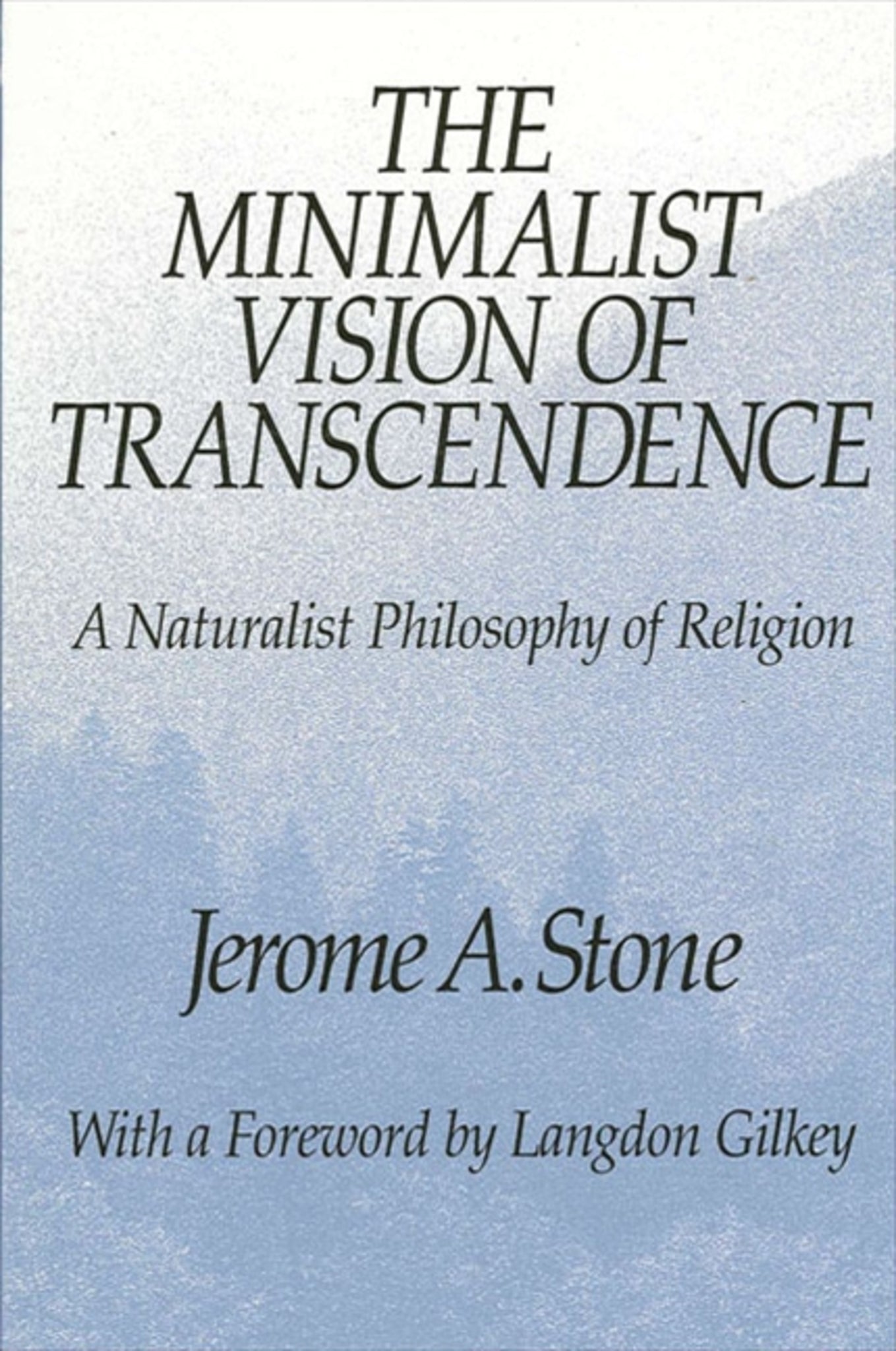
Develops a revised form of religious naturalism that, drawing on figures like James, Whitehead, and Wieman, argues for a "minimalist" and ethically open understanding of transcendence rooted in experience and nature rather than supernaturalism.
In The Minimalist Vision of Transcendence, Jerome A. Stone offers a fresh and compelling reconstruction of religious naturalism—one that is both intellectually rigorous and spiritually open.
Drawing on the rich traditions of William James, Alfred North Whitehead, Henry Nelson Wieman, and Bernard E. Meland, Stone carefully revisits their insights while critically refining their limitations. The result is a "minimalist" vision of transcendence that neither returns to classical supernaturalism nor collapses into reductive secularism, but instead articulates a thoughtful middle path: a philosophy of openness grounded in experience, ethics, and a reimagined sense of the divine within nature.
Across its chapters, Stone places his approach in dialogue with major twentieth-century thinkers and movements, including Charles Hartshorne, Schubert Ogden, Langdon Gilkey, Albert Camus, and secular humanism. He consistently asks what remains viable, what must be revised, and what can still speak to contemporary philosophical and religious concerns.
Particularly striking is Stone's account of "a generous empiricism" and his ethical emphasis on openness—offering a framework in which religious meaning is neither imposed nor discarded, but carefully reinterpreted.


"Stone has given us a new articulation and defense of a version of religious naturalism which I regard as entirely viable. He is careful to show the historical antecedents of this position (chiefly in James and Whitehead and Wieman and Meland), skillfully correcting their problematic aspects, and helpfully comparing them with their Continental counterparts.
"In what is probably the finest chapter of all, Stone calls attention to the leading contemporary alternatives (Hartshorne and Ogden, Gilkey, Camus, secular humanism) and offers admirably balanced indications of where and why the minimalist vision of transcendence differs from these. He picks up all that is still most pertinent in the work of H. N. Wieman, A. N. Whitehead, and B. E. Meland, with some nuanced doses of Tillich and Gilkey, and presents the case for a minimalistic, revisionary theism simply and plainly. All of the ideas and thinkers Stone treats are currently undergoing reappraisal, and his study will help to contribute to any future evaluation of twentieth-century American religious naturalism out of the 'Chicago School.'"— Nancy Frankenberry, Dartmouth College
Jerome A. Stone is Professor of Philosophy at William Rainey Harper College, Palatine, Illinois.
Foreword by Langdon Gilkey
Preface
Introduction
1. A Model of Divine Immanence
2. Historical Context
3. The Ethics of Openness
4. A Generous Empiricism
5. A Dialogue with Alternative Visions
Conclusion: A Secularity of Openness
Notes
Index