





Some error occured while loading the Quick View. Please close the Quick View and try reloading the page.
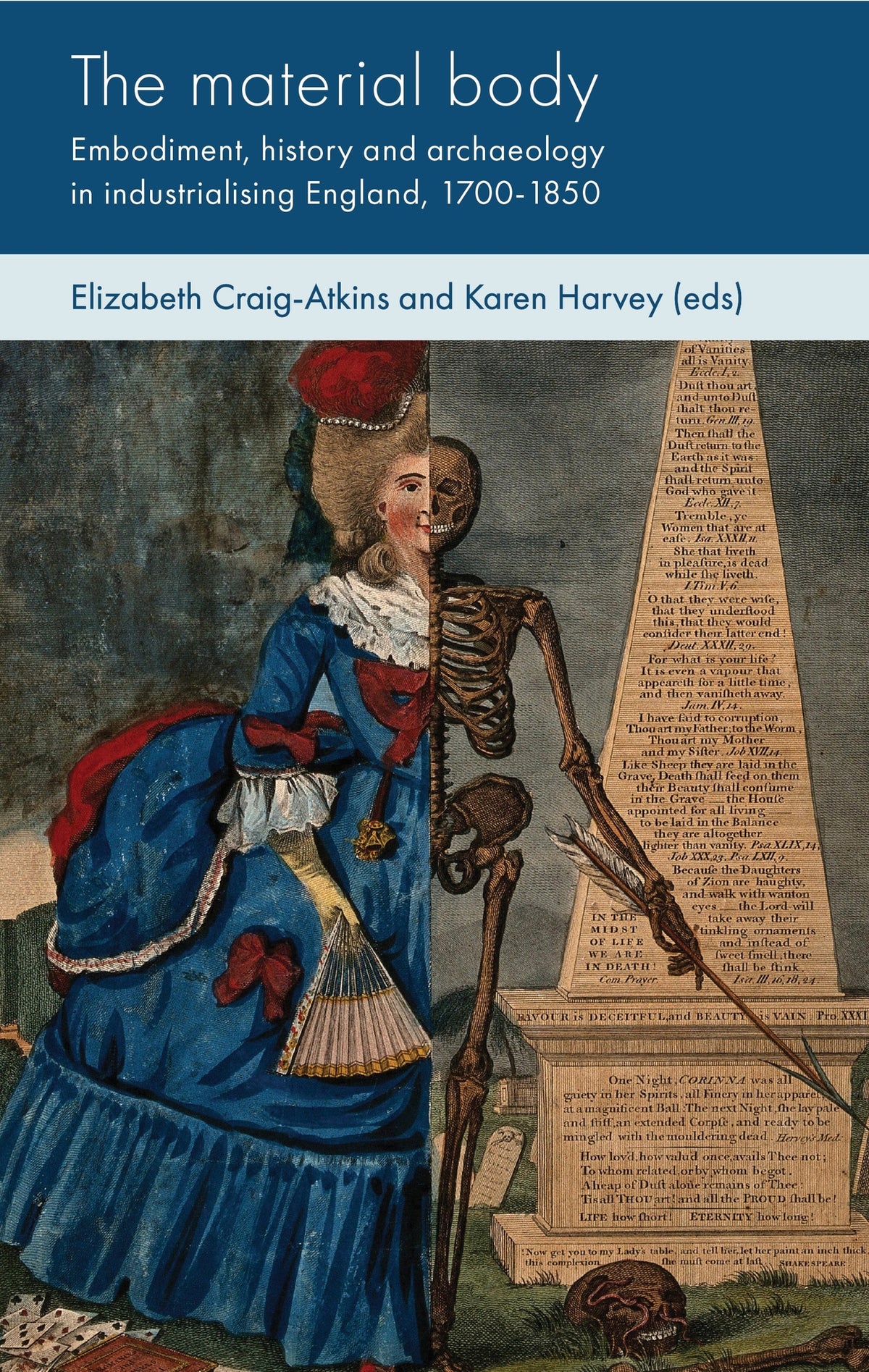
This volume explores the possibilities of studying embodied subjects in the past through the sources and approaches of archaeology, history and material culture studies. It draws on collections of human remains, material culture and documentary evidence from Britain during the period 1700–1850, considering the themes of gender, rank, age, disability and maternity. Each chapter looks at the lived experiences of the material body, bringing together disciplines that share an interest in the material or embodied turn. Combining archaeological and historical data to reconstruct embodied experiences, the volume represents the first collection of genuinely collaborative scholarship by historians and archaeologists.
An electronic edition of this book is freely available under a Creative Commons (CC BY) licence.


Elizabeth Craig-Atkins is a Senior Lecturer in Human Osteology at the University of Sheffield
Karen Harvey is Professor of Cultural History at the University of Birmingham
Introduction: the material body in archaeology and history – Elizabeth Craig-Atkins and Karen Harvey
1 Archives of embodiment: body and experience in the archaeological and historical record – Karen Harvey
2 Marking maternity: integrating historical and archaeological evidence for reproduction in the late eighteenth and early nineteenth centuries – Elizabeth Craig-Atkins and Mary E. Fissell
3 Embodying the history of shoes: footwear and gender in Britain, 1700–1850 – Matthew McCormack
4 ‘The Corporation of Corpse-stealers’: archaeological and historical evidence of bodysnatching in early eighteenth-century London – Robert Hartle
5 Who smokes anymore? Documentary, archaeological and osteological evidence for tobacco consumption and its relationship to social identity in industrial England, 1700–1850 – Anna M. Davies-Barrett and Sarah A. Inskip
6 Uncovering the lives of late-eighteenth- and nineteenth-century inhabitants of Bristol through osteoarchaeological and documentary analysis – Heidi Dawson-Hobbis and Jocelyn Davis
7 Disability, gender and old age in the Industrial Revolution: cultural historical and osteoarchaeological perspectives – Sophie L. Newman and David M. Turner
Index