





Some error occured while loading the Quick View. Please close the Quick View and try reloading the page.
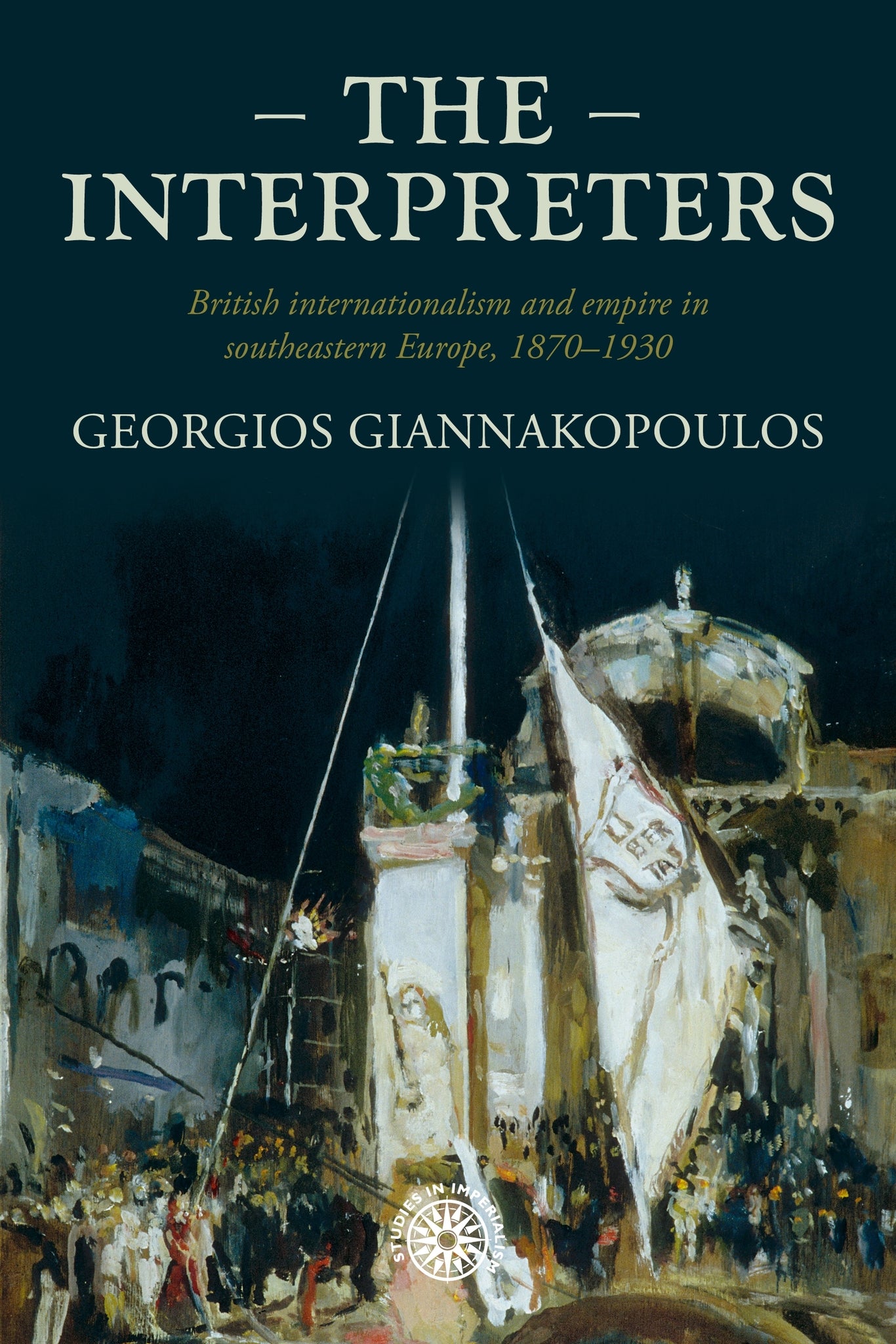


'This important new study shows the connections between the national question in southeastern Europe and British imperialism. An intellectual history of the development of liberal views on the minority question, it helps explain why internationalism took the form that it did after the First World War and how that mattered to both Britain and southeastern Europe.' Michelle Tusan, Professor of History, University of Nevada, Las Vegas
'The Interpreters offers a fascinating group portrait of the individuals who shaped Western perception of southeastern Europe. With a sharp eye and keen sense for historical convergence, Giannakopoulos shows how these nineteenth-century British intellectuals formed and changed their own views of the region through contact with its people and artifacts, as well as through their often-intimate personal relationships with one another, and in relation to the geopolitical aspirations and fantasies of Great Britain. Their interpretations are clearly still with us, making it all the more important to apprehend their origins and trajectory into the turbulent twentieth century.' Holly Case, Professor of History, Brown University
'Georgios Giannakopoulos’s The Interpreters is a vivid story and a sobering history of a series of gross misunderstandings. While meticulously following British intellectuals on their real and virtual travels to Southeastern Europe, and interrogating how this raw material of knowledge was conceptualized and translated for a British and international audience, the book reveals more than a history of how political ideas and personal political preferences interact with academic scholarship. The most captivating in Giannakopoulos’ story is how frequently his actors erased the boundaries between the conditions they have found on the ground and what they saw at home, in Britain, how often they talked of a distant region in order to intervene in debates about Britain’s imperial present and future, and how easily they aligned their material with the necessities of their argument to achieve their favoured goal at home. But beyond this sobering – and simultaneously liberating – implicit portrait of politically engaged intellectuals, The Interpreters also turns the table on Britain and its imperial glory in the late 19th and early 20th centuries. After all, arguments derived from the conditions of a region which was seen to be in a permanent crisis could only have been deployed in Britain if its own conditions were anything but glorious, rather critical.' Gábor Egry, Columbia University
'Overall, the work offers a new reading of the relationship between liberalism and empire, placing south-eastern Europe at the heart of British intellectual history. It highlights how notions of freedom, nation-building and international order were shaped by intersecting experiences of imperial rule and national movements: At a time when debates about international intervention, national sovereignty and liberal order are resurgent, the book reminds us that these dilemmas have deep, often contradictory roots.' Stefanos Kavallierakis, Ta Nea
"The Interpreters represents a significant contribution to the historiography of Britain and the Balkans. By situating British intellectual engagement with the region within wider debates about imperial governance and managing national diversity, Giannakopoulos convincingly demonstrates that southeastern Europe functioned as a laboratory for modern ideas of international order."
Ross Cameron, History
Introduction
Part I: The Eastern Crisis revisited
1. National questions in the Habsburg and Ottoman borderlands
2. The emergence of the Armenian question
3. Southeastern Europe, federalism, and Irish home rule
Part II: Managing Diversity across Austria-Hungary and the Balkans
4. Imperial order in Crete and Macedonia
5. The ‘racial question’ in Austria-Hungary
6. The Balkan question and the promise of Ottoman reform
Part III: Nationalism and internationalism during the Great War
7. National questions and federal solutions
8. New Europe and Ireland
9. Imperial dissolutions and transformations
Part IV: New order and old questions
10. The afterlives of Austria-Hungary
11. The Eastern question as a Western question
Conclusion: The interpreters and their impact