





Some error occured while loading the Quick View. Please close the Quick View and try reloading the page.
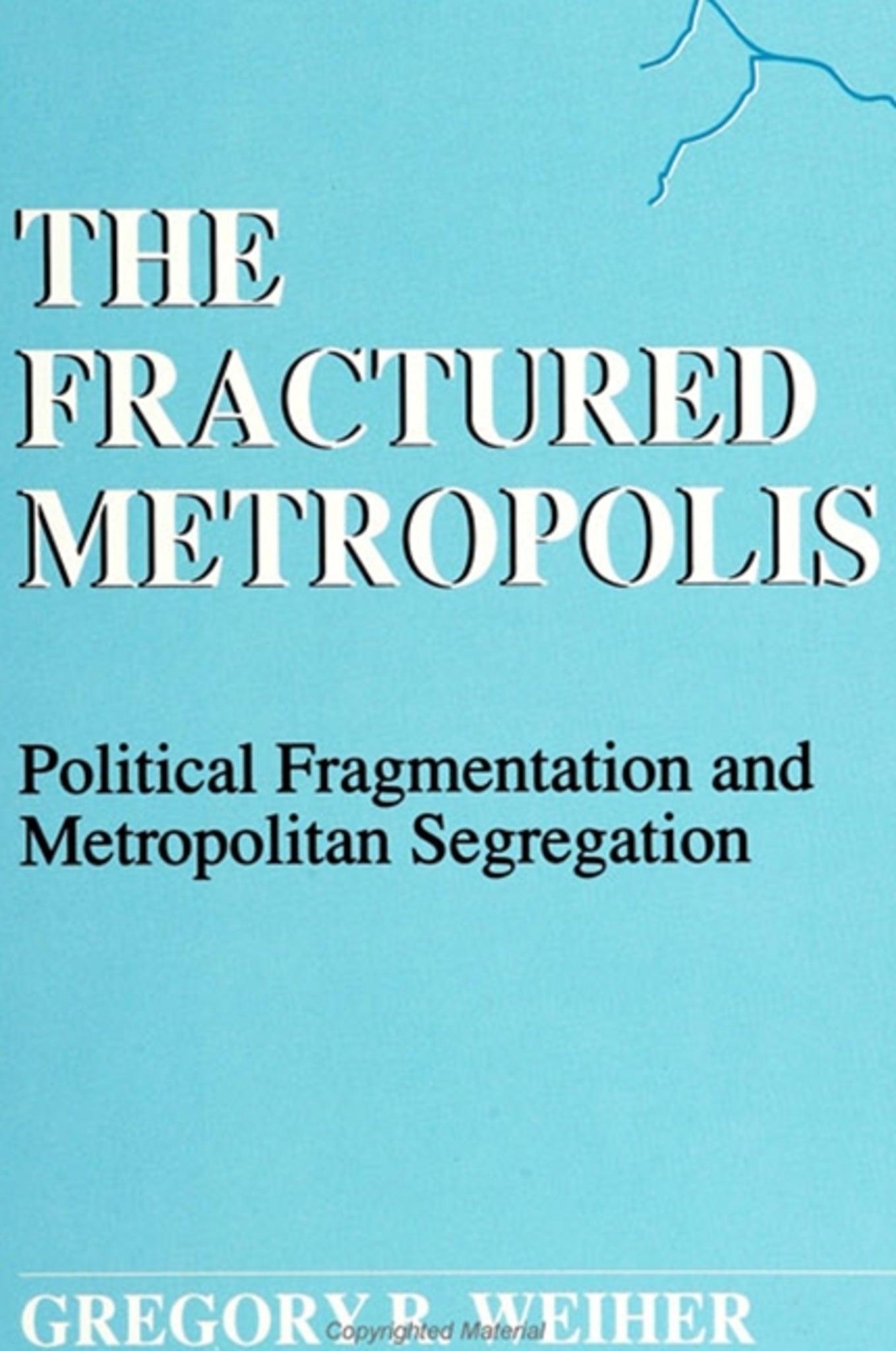
How political boundaries shape residential segregation and fracture America's metropolitan communities.
Political boundaries do more than define the limits of cities and suburbs, they shape where people live, whom they live among, and how metropolitan communities become divided.
In The Fractured Metropolis, Gregory R. Weiher develops an information-based theory of metropolitan fragmentation to explain how political institutions and jurisdictional boundaries influence patterns of residential segregation. Drawing on urban politics, political behavior, and theories of population sorting, Weiher demonstrates how individual preferences, information, and boundary configurations interact to produce persistent patterns of racial and social separation.
Through theoretical analysis and a detailed case study of Richmond Heights, Missouri, Weiher reveals the often-overlooked political forces behind metropolitan segregation. His innovative approach places political boundaries at the center of the explanation for urban fragmentation, offering a compelling new perspective on the relationship between local government, residential choice, and the structure of American metropolitan areas.
The Fractured Metropolis provides an original and important contribution to the study of urban politics, metropolitan governance, and residential segregation.


"I think this book is an outstanding original interpretation of urban political and social fragmentation. The argument is elegantly expressed and tailored to its place in existing theory with exceptional clarity and skill. The field of urban politics has frequently been characterized as lacking coherent political and social theory, except perhaps, for that contributed by economists. This book runs squarely in the other direction giving considerable form to an explicit information processing theory of mass behavior in which fundamental political institutional arrangements, such as political boundaries, play not just a role, but are decisive in explaining commonly observed patterns in racial distributions. Seldom have undeniably political factors been assigned such a central role in explaining widespread social phenomena." — Carol W. Kohfeld, University of Missouri, St. Louis
Gregory R. Weiher is Assistant Professor of Political Science at the University of Houston.
Preface
1. Urban Political Boundaries and Metropolitan Fragmentation
2. Place, Preferences, and Information: Political Boundaries and Population Sorting
3. An Information-Based Model of Jurisdictional Tipping
4. Public Policy and Patterns of Residential Segregation
5. The Impact of Boundary Configuration
6. A Case in Point: Richmond Heights, Missouri
7. Conclusions and Implications
References
Index