





Some error occured while loading the Quick View. Please close the Quick View and try reloading the page.
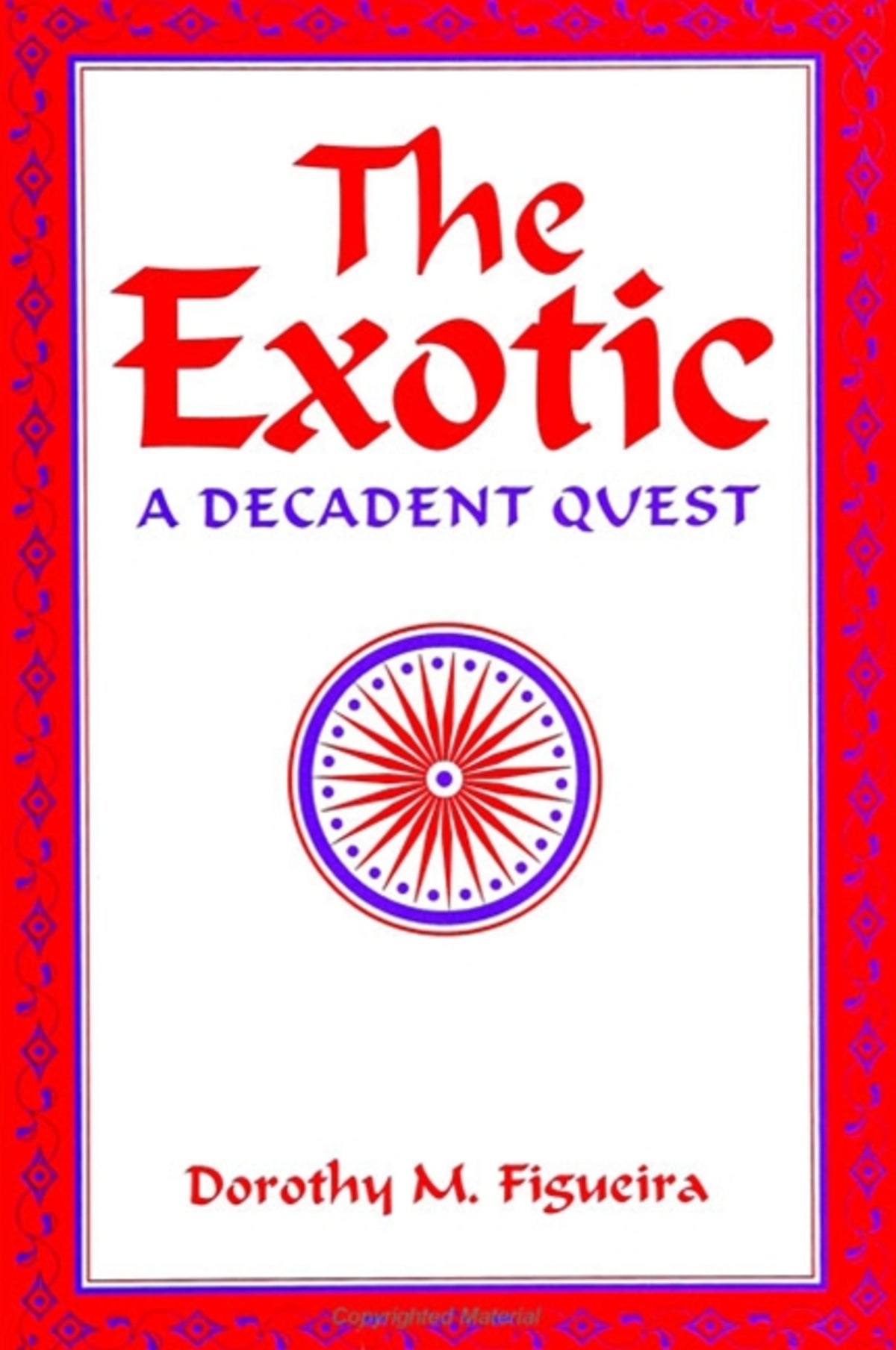
Journey into the West’s fascination with the East in The Exotic, where scholarship, philosophy, and ideology collide in a dazzling quest for understanding.
What does it mean to encounter the "Other"? How have Western scholars, writers, and philosophers understood—or misunderstood—the rich traditions of India?
In The Exotic, Dorothy M. Figueira offers a masterful exploration of the West's engagement with Sanskrit studies, tracing the complex intersections of culture, ideology, and imagination from the nineteenth century to today. From German, French, and English scholarship to the tangled legacies of Indo-Germanism and National Socialism, Figueira uncovers how exoticism has served both as a source of inspiration and a lens of distortion.
With unparalleled expertise in Sanskrit, Indian intellectual history, and European thought, Figueira illuminates the West's appropriation—and misappropriation—of Eastern ideas. The result is a rich, nuanced portrait of contrasting cultural discourses, revealing both the beauty and the perils of intellectual fascination with the "exotic."


"The Exotic covers an extraordinary range of materials as it traces the reception of Sanskrit studies in the West and issues of ideology implied in that reception. It focuses chiefly on nineteenth-century German, French, and English scholarship, literature, and philosophy, but it also addressses twentieth-century associations between Indo-Germanism and National Socialism and contemporary views on ethnocentrism and political correctness.
"The author is thoroughly at home in the languages, literatures, and cultural and institutional practices of Germany and France, but more importantly she is thoroughly expert in Sanskrit and Indian history of ideas. She brings her fully informed perspective to the West's appropriation and misappropriation of Eastern thought in positive and productive new ways. The result is that rarest of books, an undistorted view of contrasting and competing cultural discourses and their overlapping, interconnected problems, understood in the light of a comprehensive multi-cultural vision." — William Kennedy, Cornell University
"A book of remarkable erudition on a very important topic. The perceptions and (mis)understandings of Indian philosophy, literature, and culture by European scholars and writers amounted to a genuine 'Indian Renaissance.' Until now nobody has managed to unravel them so patiently and with such competence as Dorothy Figueira. She has an enviable feeling for subtle nuance in comparatist analysis.
"This is a book of comparatist scholarship at its best. Figueira combines some of the features of the historical positivist tradition with categories and approaches taken from modern criticism in a way that is truly fruitful." — Virgil Nemoianu, The Catholic University of America
Dorothy M. Figueira is Assistant Professor at State University of New York, Stony Brook. She is the author of Translating the Orient: The Reception of Sakuntala in Nineteenth-Century Europe, also published by SUNY Press.
Acknowledgments
Introduction
Part I: Exoticism: Model for Inspiration or Alibi for Despair?
1. The Dynamics of Exoticism: Herder's Epigram and Gunderrode's Epitaph
2. Rationalist Heroes and Irrational Victims: Satis, Bayaderas, and Pariahs
Part II: The Politics of Language and the Politics of Exoticism
Introduction
3. The Politics of Exoticism: Friedrich Schlegel's Metaphorical Pilgrimage to India
4. Scholarly Collusion and the Ethos of Despair: The Initial Reception of the Bhagavad Gita
Part III: The Poetics of Despair: Irrational Responses to Exoticism
Introduction
5. The German Quest for Nirvana
6. Neantisme
7. Indian Thought and the Formation of Aryan Ideology: Aryans, Tschandalen, and the Lunatic Fringe
Concluding Remarks
Notes
Bibliography
Index