Skip to product information
1 of 1

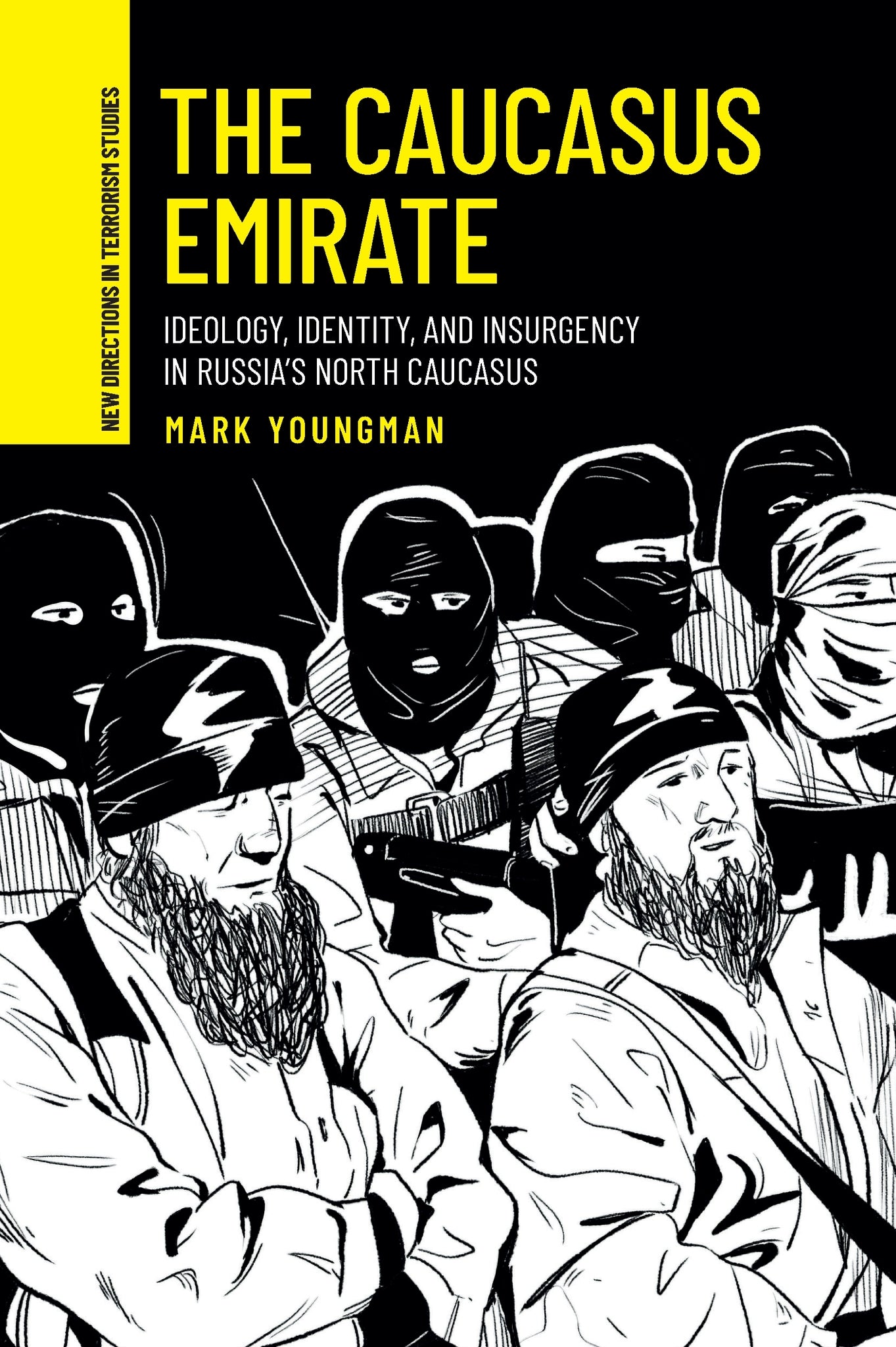
The Caucasus Emirate

Regular price £85.00
Sale price £85.00 Regular price £85.00
Sale Sold out
This book analyses the role of ideology and identity in the North Caucasus insurgency, exploring how rebel leaders balanced local, national, and global factors in their efforts to justify and promo...
Read More
  • Format:
  • 20 May 2025
View Product Details
Insurgency has plagued the North Caucasus since the collapse of the Soviet Union. Between 2007 and 2015, rebels waged their struggle under the banner of the Caucasus Emirate (Imarat Kavkaz, IK). This book systematically examines the IK’s ideology to explain what the group claimed to be fighting for and against and how it sought to mobilise people behind its cause. It reveals a group with a weakly developed political programme, which aligned itself with global jihadism but consistently prioritised local concerns. It demonstrates the priority rebel leaders afforded to shaping local identities, but also their failure to forge a unified movement or revitalise armed struggle. Re-evaluating the IK’s ideology helps us better understand the past and future of armed struggle in the North Caucasus.
files/i.png Icon
Price: £85.00
Pages: 264
Publisher: Manchester University Press
Imprint: Manchester University Press
Series: New Directions in Terrorism Studies
Publication Date: 20 May 2025
ISBN: 9781526185440
Format: Hardcover
BISACs:

POLITICAL SCIENCE / World / Russian & Former Soviet Union, Terrorism, armed struggle, POLITICAL SCIENCE / Terrorism, POLITICAL SCIENCE / Political Ideologies / Radicalism

REVIEWS Icon

''A much-needed comprehensive analysis of the ideology of the Caucasus Emirate in Russia’s North Caucasus. A must read for security experts trying to figure out how the North Caucasus insurgency has developed and what ideological shifts it has gone through. An important book that sheds light on how Russia’s insurgency is and is not connected to global jihadism.'
Dr Elena Pokalova, College of International Security Affairs, National Defense University

‘Without a single doubt, the author is one of the leading scholars on the Caucasus Emirate. The project is empirically unique and provides an exhaustive analysis on an understudied topic. The impressive quality of data collection and its meticulous methodology combined with a coherent and precise analytical framework underline the quality of the research project and its importance in the field.’

Professor Jean-François Ratelle is an Adjunct Professor of Conflict Studies and Human Rights at the Graduate School of Public and International Affairs (GSPIA) at the University of Ottawa.

Mark Youngman is Executive Director of Threatologist, a research consultancy that helps individuals and organisations understand security threats in Russia and Eurasia

Introduction
Part I Background and framework
1 The IK in historical context
2 Insurgent ideologies
Part II Ideology across space and time
3 Ideology at the centre
4 Dagestan — going to extremes
5 Kabardino-Balkaria — social roots and sophistication
6 Ingushetia — indistinct insurgency
Part III Interpreting the ideology of insurgency
7 Variance, continuity and change across the IK
8 Locating the IK on the jihadist landscape
Conclusion: Lessons from the ideology of the IK
Appendix: Methodology