





Some error occured while loading the Quick View. Please close the Quick View and try reloading the page.
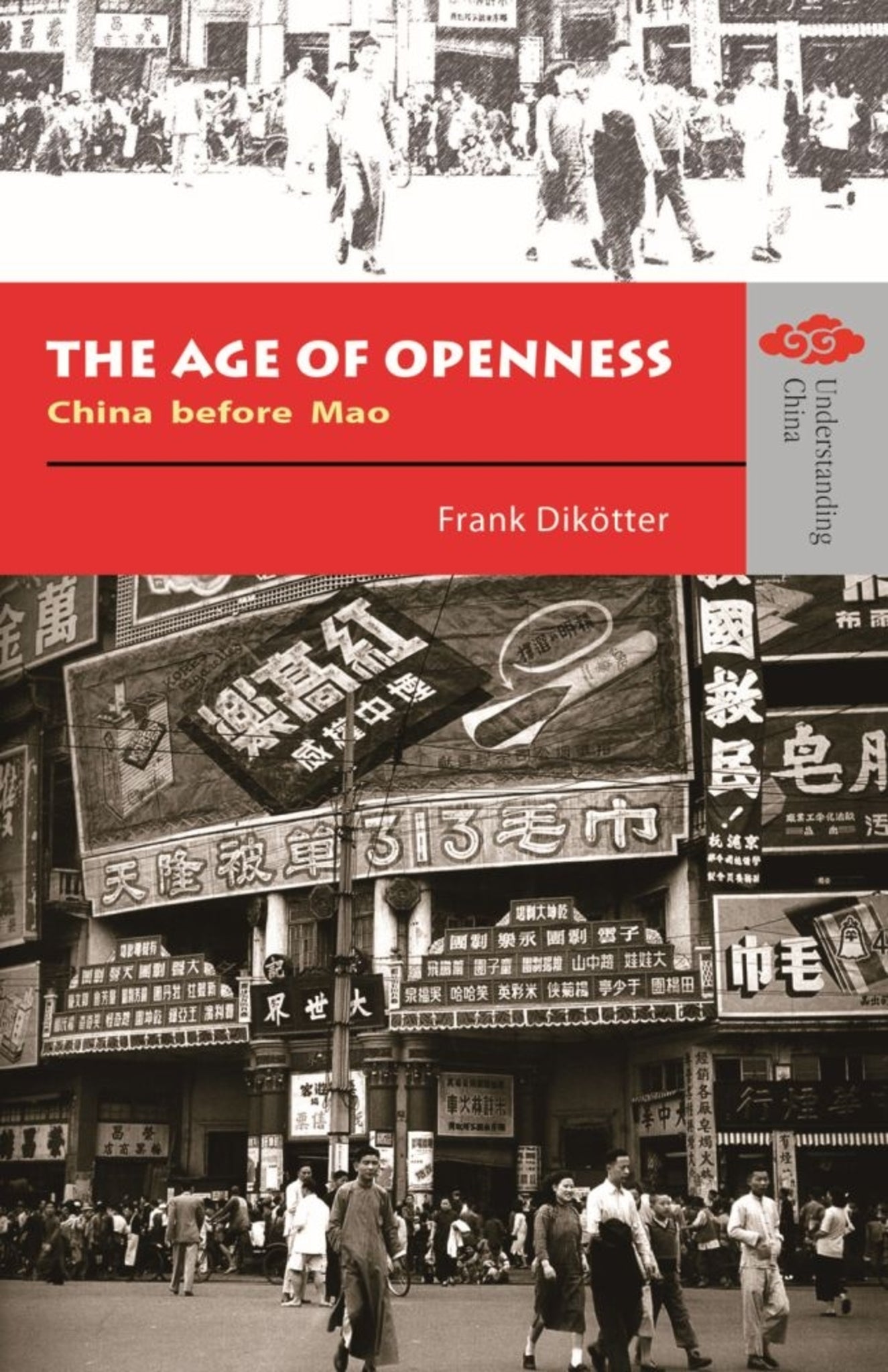
The era between empire and communism is routinely portrayed as a catastrophic interlude in China’s modern history, but this engagingly written book shows instead that the first half of the twentieth century witnessed a qualitatively unprecedented trend towards openness.
Frank Dikötter argues that the years from 1900 to 1949 were characterised at all levels of society by engagement with the world, and that the pursuit of openness was particularly evident in four areas: in governance and the advance of the rule of law and of newly acquired liberties; in freedom of movement in and out of the country; in open minds thriving on ideas from the humanities and sciences; and in open markets and sustained growth in the economy.
Freedom of association, freedom to travel, freedom of religion, freedom to trade and relative freedom of speech wrought profound changes in the texture of everyday life. While globalisation itself was a vector of cultural diversification, pre-existing constellations of ideas, practices and institutions did not simply vanish on contact with the rest of the world, but on the contrary expanded even further, just as much as local industries diversified thanks to their inclusion into a much larger global market. Arguably the country was at its most diverse in its entire history on the eve of World War II – in terms of politics, society, culture and the economy.
Accessible to general readers, while providing an integration of ideas that will be valuable for specialists, this book presents a fresh way of approaching the history of modern China.
Frank Dikötter argues that the years from 1900 to 1949 were characterised at all levels of society by engagement with the world, and that the pursuit of openness was particularly evident in four areas: in governance and the advance of the rule of law and of newly acquired liberties; in freedom of movement in and out of the country; in open minds thriving on ideas from the humanities and sciences; and in open markets and sustained growth in the economy.
Freedom of association, freedom to travel, freedom of religion, freedom to trade and relative freedom of speech wrought profound changes in the texture of everyday life. While globalisation itself was a vector of cultural diversification, pre-existing constellations of ideas, practices and institutions did not simply vanish on contact with the rest of the world, but on the contrary expanded even further, just as much as local industries diversified thanks to their inclusion into a much larger global market. Arguably the country was at its most diverse in its entire history on the eve of World War II – in terms of politics, society, culture and the economy.
Accessible to general readers, while providing an integration of ideas that will be valuable for specialists, this book presents a fresh way of approaching the history of modern China.

Price: £16.80
Pages: 140
Publisher: Hong Kong University Press
Imprint: Hong Kong University Press
Publication Date:
01 December 2008
Trim Size: 8.35 X 5.39 in
ISBN: 9789622099203
Format: Paperback
BISACs:

“In this succinct and vigorous book, Frank Dikötter presents a cornucopia of graphic examples to show that China in the first half of the twentieth century, far from being in a state of decay that called for revolutionary action, was in fact a vibrant and cosmopolitan society. In such a reading, the current Chinese leaders should not be seen as striving to do something bold and new; they are merely struggling to rebuild a network of global connections that Mao and others had systematically helped to destroy. This should be an ideal book to spark class discussion on modern China.”
— Jonathan Spence, author of The Search for Modern China and Return to Dragon Mountain
— Jonathan Spence, author of The Search for Modern China and Return to Dragon Mountain