





Some error occured while loading the Quick View. Please close the Quick View and try reloading the page.
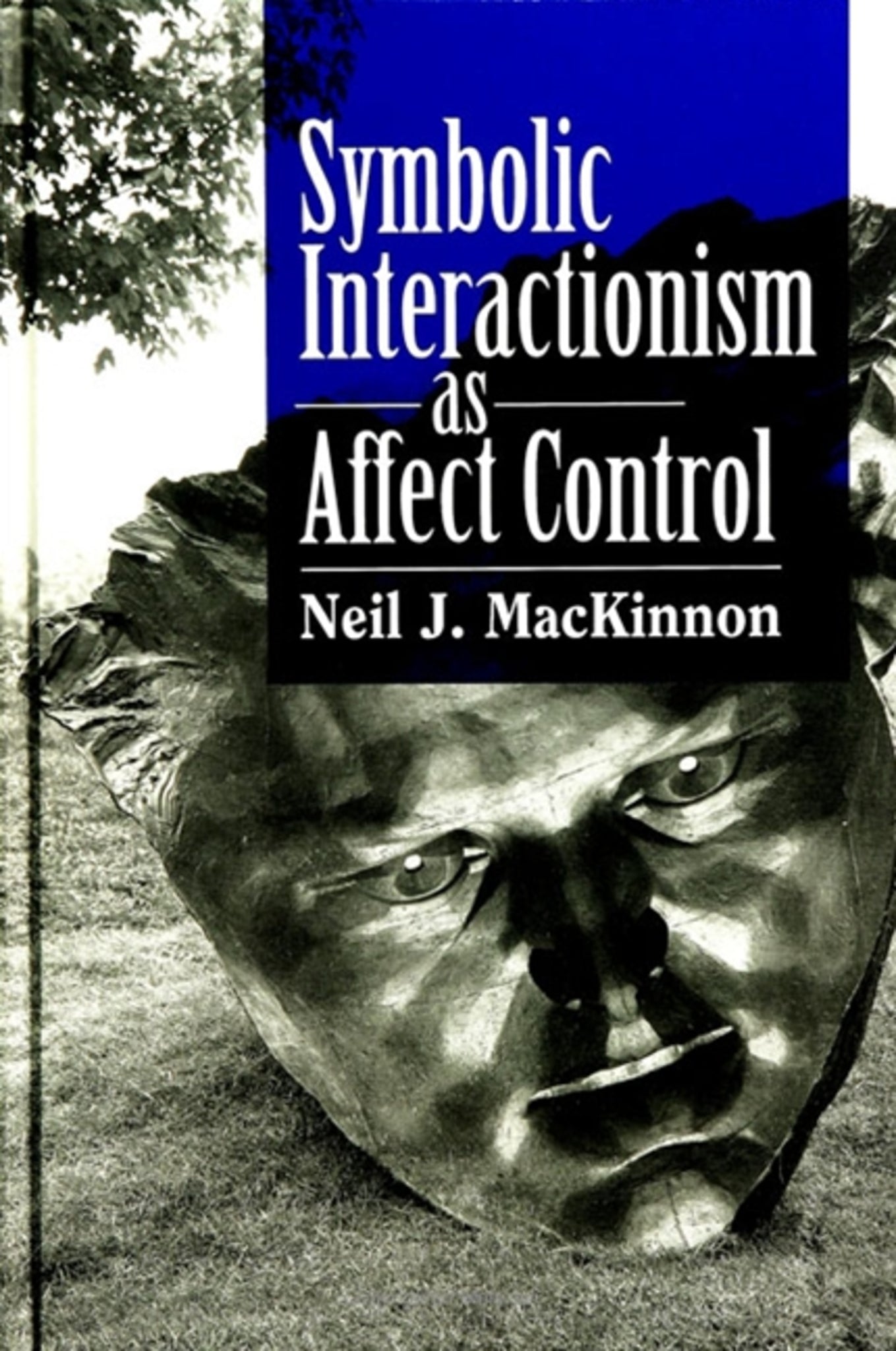
A synthesis of symbolic interactionism and Affect Control Theory showing how emotion, meaning, and identity dynamically organize social life.
What happens when meaning, emotion, and identity are not separate forces—but expressions of a single, organizing system of social life?
In Symbolic Interactionism as Affect Control, Neil J. MacKinnon offers a major synthesis of symbolic interactionist theory and Affect Control Theory, showing how shared cultural meanings shape not only how we interpret the world, but how we feel, act, and sustain a sense of social order. Moving beyond traditional divides in sociological thought, the book demonstrates how affective meaning operates as a core mechanism linking cognition, motivation, identity, and emotion.Drawing on the foundational work of George Herbert Mead, as well as contemporary advances in social psychology, MacKinnon traces how individuals continuously evaluate and produce social events through culturally learned affective expectations. He shows how identities are stabilized through interaction, how emotions function as both signals and regulators of meaning, and how role behavior can be systematically analyzed within a unified theoretical framework.
Clear, rigorous, and integrative, Symbolic Interactionism as Affect Control lays out Affect Control Theory in a structured sequence of propositions and applications, making it accessible to readers in sociological theory, social psychology, and the sociology of emotion. Chapters move from core concepts—symbols, cognition, and affect—to applied analyses of roles, identity processes, emotional dynamics, and reidentification, culminating in a broader argument for theory integration and future research directions.
For scholars seeking to bridge classical interactionist traditions with contemporary affective science, Symbolic Interactionism as Affect Control offers both a theoretical roadmap and a compelling rethinking of how social reality is constructed and maintained through emotion and meaning.


"Symbolic Interactionism as Affect Control is the only readable english-language text that deals with the theoretical implications of Affect Control Theory for people who are qualitatively oriented and not methodologists. It will become required reading in all courses in sociological theory and in the sociology of emotions.
"The book contains an excellent argument for how Affect Control Theory both relates to historical theory and resolves specific paradoxes in contemporary theoretical approaches. I particularly like the way Dr. MacKinnon has spelled out the seven groups of propositions for Affect Control Theory and the way that he demonstrates that Affect Control Theory integrates the Chicago and Iowa Schools of Symbolic Interaction. I am also impressed with his discussion of culture and emotion theory." — John D. O'Brien, Program in the Measurement of Affect and Affective Processes, Indiana University
Neil J. MacKinnon is Professor at the University of Guelph.
Tables and Figures
Foreword by David R. Heise
Preface
Acknowledgments
1. Introduction
Affect Control Theory
Plan of this Book
The Rediscovery of Affect
The Social Psychology of Emotion
Summary
2. Affect Control Theory
Symbols, Language, and Affective Meaning
Cognitive Constraints
Affective Response and Control
Event Assessment
Event Production
Emotions
Cognitive Revisions
Summary
3. Cognition, Affect, and Motivation
Cognition and Affect
Motivation
Summary
4. Affect Control Theory and the Social Psychology of George Herbert Mead
Emotions in Mead's Social Psychology
The Social Psychology of Mead and Affect Control
Summary
5. Identities and Roles
The Conceptual Framework
Two Schools of Role Theory
Identity Theory
Affect Control Theory and Identity Theory
Summary
6. Role Analysis
The Affect Control Model for Role Analysis
Role Analysis
Learning and Accessing Norms
Summary
7. Emotions
The Constructionist Versus Positivist Debate
The Affect Control Theory of Emotions
Emotion Analysis
The Constructionist Versus Positivist Debate and Affect Control Theory
Summary
8. Reidentification
Part I: The Established Model—Attributions and Identity Labels
Part II: The Expanded Model—The Effect of Expressed Emotions on Reidentification Outcomes
Summary
9. Conclusion
Relation to Other Theories
Affect Control Theory as Sociological Explanation
Affect Control Theory as Integrative Social Psychology
Directions for Future Research and Refinement
Summary
Endnotes
References
Index