





Some error occured while loading the Quick View. Please close the Quick View and try reloading the page.
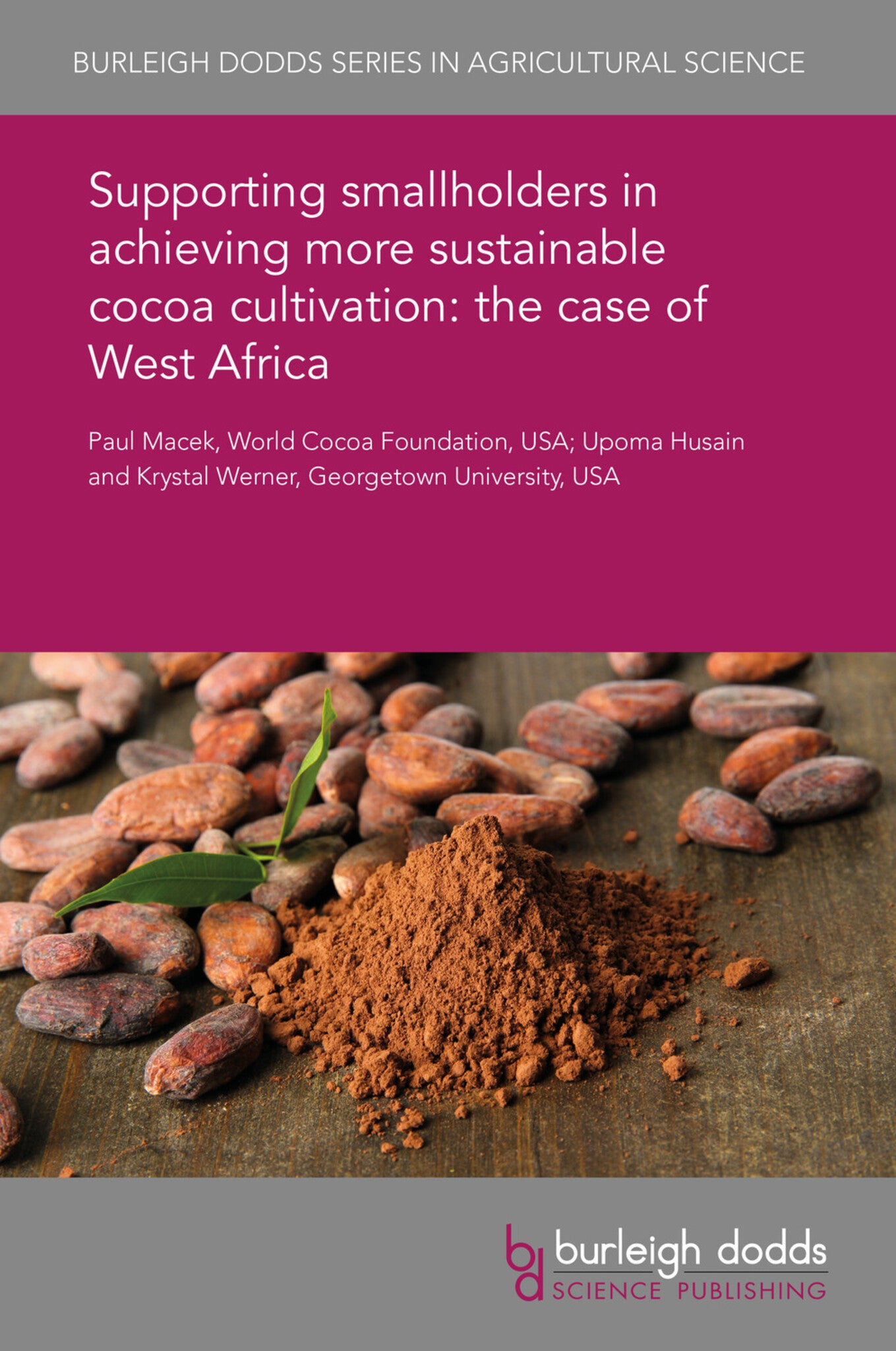
Sustainability initiatives, including associations, platforms and networks, voluntary sustainability standards, corporate and non-governmental and civil society initiatives, have all been developed as solutions to the multiple, long-running challenges facing cocoa growers and producers. Largely implemented by cocoa farmers and groups, these initiatives are often supported by traders, government agencies, certification organisations and other not-for-profit organisations. This chapter examines the different sustainability initiatives and their social, economic and environmental impacts on cocoa farmers, farms and ecosystems. The chapter provides detailed case studies of impacts in Ghana and Ivory Coast. The chapter also looks ahead to future research trends in this area and provides detailed guidance for further reading on the topic.

Price: £25.00
Publisher: Burleigh Dodds Science Publishing
Imprint: Burleigh Dodds Science Publishing
Series: Burleigh Dodds Series in Agricultural Science
Publication Date:
08 August 2018
ISBN: 9781838793715
Format: eBook
BISACs:

1 Introduction 2 Changes in cocoa production 3 Agronomic and environmental challenges 4 Social and economic challenges 5 Initiatives to support smallholders 6 Conclusion 7 Future trends 8 Where to look for further information 9 References